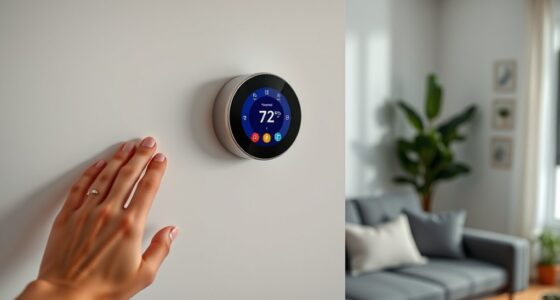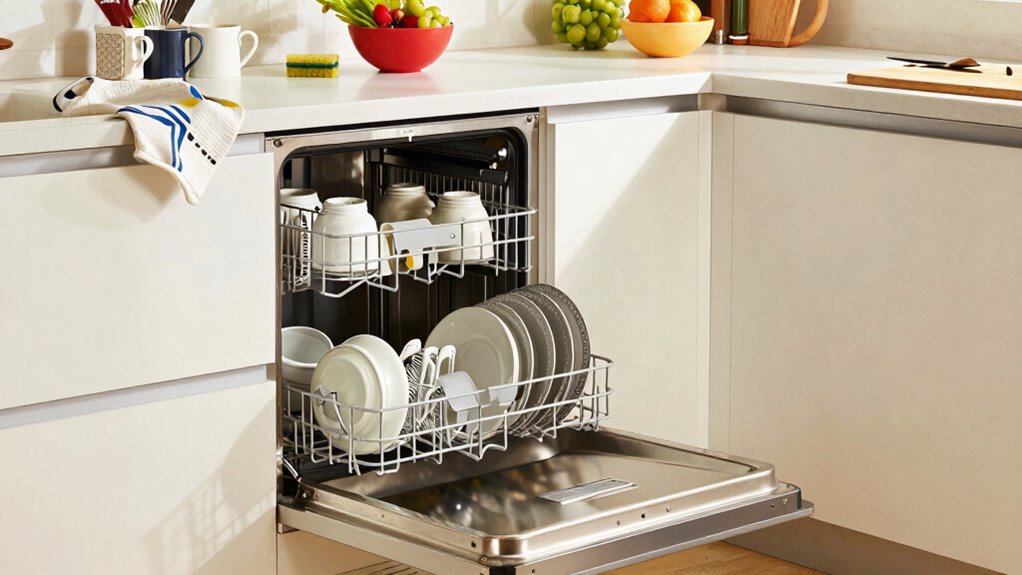

Efficient appliances don’t automatically create energy-saving habits because you need to consciously use and maintain them properly. Simple actions like closing the fridge door or avoiding overloading the washer require effort and routine. Without regular maintenance and intentional behavior, these appliances won’t reach their full potential. Developing habits takes awareness and effort, even with high-efficiency devices. If you keep exploring, you’ll discover how combining maintenance and habits leads to better energy savings.

Get garden gear delivered free — and shop member deals
- Fast, free delivery on millions of items
- Access to Prime Big Deal Days deals on October 6–7
- Prime Video, Amazon Music and more included
Key Takeaways
- People often assume new appliances will automatically lead to energy-saving behaviors without intentional habit changes.
- Proper maintenance and routine use are necessary to ensure appliances operate efficiently, but habits influence actual usage.
- Without conscious effort, users may neglect simple practices like turning off appliances or scheduling loads efficiently.
- Relying solely on high-efficiency appliances ignores the importance of behavioral adjustments for maximum savings.
- Developing energy-conscious routines is essential, as efficient appliances alone don’t promote proper usage habits.
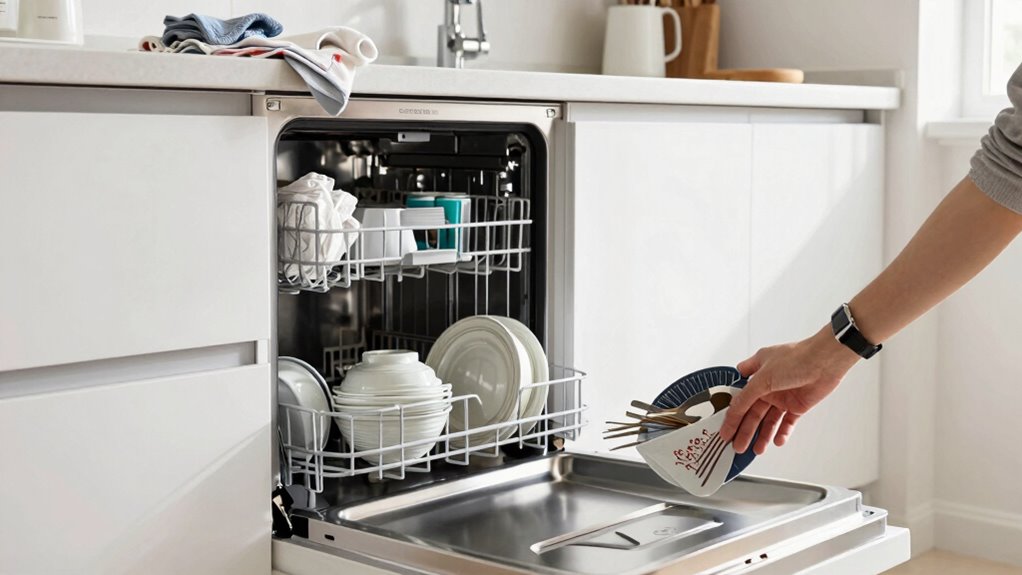
Efficient appliances need proper maintenance to perform at their best. You might buy a high-efficiency washing machine, but if you neglect routine maintenance like cleaning filters or inspecting hoses, it won’t work as efficiently as intended. Small tasks like descaling a dishwasher or regularly changing filters can make a noteworthy difference in energy consumption. Without maintenance, appliances may work harder than necessary, wasting energy and reducing the benefits of their design. It’s easy to forget or overlook these tasks, but establishing a routine for appliance upkeep guarantees they operate at their peak, ultimately saving you money and energy. Additionally, understanding the importance of appliance efficiency can motivate more consistent maintenance habits. Recognizing the role of routine maintenance in sustaining appliance performance helps reinforce these habits.
Regular appliance maintenance ensures optimal performance, saving energy and money through small but vital routine tasks.
Regularly monitoring appliance performance can help identify issues early, preventing energy waste and costly repairs. However, even with well-maintained appliances, your habits determine how much energy you actually save. Habit formation is essential. For example, simply turning off lights when you leave a room or unplugging chargers when they’re not in use can add up over time. These small actions, repeated consistently, become automatic and substantially reduce unnecessary energy use. Developing energy-conscious habits can significantly enhance the benefits of efficient appliances and make your efforts more effective. The challenge is that old habits die hard. You might find yourself defaulting to old routines, like leaving appliances on standby or forgetting to switch off devices after use. Changing these behaviors requires conscious effort initially, but over time, they become second nature.
It’s also important to recognize that relying solely on efficient appliances without adjusting your habits won’t maximize savings. A new fridge won’t save energy if you keep the door open unnecessarily or overfill it. Similarly, a high-efficiency dryer won’t be as effective if you run it multiple times a day or dry small loads. Developing new habits around appliance use is essential. Making a conscious effort to plan laundry loads, use appliances during off-peak hours, and avoid overuse can drastically improve efficiency. These small behavioral shifts, reinforced through habit formation, ensure that your investments in efficient appliances truly pay off.
In short, efficient appliances are a great start, but they don’t create energy-saving habits on their own. Proper appliance maintenance keeps them running smoothly, while consciously forming new routines ensures you leverage their full potential. Combining these approaches guarantees that your efforts toward energy efficiency are sustainable and genuinely impactful. Recognizing the role of habit formation and routine maintenance is key to maximizing your energy savings over time.
As an affiliate, we earn on qualifying purchases.
Frequently Asked Questions
How Long Does It Take to Change Habitual Behaviors?
Changing habitual behaviors usually takes around 21 to 66 days, depending on the person and behavior. To speed up the process, use motivation strategies like setting clear goals and rewarding progress. Consistency in your routine is essential—try to perform the new behavior at the same time and place daily. Over time, these efforts help solidify habits, making them automatic and less effortful.
Can Incentives Influence Habit Formation More Than Appliances?
Incentive structures and behavioral nudges act like gentle winds guiding your habits, often more powerfully than appliances alone. You’re more likely to change your routine if rewards or subtle prompts spark your motivation. Appliances may be the compass, but incentives and nudges are the wind that fills your sails, steering you toward consistent, efficient behaviors. Without these psychological guides, habits can drift, no matter how advanced your appliances are.
What Role Does Education Play in Developing Efficient Habits?
Education plays a vital role in developing efficient habits by applying behavioral psychology and effective learning strategies. When you understand the reasons behind energy-saving practices, you’re more likely to adopt them consistently. Learning strategies like repetition, positive reinforcement, and clear goal-setting help reinforce new behaviors. By gaining knowledge and understanding, you build motivation and confidence, making it easier to turn energy-efficient actions into lasting habits.
Are There Psychological Barriers to Adopting Efficient Habits?
You may face psychological barriers like behavioral resistance and motivation gaps that make adopting efficient habits challenging. Even with efficient appliances, old routines die hard, and you might struggle to stay motivated or change ingrained behaviors. These barriers cause hesitation or inconsistency, preventing habits from sticking. Recognizing these psychological hurdles helps you develop strategies, such as setting small goals or rewarding progress, to overcome resistance and build lasting efficiency.
How Can Communities Support Sustainable Habit Changes?
You can support sustainable habit changes through active community engagement that encourages collective responsibility. By fostering social norms that prioritize eco-friendly actions, you inspire others to follow suit. Organize local events, share success stories, and create platforms for open discussion. When everyone participates and models sustainable behaviors, it becomes part of the community’s identity, making it easier for individuals to adopt and maintain eco-conscious habits naturally.
Conclusion
While upgrading to efficient appliances helps reduce energy use, it won’t automatically make your habits more eco-friendly. Think of it like buying a smart thermostat—you still need to set it wisely and adjust your routines. Without conscious effort, you might leave lights on or run appliances unnecessarily, wasting the savings. Remember, technology alone isn’t enough—you must actively choose to adopt habits that support your goals. Only then will your efforts truly pay off for both your wallet and the planet.
Fall yard work Picks
leaf blowers
As an affiliate, we earn on qualifying purchases.