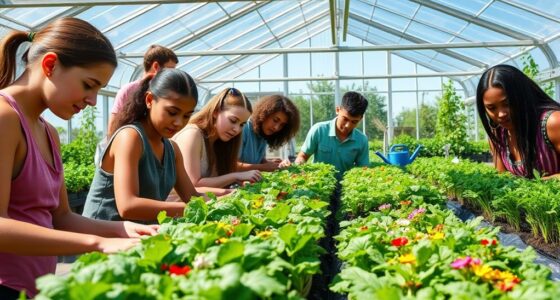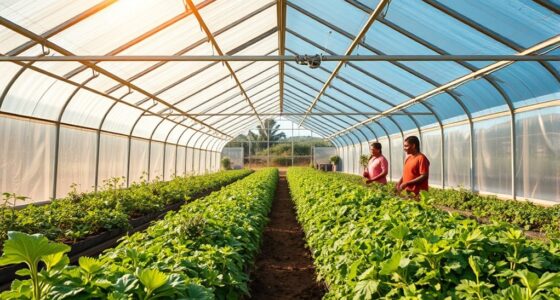

Partnering with the community makes school greenhouses more successful by bringing in extra resources, expertise, and support. Your students gain hands-on learning in sustainability and urban farming, while community members can collaborate through workshops and projects. These partnerships foster pride, strengthen local networks, and create opportunities for entrepreneurship. When you involve the community, your greenhouse becomes more than a classroom—it’s a hub for growth, connection, and real-world impact. Keep exploring to see how these partnerships truly transform your school environment.

Get garden gear delivered free — and shop member deals
- Fast, free delivery on millions of items
- Access to Prime Big Deal Days deals on October 6–7
- Prime Video, Amazon Music and more included
Key Takeaways
- Community partners provide essential resources, mentorship, and funding that sustain and enhance greenhouse programs.
- Collaboration connects schools with local expertise, fostering real-world learning and career pathways.
- Partnerships create shared spaces for community engagement, building pride and social ties around sustainability efforts.
- Working with local food initiatives and environmental projects amplifies the greenhouse’s impact on urban food security.
- Community involvement transforms greenhouses into catalysts for broader community development and student leadership.
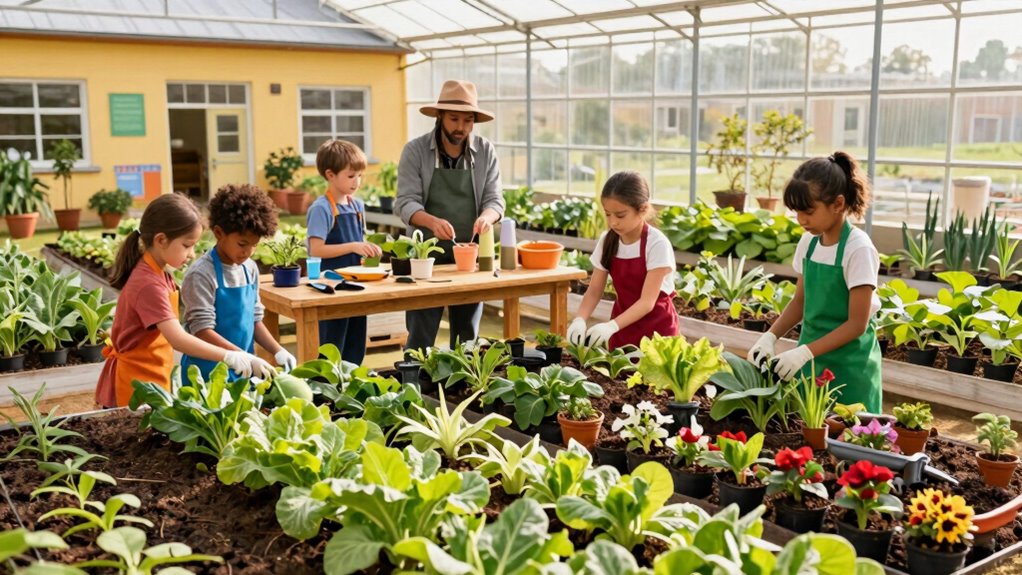
Have you ever wondered how school greenhouses can transform both education and community engagement? When you introduce a greenhouse into your school’s environment, you’re opening up opportunities for students to connect with real-world issues like urban agriculture. These green spaces become living classrooms where students not only learn about plant biology or sustainability but also develop a deeper understanding of how food systems work within a city. By integrating urban agriculture into the curriculum, you help students see the tangible impact they can have on their community, fostering a sense of purpose and responsibility. This hands-on learning approach boosts student engagement because it makes lessons meaningful and relevant to their everyday lives.
Partnering with community organizations amplifies the benefits of a school greenhouse. These partnerships bring in expertise, resources, and diverse perspectives that a school alone might struggle to access. Local farms, gardening nonprofits, or city agriculture programs can provide mentorship, supplies, and even funding, making the greenhouse more sustainable and impactful. When community partners get involved, they see the greenhouse as a way to nurture local talent and promote food security. Students, in turn, gain exposure to careers and pathways they might not have considered before, increasing their motivation and curiosity.
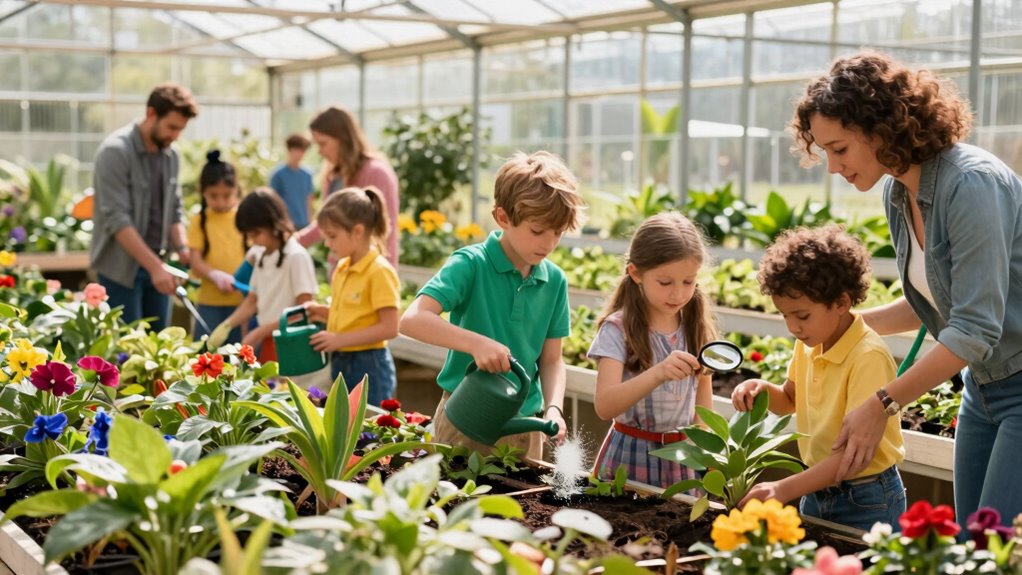
Community partners provide mentorship, resources, and funding, making school greenhouses more sustainable and inspiring student career exploration.
Community partnerships also help bridge the gap between the school and the neighborhood, creating a shared space for collaboration. This can foster community pride and ownership, encouraging families and residents to participate in gardening days, workshops, or farmer’s markets held at the greenhouse. These activities turn the greenhouse into a hub of community activity, strengthening social ties and promoting a collective investment in local well-being. When students see their school working alongside community members on projects like urban farming or composting initiatives, they realize the importance of teamwork and civic engagement. Incorporating urban agriculture practices into these projects further emphasizes the importance of sustainable food production in urban settings. Additionally, integrating community involvement into the greenhouse activities ensures a broader support network and shared responsibility for its success. Building these partnerships also encourages the development of local food initiatives, which can help improve access to fresh produce in underserved neighborhoods.
Furthermore, these partnerships can extend beyond the greenhouse itself. They open doors for students to participate in local food initiatives, environmental projects, or entrepreneurship ventures. This expands their understanding of sustainability and economic development within their city. It’s an effective way to prepare students for future roles as community leaders or environmental advocates. Additionally, leveraging small wood stoves in community projects can serve as practical demonstrations of sustainable practices in urban settings. By combining education with community involvement, school greenhouses become more than just a classroom—they become catalysts for community transformation. This synergy encourages student engagement, fosters urban agriculture practices, and creates a sense of shared purpose that benefits everyone involved.
As an affiliate, we earn on qualifying purchases.
Frequently Asked Questions
How Do Community Partners Choose Which Projects to Support?
You choose projects based on how well they promote community engagement and align with shared goals. Consider the project’s impact on students, sustainability, and local needs. You evaluate the potential for collaboration and how it fosters learning or environmental benefits. By prioritizing projects that resonate with community values and offer long-term benefits, you guarantee your support makes a meaningful difference. This thoughtful project selection strengthens partnerships and maximizes positive outcomes.
What Funding Sources Are Available for School Greenhouses?
You can find funding for school greenhouses through various sources like fundraising opportunities and grant applications. Local businesses, community organizations, and parent groups often contribute through fundraising events. Additionally, many grants are available from government agencies, educational foundations, and environmental programs specifically designed to support school projects. Applying for these grants and organizing fundraising activities can provide the necessary funds to build and maintain a successful greenhouse, engaging students and the community alike.
How Do Greenhouses Enhance Student Learning Outcomes?
Greenhouses enhance your student’s learning outcomes by immersing them in plant cultivation and environmental education. They actively engage students in hands-on experiments, fostering critical thinking and problem-solving skills. Through nurturing plants and understanding ecosystems, students develop a deeper appreciation for sustainability and science. Greenhouses turn theoretical lessons into real-world experiences, making learning more meaningful, memorable, and motivating, ultimately preparing them for future environmental challenges.
What Challenges Do Partnerships Face in Maintaining Greenhouses?
Partnerships often face funding hurdles that make maintaining greenhouses challenging, especially for ongoing supplies and equipment. You might also encounter issues with partner engagement, where some partners lose interest or can’t commit long-term. To overcome these challenges, you need clear communication, shared goals, and consistent support. Building strong relationships guarantees everyone stays invested, helping the greenhouse thrive and continue benefiting students and the community.
How Can Schools Measure the Success of Community Collaborations?
Imagine a thriving greenhouse bursting with life, much like your community impact. You can measure success through partnership appraisal, tracking student engagement, skill development, and project sustainability. Coincidences like increased local support or student-led initiatives highlight positive outcomes. By regularly evaluating these indicators, you’ll see how your collaboration fosters growth, education, and community resilience, proving the partnership’s value and guiding future improvements.
Conclusion
By teaming up with community partners, your school greenhouse becomes more than just a garden—it transforms into a thriving hub of learning and connection. These collaborations are the roots that deepen engagement and expand resources, allowing students to grow alongside their community. Together, you create a symphony of support that nurtures both the plants and the people involved. When community and education intertwine, the greenhouse blossoms into a beacon of hope and opportunity, shining brightly for all to see.
Fall Picks
fall essentials
As an affiliate, we earn on qualifying purchases.