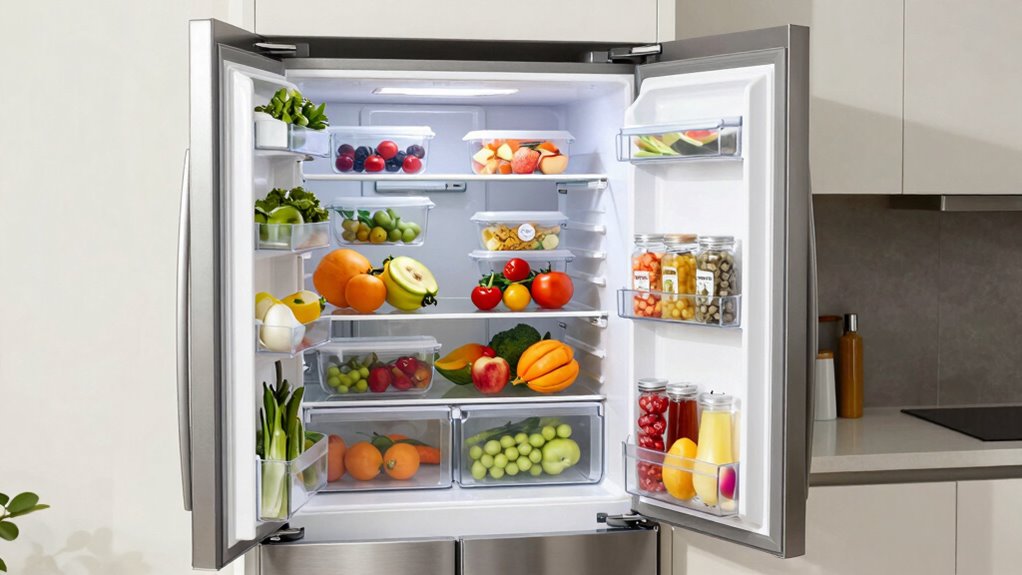

Organizing your fridge and freezer allows you to easily see what you have, reducing forgotten or spoiled food. Clear labels, proper packaging, and regular checks keep everything fresh longer, minimizing waste. Planning meals around your stored ingredients makes grocery trips more efficient and prevents duplicates. This strategy lowers stress by making meal prep smoother and your kitchen tidier. Keep exploring to learn specific tips that can transform your food management and further cut waste and worry.

Get garden gear delivered free — and shop member deals
- Fast, free delivery on millions of items
- Access to Prime Big Deal Days deals on October 6–7
- Prime Video, Amazon Music and more included
Key Takeaways
- Organized storage and clear labeling prevent forgotten items, reducing food waste and last-minute shopping stress.
- Freezing leftovers and seasonal produce extends freshness, minimizing spoilage and unnecessary disposal.
- Proper packaging and temperature monitoring maintain food quality, lowering the risk of freezer burn and waste.
- Planning meals based on available ingredients avoids duplicates, saving money and reducing household stress.
- Regularly checking and maintaining fridge/freezer conditions ensures optimal preservation, decreasing waste and operational worries.
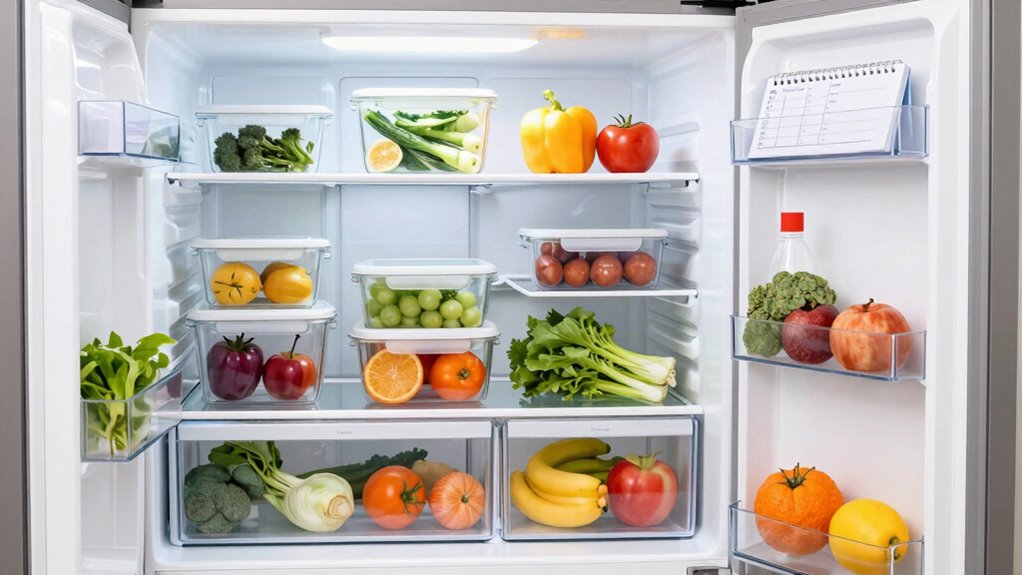
Have you ever wondered if your fridge and freezer are working together as efficiently as they could? If so, you’re not alone. Many people overlook how a well-coordinated fridge and freezer strategy can drastically reduce waste and stress in your daily routine. When you develop a smart system for food preservation and meal planning, you’ll find it easier to keep track of what you have, avoid spoilage, and save money.
Start by organizing your fridge and freezer so that everything is accessible and visible. When your items are properly stored, you’re less likely to forget about leftovers or perishables, which often end up in the trash. Use clear containers and labels to keep food sorted by type or meal plan. This way, you can quickly see what needs to be used up and plan your meals around those ingredients. Meal planning becomes more straightforward when you know exactly what’s available, helping you avoid last-minute trips to the store or impulse buys that can lead to waste. Additionally, understanding the benefits of freezing can help you optimize your storage and reduce food loss.
Organize your fridge and freezer with clear containers and labels for easy access and reduced waste.
Food preservation is key, and your freezer is your best tool for this. Freeze leftovers, bulk purchases, and seasonal produce to extend their shelf life. When you freeze food promptly, you prevent spoilage and reduce the pressure to eat everything immediately. Proper packaging—using airtight containers or freezer bags—ensures that food stays fresh longer and avoids freezer burn. Keep a record of what’s in your freezer, either with a list on the door or a digital note, so you can rotate items and avoid freezer clutter. This practice helps you use what you have before buying more, ultimately minimizing waste. Incorporating a climate-controlled environment for your freezer can further improve food preservation and energy efficiency. Regularly checking your freezer’s temperature and defrosting when necessary also helps maintain optimal conditions. Using a temperature monitoring system can provide additional peace of mind and efficiency.
Meal planning also benefits from a thoughtful fridge strategy. By planning your weekly meals around what’s already in your fridge and freezer, you’re less likely to buy duplicates or ingredients you won’t use. This reduces food waste and makes grocery shopping more efficient. Additionally, you can prep ingredients in advance, storing them properly to use throughout the week. When your fridge is organized according to your meal plan, you’ll feel less overwhelmed and more confident in your cooking choices. Moreover, staying aware of food storage guidelines can help you determine the best way to store different types of food for maximum freshness.
In the end, a well-executed fridge and freezer strategy isn’t just about saving food—it’s about saving time, money, and stress. When you regularly manage your food preservation and meal planning, you create a smoother, more sustainable household routine. You’ll find that waste decreases, your kitchen stays tidier, and mealtime stress diminishes because you’re always prepared with what you need. The best part? You’ll enjoy knowing that your efforts are making a real difference in reducing waste and making your life easier every day.
clear food storage containers with lids
As an affiliate, we earn on qualifying purchases.
As an affiliate, we earn on qualifying purchases.
Frequently Asked Questions
How Often Should I Clean My Fridge and Freezer?
You should clean your fridge and freezer every three to four months. Regular cleaning helps maintain proper food storage and prevents mold or spoilage. During your cleaning routines, wipe down shelves, discard expired items, and check for any leaks or spills. This keeps your appliances hygienic, reduces waste, and guarantees you’re always ready to store fresh food efficiently. Staying consistent with cleaning routines makes your kitchen more organized and stress-free.
What Are the Best Containers to Organize Food?
A place for everything, and everything in its place. To organize food effectively, use stacking bins for maximizing space and airtight containers to keep leftovers fresh. Clear containers help you see what’s inside at a glance, reducing waste. Stacking bins save space and keep things tidy, while airtight containers prevent spills and spoilage. Together, they make your fridge and freezer more efficient, stress-free, and less wasteful.
How Can I Prevent Freezer Burn Effectively?
To prevent freezer burn effectively, focus on proper freezer organization and preventing moisture buildup. Wrap food tightly with airtight containers or heavy-duty freezer bags, squeezing out excess air. Label and date everything to avoid overfreezing. Keep your freezer at a consistent temperature, ideally 0°F (-18°C). Regularly check for and discard any items with ice crystals or freezer burn. Proper organization helps you quickly identify items and maintain quality.
What Temperature Should My Fridge and Freezer Be Set To?
Your fridge should be set to around 37-40°F (3-4°C), and your freezer to 0°F (-18°C) for ideal cooling—these temps keep food fresh and prevent spoilage. Think of it as a magic number that keeps your food safe and tasty! Regular temperature calibration ensures your appliances stay precise, avoiding waste and stress. Keep an eye on the thermometer to make sure your fridge and freezer stay in this perfect zone.
How Do I Track Expiry Dates Efficiently?
To track expiry dates efficiently, you should implement a simple system using expiration tracking and inventory management. Label items with clear, visible dates using stickers or a marker. Regularly check your fridge and freezer, updating your inventory list with upcoming expiry dates. This way, you stay aware of what’s expiring soon, reducing waste and stress. Consistency is key—make it part of your routine to keep everything organized and fresh.
Conclusion
By mastering your fridge and freezer strategy, you hold the keys to reducing waste and stress. Think of your appliances as guardians of your resources, protecting freshness and order within. When you organize with purpose, you create a sanctuary where food lasts longer, and chaos stays at bay. Embrace this routine, and you’ll find that your kitchen becomes a haven of harmony—an anchor that keeps your life balanced and your environment sustainable.
Fall yard work Picks
leaf blowers
As an affiliate, we earn on qualifying purchases.