
The Haines 2.0 SunUp Solar Cooker and Dutch Oven Kit is a portable, sun-powered cooker aimed at campers, outdoor cooks, and households that want a backup cooking option without relying on fuel. Its main advantage is the combination of adjustable reflective panels and a Dutch oven in a package designed to set up outdoors. The central drawback is equally clear: cooking depends on direct, usable sunlight, so timing and results are less predictable than with a conventional camping stove. It is worth considering for patient cooks in sunny conditions, but not as a dependable all-weather or primary emergency cooker.

Get garden gear delivered free — and shop member deals
- Fast, free delivery on millions of items
- Access to Prime Big Deal Days deals on October 6–7
- Prime Video, Amazon Music and more included
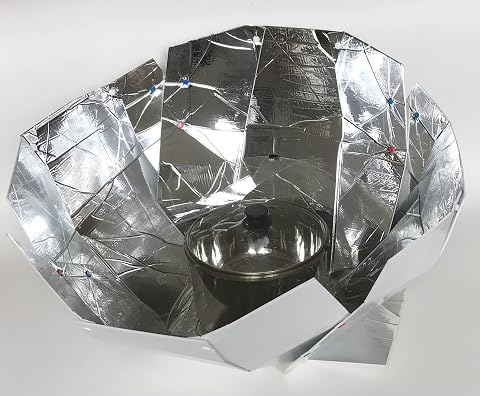
Haines 2.0 SunUp Solar Cooker and Dutch Oven Kit
- ✔ Capacity: 4 quarts
- ✔ Dimensions: 35 x 35 x 20 inches
- ✔ Material: Ceramic
Why This Product Stands Out
The SunUp stands apart from ordinary portable camping stoves by treating sunlight as its heat source. That changes the main buying question: it is less about how quickly the cooker heats and more about whether the user can choose a sunny spot, set it up at a useful time, and let the meal cook without needing immediate results. For buyers with a predictable outdoor routine, the fuel-free approach has a clear purpose. For those who need cooking on demand, it is a substantial compromise.
Within the solar-cooker category, the kit’s notable strength is its combination of adjustable reflectors and a Dutch oven. The four-quart vessel gives it a useful role for covered, one-pot cooking, while the portable design makes it more plausible for camping than a permanently installed solar appliance. But the cooker should not be mistaken for a weather-independent oven: its stated temperature rating of 325 °F does not remove the need for suitable sun, and no temperature rating can make cloudy conditions equivalent to clear ones.
That puts the Haines in a specialized middle ground. It offers a more structured cooking setup than a simple solar oven bag, while remaining a different proposition from a foldable fuel-powered camping oven or a dedicated solar barbecue. Those alternatives may suit buyers who prioritize quicker heat, different cooking styles, or less reliance on a particular sun window. The Haines makes the strongest case for people who value fuel-free cooking more than speed.
Key Features and What They Mean
The adjustable reflective panels are the feature that makes this kit more useful than a fixed-angle solar cooker: users can redirect sunlight as its position changes, helping keep a long cook on track without moving the whole setup. That is valuable for patient cooks preparing a meal over several hours in a reliably sunny location. The panels do not solve the central limitation, however; if clouds or shade cut off usable sunlight, adjustment cannot provide replacement heat. This feature is compelling for planned sunny-day cooking, but offers little advantage to buyers who need consistent, on-demand results.
The included four-quart Dutch oven gives the cooker a clear practical role: covered, one-pot dishes such as soups and stews can be prepared in a single vessel, reducing the amount of cookware a camper needs to pack. That format suits couples and small households, though larger groups may need smaller portions or multiple rounds. The ceramic material and polished finish are listed specifications, not proof of better heat retention, easier cleaning, or greater impact resistance. Buyers should value the oven for its capacity and meal format, while handling it with appropriate care during transport.
At 35 × 35 × 20 inches, the cooker needs a sizeable open patch or stable surface. The footprint gives the reflectors room to collect sunlight, supporting the product’s core cooking method and making it more practical than a tiny solar device for a covered meal. The trade-off is real: crowded campsites, small patios, and tightly packed gear make setup less convenient. It is portable between locations, but not compact in use, so buyers benefit most when they can reserve a clear, sunny cooking area.
The 325 °F rating gives buyers a stated upper temperature reference, but it should not be read as a reliably available cooking temperature. Actual results depend on sunlight and exposure, which makes the rating less useful for planning than a controllable burner setting. Weather-resistant construction is a sensible advantage for equipment used outdoors and may make routine outdoor handling less concerning, but it does not remove the need for sensible storage or overcome poor cooking conditions. Overall, the features support a capable, self-contained solar setup for the right sunny-day user; they do not make it a dependable replacement for fuel-powered cooking.
Performance and Real-World Use
In day-to-day use, the Haines is best understood as a planned cooking method, not an instant heat source. The user needs direct sunlight, a location with room for the reflective panels, and enough time for the meal to cook. Adjustable panels offer some control over how the cooker is aimed, but changing sunlight or unexpected cloud cover can still affect the schedule. That makes it more suitable for meals that can wait than for cooking when a fixed serving time matters.
The portable design and simple setup are advantages for campsites, emergency kits, or backyard use, particularly for someone already comfortable arranging outdoor gear. Yet the cooker’s 35-inch-wide footprint calls for more open space than a compact stove. A shaded site, tree cover, or crowded pitch can limit where it works. Its straightforward setup does not mean there is no learning curve: users need to select a sunny position and account for changing light rather than simply turning a control knob.
For maintenance and durability, weather-resistant materials are a sensible fit for outdoor equipment, but no construction claim can protect cooking performance from poor conditions. The ceramic Dutch oven also calls for care appropriate to ceramic cookware, especially during transport. The product’s most reliable day-to-day role is as a supplementary cooker for sunny occasions, rather than as the only means of preparing meals on a trip or during an emergency.
Who Should Buy This
The Haines 2.0 SunUp makes sense for campers, backyard cooks, and preparedness-minded households who have dependable access to direct sunlight and are willing to schedule meals around it. It is particularly appealing to someone who wants to reduce reliance on cooking fuel during sunny outdoor days and usually prepares modest, covered one-pot meals. Buyers should have enough open space for the cooker and be comfortable treating solar cooking as a slower alternative rather than expecting stove-like responsiveness. As a backup, it can add a fuel-free option, provided the household also has another plan for nights, shade, and poor weather.
Who Should Skip This
Skip this cooker if you need predictable meal times, fast heat, or all-weather reliability. It is a mismatched choice for campers who regularly cook under tree cover, travel in cloudy climates, or need to prepare dinner after sunset. Large families and group campers may also find the four-quart capacity restrictive, especially when several dishes must be ready together. If the main need is a dependable emergency cooker, a fuel-powered option is a stronger primary choice; if the goal is a compact cooking tool with a different outdoor format, the GoSun Solar Barbecue or a solar oven bag may be worth comparing, while the VEVOR foldable camping oven is the more relevant alternative when fuel-based heat and a grill-style setup matter more than solar operation.
Value for Money
The value case rests on a fairly narrow benefit: cooking with sunlight instead of conventional fuel. For people who will use it regularly in clear conditions, the portable setup, adjustable reflectors, and included Dutch oven form a more complete package than a basic solar cooking accessory. For occasional users, or anyone whose trips often involve cloud, shade, or a strict meal schedule, that benefit may not outweigh the limits. Its mid-range positioning should be judged against how often the buyer can actually cook in sun, not simply against the idea of fuel-free cooking. A VEVOR foldable camping oven is the more sensible comparison for buyers who prioritize controllable heat, while the GoSun Solar Barbecue or a solar oven bag may suit those seeking a different solar-cooking format. The Haines is worth the outlay only when its specific mix of a Dutch oven and adjustable solar panels matches a regular use case.
Haines 2.0 SunUp Solar Cooker and Dutch Oven Kit
The SunUp stands apart from ordinary portable camping stoves by treating sunlight as its heat source . That changes the main buying question: it is less about how quickly the cooker heats and more about whether the user can choose a sunny spot, set it up at a useful time, and let the meal cook without needing immediate
Pros:
- Solar cooking avoids using conventional fuel during suitable daylight conditions, which can reduce fuel needs on extended camping trips.
- The adjustable reflective panels give users a way to direct sunlight toward the cooker as conditions change, rather than relying on a fixed reflector position.
- Its portable design and straightforward setup suit campsites, patios, and other outdoor locations where carrying a full-size oven is impractical.
- The included four-quart Dutch oven supports covered, one-pot meals, making it a practical format for stews and similar dishes.
- Weather-resistant construction is intended for outdoor use, where cookware and equipment face more exposure than they would in a kitchen.
Cons:
- Performance depends on direct sunlight, so cloud cover, shade, season, and time of day can make cooking slow or impractical.
- The four-quart capacity is better suited to a small household or modest camp meal than to feeding a large group.
- Solar cooking requires planning and patience; it cannot offer the quick heat adjustment or predictable timing of a gas or other fuel-powered stove.
- Its large open dimensions require a sunny, unobstructed setup area, which can be inconvenient at crowded campsites or in limited outdoor space.
Best for: Campers and outdoor cooks who can plan meals around strong sunlight and want a portable, fuel-free cooking option for modest portions.
Not ideal for: People who need fast, reliable cooking in cloudy weather, after dark, or for a large group.
Bottom line: The Haines 2.0 SunUp Solar Cooker and Dutch Oven Kit is a conditional buy : a practical niche cooker for sunny outdoor meals, not a universal replacement for a camping stove.
Frequently Asked Questions
Can the Haines 2.0 SunUp cook when it is cloudy?
It depends on how much direct sunlight reaches the reflective panels. The cooker is designed around solar input, so heavy cloud or shade can slow cooking or make it impractical. It is a poor choice as the only cooking method when weather is uncertain.
Is the four-quart Dutch oven large enough for a family?
The four-quart capacity can suit a small family meal or a modest one-pot dish, but it is limited for larger households and group camping. Consider how many portions you usually cook and whether you need several dishes ready at once.
Is this a good emergency cooker?
It can serve as a supplementary emergency cooking option when there is direct sun and a safe outdoor place to set it up. It cannot reliably cover emergencies at night or during cloudy weather, so it should not replace a more dependable backup heat source.
Should I choose this over a foldable camping oven?
Choose the Haines if you specifically want solar-powered cooking and can plan around daylight. A fuel-powered foldable camping oven, such as the VEVOR option, is a better fit when you need more direct control over heat and less dependence on weather.
Does the cooker’s 325 °F rating mean it will always reach that temperature?
No. The rating is a listed specification, not a promise that the cooker will reach that temperature in every setting. Actual cooking depends on sunlight and exposure, so buyers should not treat the number as a substitute for reliable conditions.
Final Thoughts
The Haines 2.0 SunUp Solar Cooker and Dutch Oven Kit is a conditional buy: a practical niche cooker for sunny outdoor meals, not a universal replacement for a camping stove. Choose it if fuel-free cooking, a four-quart one-pot setup, and portable outdoor use matter more than speed and schedule control. Pass if your trips involve unreliable sunlight, if you cook for a crowd, or if you need an emergency appliance that works regardless of the weather. For those buyers, a fuel-powered camping oven or stove is the safer primary choice; the Haines earns its place as a supplementary cooker when the sun is likely to cooperate.
Fall yard work Picks
leaf blowers
As an affiliate, we earn on qualifying purchases.