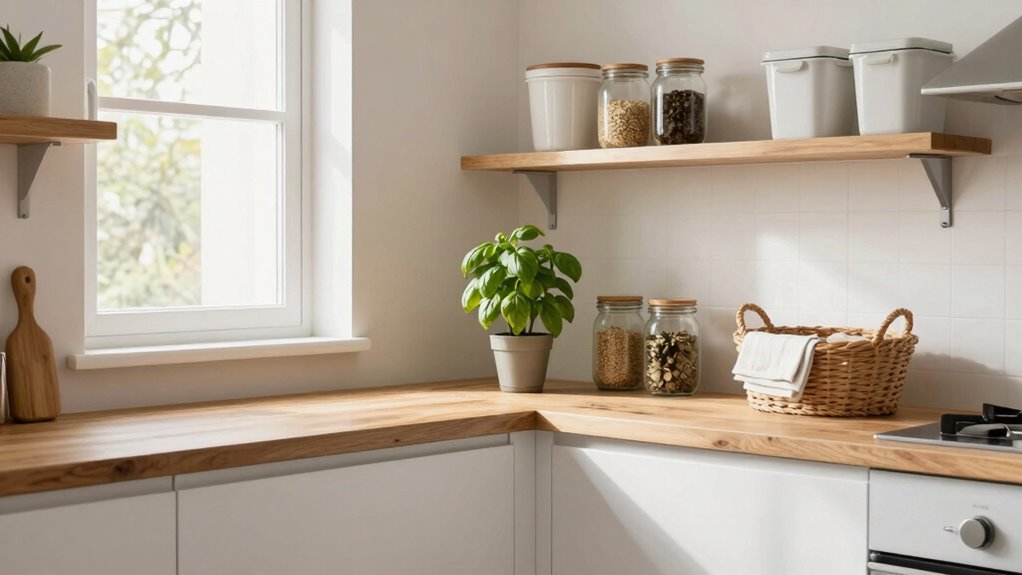

Even in small kitchens, you can support low-waste living by using reusable containers instead of plastic bags and bins. Keep food scraps for composting to reduce trash and nourish your garden. Choose compact compost bins that fit easily in your space and control odors. Focus on mindful purchasing, avoiding excess packaging, and organizing with transparent containers. Small changes like these make a big difference, so explore how to maximize your efforts and create a greener space.
Key Takeaways
- Use compact, reusable containers for storage and bulk shopping to minimize packaging waste.
- Implement small, odor-sealed compost bins to recycle food scraps efficiently in limited space.
- Incorporate simple routines like meal planning and mindful purchasing to reduce unnecessary waste.
- Maximize organization with transparent containers to enhance visibility and prevent overbuying.
- Engage with community compost and waste programs to extend low-waste practices beyond the kitchen.
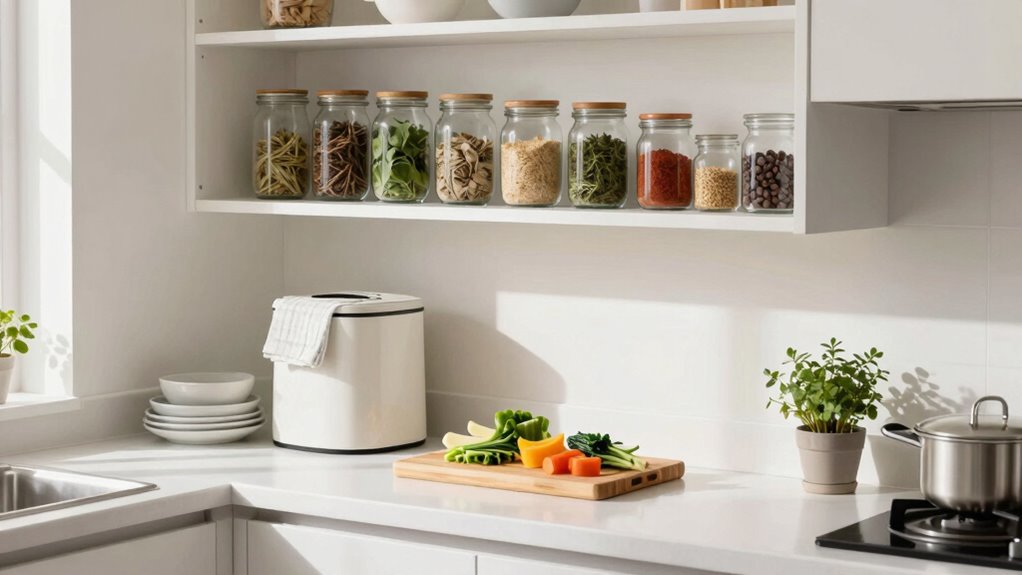
Have you ever wondered how small kitchens can actually support a low-waste lifestyle? Even with limited space, you can make impactful changes that reduce your environmental footprint. One of the simplest ways is by investing in reusable containers. Instead of relying on single-use plastic bags, consider stacking your pantry with glass or stainless-steel containers. They keep food fresh longer and eliminate the need for disposable wraps. When shopping, bring your containers to bulk stores to fill them up with grains, nuts, or snacks, cutting down on packaging waste. These containers aren’t just practical—they also help you organize your small space more efficiently, making it easier to see what you have and avoid unnecessary purchases.
In a small kitchen, composting might seem tricky, but it’s totally doable with the right tips. Start by choosing a compact compost bin that fits comfortably on your countertop or under the sink. Look for one with a tight-sealing lid to control odors. Composting reduces food scraps from ending up in the trash, where they generate methane, a potent greenhouse gas. To make it easier, establish a routine of collecting vegetable peelings, coffee grounds, eggshells, and other compostable waste. Keep a small container near your prep area so you can toss scraps directly into your compost bin throughout the day. When it’s full, take it out to a community compost site or, if you have space, set up a small compost pile outside. Incorporating composting tips into your routine not only minimizes waste but also nourishes your garden if you have one. Additionally, understanding the importance of biodiversity can motivate you to reduce waste and protect local ecosystems. Recognizing the role of indigenous knowledge in sustainable practices can inspire you to explore traditional ways of waste reduction and resource management. Developing a mindful approach to resource management can help you make smarter choices about what you buy and how you dispose of waste. Incorporating local waste management systems can further streamline your efforts and connect you with community initiatives.
Living low-waste in a small kitchen requires a little planning, but it’s well worth the effort. Reusable containers help you cut down on packaging and keep clutter at bay. Meanwhile, composting tips enable you to transform food scraps into valuable compost, reducing trash and environmental impact. A mindful approach to resource management can further enhance your efforts by encouraging smarter purchasing habits and waste reduction. Don’t let your limited space discourage you; instead, embrace these simple swaps and routines. Over time, you’ll find that small changes can lead to big results, making your kitchen more sustainable and your lifestyle more aligned with your eco-friendly values. Remember, even tiny kitchens can contribute to a healthier planet when you thoughtfully implement low-waste habits.
compact reusable food storage containers
As an affiliate, we earn on qualifying purchases.
As an affiliate, we earn on qualifying purchases.
Frequently Asked Questions
How Can I Store Bulk Items Efficiently in a Small Kitchen?
You can store bulk items efficiently in your small kitchen by using reusable storage solutions like fabric bags or glass jars. Opt for clear containers so you can easily see what’s inside, reducing waste and clutter. Stack and organize these containers to maximize space. Label them for quick identification. This approach keeps your bulk items fresh, accessible, and neatly stored, helping you maintain a low-waste lifestyle even in a compact kitchen.
What Are Space-Saving Composting Options for Tiny Kitchens?
Did you know that nearly 30% of household waste is compostable? In a tiny kitchen, space-saving composting options like compact composting bins are perfect. You can choose countertop models that fit in a corner or under-sink containers to save space. Kitchen composting becomes easier with these small, odor-controlled bins that allow you to compost effortlessly without cluttering your limited space, making low-waste living more achievable.
How Do I Reduce Plastic Use in a Small Kitchen?
To reduce plastic use in your small kitchen, switch to sustainable cleaning products in refillable bottles and choose bulk options to minimize packaging. Use reusable containers for storing food instead of plastic wrap or bags. Avoid single-use plastics by opting for glass, metal, or silicone alternatives. These small changes help cut down plastic waste, making your kitchen more eco-friendly while keeping your space organized and clutter-free.
Are There Low-Waste Meal Prep Tips for Small Spaces?
Think of your small kitchen as a tiny garden—you can still grow plenty with careful planning. Use meal planning to minimize leftovers and reduce waste. Opt for reusable containers to store prepped ingredients and leftovers, cutting down on single-use packaging. By organizing efficiently and prepping in advance, you make the most of your space, keeping waste low and your meals fresh, just like nurturing a thriving, sustainable garden.
How Can I Organize Zero-Waste Essentials in Limited Cabinet Space?
You can organize zero-waste essentials in limited cabinet space by using stackable or nesting reusable containers to save room. Place recycling bins near your workspace for easy access, choosing compact or slim models that fit your space. Use hooks or magnetic strips on the inside of cabinet doors for storing reusable bags or utensils. Prioritize multifunctional items, and keep frequently used essentials within reach to maintain an organized, low-waste kitchen.
Conclusion
Even in a tiny kitchen, you can turn waste into a thing of the past, like a phoenix rising from the ashes. With mindful planning, you’ll find that small spaces can be mighty in supporting low-waste living. By embracing creative storage, composting, and smart shopping, you’re not just making the most of your kitchen—you’re helping the planet breathe a little easier. Remember, big change often starts with the smallest of spaces.