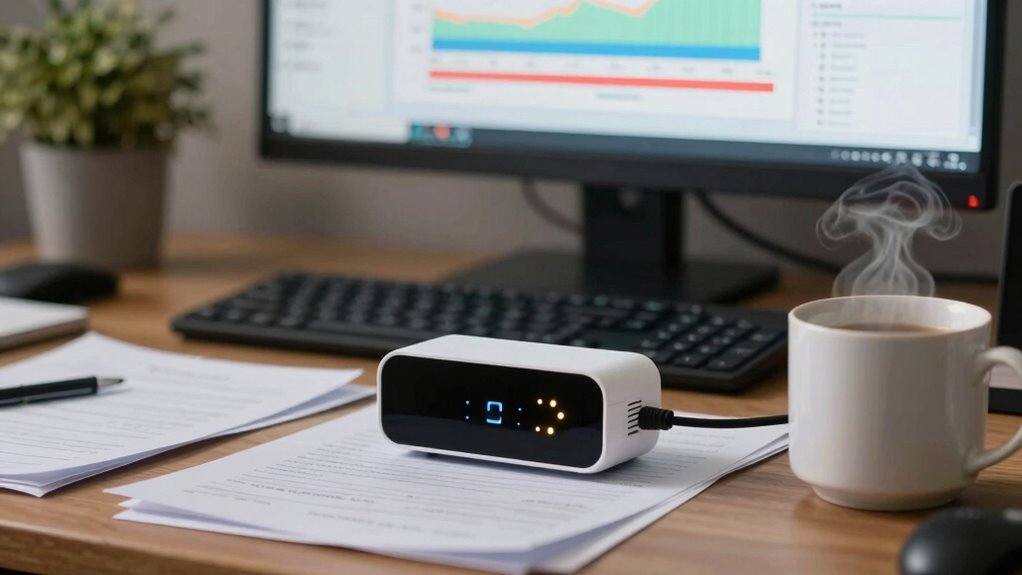

Small monitoring devices help you catch waste problems early by providing real-time, accurate data on fill levels, temperature, and contamination. They enable quick decisions, preventing costly overflows and inefficiencies. Their durability guarantees consistent performance in tough environments, while regular calibration keeps data reliable. By catching issues before they become big surprises, you save money and reduce environmental impact. Keep going to discover how these small tech solutions can transform your waste management approach.

Get garden gear delivered free with Prime
- Fast, free delivery on millions of items
- Prime Video, Amazon Music and more included
- Member-only deals all year
Key Takeaways
- Small devices enable continuous, real-time data collection to detect issues early before they escalate.
- Their durability ensures reliable operation in harsh waste environments, preventing data gaps and failures.
- Accurate sensors reduce false alarms, allowing for precise decision-making and efficient waste management.
- Compact monitoring tools facilitate widespread deployment, covering more areas and catching hidden waste patterns.
- Regular calibration and maintenance of small devices maintain data integrity, avoiding costly surprises.

Small monitoring devices are revolutionizing waste management by providing real-time data that helps identify inefficiencies and prevent unnecessary disposal. With these compact tools, you gain immediate insights into waste patterns, enabling you to catch issues before they turn into costly, wasteful surprises. The success of these devices hinges on two key factors: sensor accuracy and device durability. If the sensors aren’t precise, you risk making decisions based on flawed data, which could lead to over-collection or missed opportunities to reduce waste. Accurate sensors ensure you’re monitoring exactly what matters—be it fill levels, temperature, or contamination—so you can act quickly and confidently. When sensors are reliable, you avoid false alarms or overlooked problems, streamlining your waste management process and saving both time and resources.
Reliable sensors streamline waste management by providing precise data, enabling quick decisions and reducing unnecessary pickups.
Device durability is equally critical. Waste management environments are often harsh, with exposure to moisture, dirt, and physical impacts. If your monitoring device can’t withstand these conditions, it’ll likely break down or give faulty readings, rendering your efforts ineffective. A sturdy device means less downtime and fewer replacements, ensuring continuous data flow that’s essential to optimizing waste collection schedules and reducing unnecessary pickups. Durability also translates into long-term cost savings; investing in robust devices pays off by minimizing maintenance costs and maximizing operational efficiency. Additionally, selecting devices with sensor calibration can further enhance accuracy and performance over time. Incorporating advanced materials in device construction can also improve resilience against environmental stressors. Moreover, integrating predictive maintenance techniques can help identify potential device failures before they occur, further safeguarding your data integrity. Regular calibration and maintenance are vital to maintaining the accuracy of sensors over the device’s lifespan, preventing drift and ensuring ongoing reliability. Furthermore, choosing devices with weather-resistant features ensures they remain functional in diverse environmental conditions, extending their lifespan and reliability.
By combining high sensor accuracy with durable construction, these small devices become powerful allies in waste prevention. You can rely on their consistent performance to inform decisions, such as adjusting collection routes based on real-time fill levels or identifying areas where waste sorting needs improvement. This proactive approach prevents overflows, reduces landfill contributions, and promotes recycling—saving money and protecting the environment simultaneously. Furthermore, the data collected from accurate, durable sensors can reveal patterns that were previously hidden, allowing you to implement smarter waste reduction initiatives.
In essence, these small monitoring devices aren’t just gadgets—they’re essential tools that help you stay ahead of waste problems before they escalate. Their ability to deliver precise, reliable data means you’re always making informed choices, avoiding costly surprises, and improving your waste management strategy. By prioritizing sensor accuracy and device durability, you ensure your monitoring system remains effective and resilient over time. This investment results in fewer unnecessary waste pickups, lower operational costs, and a more sustainable approach to waste management. It’s clear that embracing these small devices can lead to big savings and environmental benefits, proving that sometimes, small tools make the biggest difference.
As an affiliate, we earn on qualifying purchases.
Frequently Asked Questions
How Do Small Monitoring Devices Connect to Larger Systems?
You connect small monitoring devices to larger systems through wireless connectivity options like Wi-Fi, Bluetooth, or cellular networks. These devices efficiently transmit data in real-time, allowing seamless integration. Power management features guarantee they run long without frequent recharging, maintaining reliable performance. By leveraging these technologies, your monitoring devices stay connected, providing continuous oversight, and preventing costly surprises by catching issues early before they escalate into major problems.
What Is the Average Lifespan of These Small Devices?
You can expect the average lifespan of small monitoring devices to be around 1 to 3 years, depending on battery longevity and device durability. Battery life varies based on usage and energy efficiency, while high-quality devices with rugged construction tend to last longer. Regular maintenance, like battery replacements or updates, can extend their operational life, ensuring you stay ahead of surprises without frequent replacements.
Are Small Monitoring Devices Suitable for Outdoor Use?
Sure, these tiny gadgets brave the great outdoors like fearless explorers. Thanks to weather resistance, they stand up to rain, snow, and sun, while maintaining signal compatibility even in the wildest conditions. You can trust them to monitor your outdoor setup without turning into soggy, signal-lost messes. So, yes, these small devices are perfectly suitable for outdoor use, ensuring you stay informed no matter the weather’s mood swings.
How Much Do Small Monitoring Devices Typically Cost?
Small monitoring devices typically cost between $20 and $150, depending on features and brand. When comparing costs, consider affordability factors like durability, battery life, and data capabilities. Entry-level options are more budget-friendly, while advanced models with extra features cost more. Your choice should balance your needs with your budget, ensuring you get reliable monitoring without overspending. This way, you prevent surprises while staying within your financial limits.
Can These Devices Be Easily Integrated Into Existing Infrastructure?
Yes, these devices can be easily integrated into existing infrastructure. Their sensor accuracy guarantees reliable data collection, while their power efficiency allows for long-term operation without frequent replacements. You simply connect them to your current systems, often via wireless technology, making the integration seamless. This ease of setup means you benefit quickly from real-time monitoring, preventing costly surprises and optimizing your operations without significant disruption.
Conclusion
So, next time you think about ignoring those tiny monitoring devices, remember—they’re your best defense against costly surprises. These small gadgets hold the power to catch problems early, saving you money and stress. But what if you overlook them? The real question isn’t just about saving now, it’s about what you could be risking down the line. Don’t wait until it’s too late—stay vigilant, stay protected, and keep the surprises at bay.
Columbus Day / Indigenous Peoples' Day Picks
long weekend sales
As an affiliate, we earn on qualifying purchases.