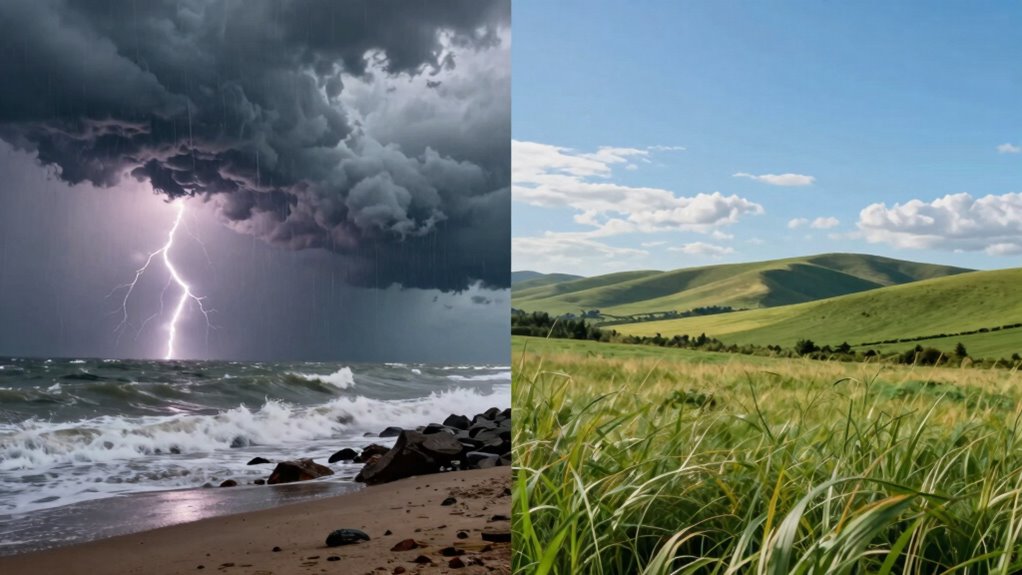

Weather extremes are short-term events like heatwaves or storms that happen suddenly and locally, often influenced by factors like urban heat or ocean currents. Climate trends, on the other hand, refer to long-term shifts in average weather over decades caused by factors like greenhouse gases and deforestation. While extremes are unpredictable, climate trends provide the overall pattern shaping those events. Understanding how these differences connect can help you better grasp environmental changes; keep exploring to learn more.

Get garden gear delivered free — and shop member deals
- Fast, free delivery on millions of items
- Access to Prime Big Deal Days deals on October 6–7
- Prime Video, Amazon Music and more included
Key Takeaways
- Weather extremes are short-term events like storms or heatwaves, while climate trends reflect long-term shifts in average conditions.
- Weather extremes fluctuate daily or seasonally, whereas climate trends develop over decades or centuries.
- Climate change influences the frequency and severity of weather extremes but does not predict individual events.
- Local factors, such as urban heat islands, can amplify weather extremes independently of overall climate trends.
- Understanding both helps in effective planning, adaptation, and addressing the root causes of climate-related challenges.
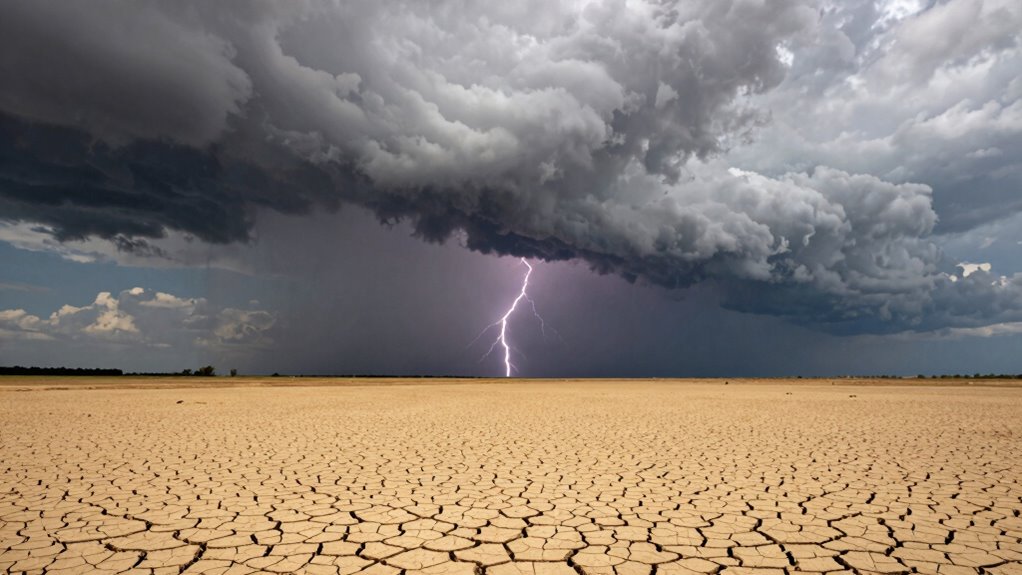
Recent years have seen an increase in weather extremes, highlighting the shifting patterns of our climate. These sudden, intense events—like heatwaves, heavy storms, or droughts—stand out because they seem unpredictable and alarming. But to truly understand what’s happening, it’s important to differentiate between weather extremes and long-term climate trends. Weather extremes are short-term, localized events that fluctuate daily or seasonally. They’re influenced by various factors, including changes in urban heat and ocean currents. For example, urban areas tend to experience higher temperatures than surrounding regions—a phenomenon known as the urban heat island effect. When cities expand without green spaces, they trap more heat, making heatwaves more intense and prolonged. Similarly, ocean currents play a pivotal role in regulating climate by redistributing heat across the globe. Disruptions in these currents, whether from climate change or natural variability, can lead to sudden shifts in weather patterns, such as unseasonal storms or cold spells. Additionally, local factors like urban heat island effects can intensify these weather extremes further. Recognizing the interplay between natural variability and human activities helps us better understand these phenomena. Moreover, feedback mechanisms within the climate system can amplify these effects, making some weather extremes more severe.
In contrast, climate trends refer to the long-term shifts in average weather conditions over decades or even centuries. These trends are driven by broader factors like greenhouse gas emissions, deforestation, and changes in atmospheric composition. Over time, we observe gradual increases in global temperatures, rising sea levels, and shifts in precipitation patterns. While a single hot day or a cold snap doesn’t define climate change, the consistent warming trend points to a changing climate system. This long-term perspective helps us see the bigger picture and understand the underlying causes of increasing weather extremes. For instance, as the planet warms, the amplitude and frequency of heatwaves and storms tend to rise, making weather extremes more severe and unpredictable.
Understanding the difference between weather extremes and climate trends is essential for planning and adaptation. While you might experience a particularly scorching day or a rare blizzard, it’s the overarching climate trend that indicates a fundamental shift in our environment. Recognizing how urban heat amplifies local temperature spikes or how alterations in ocean currents affect weather patterns can help you grasp why these extremes are becoming more common. It also emphasizes the importance of addressing the root causes of climate change, rather than just reacting to the immediate extremes. By viewing weather events within the context of long-term climate shifts, you can better prepare for the future and support efforts to mitigate these changes.
As an affiliate, we earn on qualifying purchases.
Frequently Asked Questions
How Do Individual Weather Events Impact Long-Term Climate Change?
You might think individual weather events don’t affect long-term climate change, but they do play a role in understanding the bigger picture. Short-term variability can be influenced by climate trends, and scientists use event attribution to determine how much a specific event links to climate change. While one event isn’t proof, recognizing patterns helps you see how climate change influences extreme weather over time.
Can Weather Extremes Occur Without Climate Change Influencing Them?
Yes, weather extremes can happen without climate change influencing them. You experience these as short-term variability or daily fluctuations, like a sudden storm or heatwave. These events are driven by natural atmospheric processes and can occur independently of long-term climate trends. While climate change can make extremes more intense or frequent, it’s entirely possible for weather extremes to happen as part of Earth’s natural variability, without any direct influence from climate change.
What Regions Experience the Most Significant Climate Trend Shifts?
You’ll notice the most significant climate trend shifts in regions with high seasonal variability and distinct regional patterns. For example, Arctic areas experience rapid warming, while parts of Africa face prolonged droughts. These shifts are driven by global climate change, amplifying existing regional variability. You’ll see these trends more prominently in areas where seasonal changes are already pronounced, making the impacts of climate change more evident and urgent in those regions.
How Do Scientists Differentiate Between Weather and Climate Data?
Scientists differentiate between weather and climate data by examining short-term variability versus long-term patterns. They analyze weather data over days or weeks to understand immediate conditions, while climate data involves interpreting trends across decades or centuries. By focusing on long-term averages and recognizing the natural variability in weather, scientists can accurately interpret climate trends, distinguishing them from typical weather fluctuations and avoiding confusion between short-term weather events and broader climate changes.
Are Climate Trends Reversible or Only Progressive?
Climate trends are generally progressive, but they can be influenced by seasonal variability and atmospheric patterns that temporarily alter the climate. While some aspects, like rising temperatures, seem irreversible without significant intervention, others may stabilize or reverse over time through global efforts and natural fluctuations. You should understand that long-term climate change involves complex interactions, making complete reversibility challenging, but localized or short-term reversals are possible due to atmospheric patterns.
Conclusion
While weather extremes may catch your attention with their sudden chaos, they’re just fleeting moments compared to the steady, long-term shifts of climate trends. One is like a thunderclap, loud and brief; the other, a slow erosion, shaping the landscape over time. Recognizing this difference helps you understand that addressing climate change isn’t about chasing storms, but about preparing for a persistent, ongoing transformation—one that quietly rewrites the world you know.
Fall Picks
fall essentials
As an affiliate, we earn on qualifying purchases.