

Soil organic matter boosts your landscape’s resilience against climate impacts by improving water retention, helping plants survive droughts and heatwaves. It supports diverse microbes that break down organic material into nutrients, encouraging healthy growth and adaptation. Organic matter also locks in carbon, reducing greenhouse gases and slowing climate change. These benefits make ecosystems stronger and more adaptable. Keep exploring to discover how boosting soil organic matter can enhance climate resilience even further.

Get garden gear delivered free — and shop member deals
- Fast, free delivery on millions of items
- Access to Prime Big Deal Days deals on October 6–7
- Prime Video, Amazon Music and more included
Key Takeaways
- Organic matter enhances soil’s water retention, reducing drought impacts and supporting plant resilience during climate extremes.
- It promotes soil structure stability, improving aeration and water movement to withstand climate-related disturbances.
- Increased organic content boosts microbial diversity, aiding nutrient cycling and supporting healthy plant growth amid changing conditions.
- Soil organic matter acts as a carbon sink, helping mitigate greenhouse gases and regulate local and global climate.
- Practices increasing organic matter strengthen ecosystem stability and community resilience to unpredictable weather patterns.
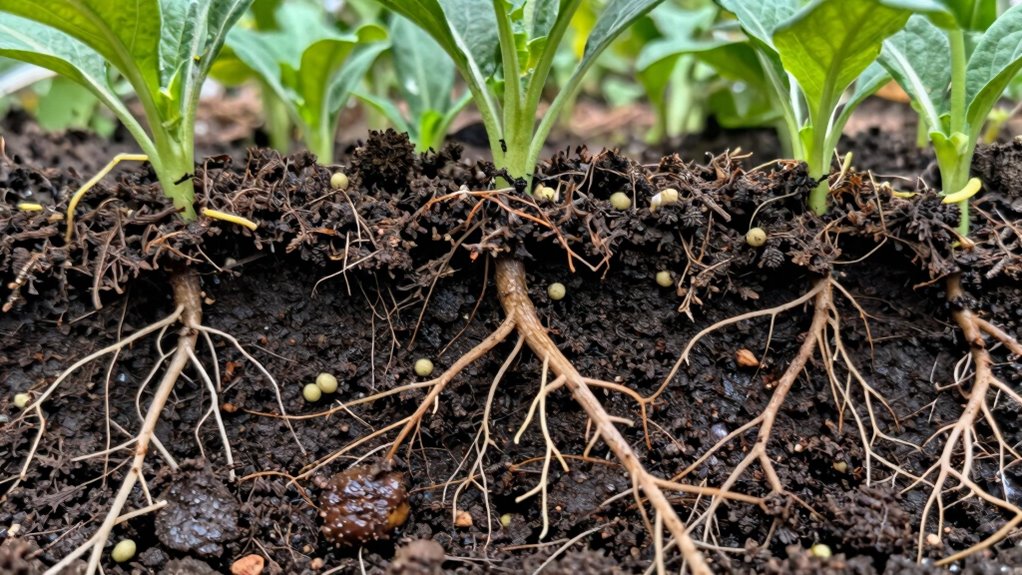
Soil organic matter plays an essential role in strengthening the resilience of ecosystems against climate change. When you improve soil organic matter, you’re actively contributing to a healthier environment that can better withstand unpredictable weather patterns and extreme events. One of the key benefits is carbon sequestration. As organic matter builds up in the soil, it captures and stores atmospheric carbon dioxide, reducing the greenhouse gases that drive global warming. This process not only helps mitigate climate change but also enhances soil quality, creating a more stable foundation for plants and microbes. The more organic matter you add, the more carbon you lock away, making your soil a natural carbon sink.
In addition to carbon sequestration, soil organic matter considerably boosts water retention. When you increase organic content, you improve the soil’s structure, creating tiny pores that hold water more effectively. This means your soil can absorb rainfall quickly and retain it longer, providing plants with a steady water supply even during dry spells. This natural water retention reduces runoff and erosion, which are common issues exacerbated by climate extremes. With better water management, your plants face less stress during droughts and heatwaves, making your ecosystem more resilient overall.
Furthermore, rich soil organic matter supports a diverse community of microorganisms that play an indispensable role in nutrient cycling and disease suppression. These microbes help break down organic material into nutrients that plants can absorb, promoting healthy growth. When plants are healthier and more vigorous, they’re better equipped to adapt to changing climate conditions. Additionally, soil organic matter enhances microbial activity, which further contributes to the formation of stable soil aggregates, improving aeration and water infiltration, reinforcing the soil’s structure and function. Building up organic matter also encourages biodiversity in the soil, which is crucial for resilient ecosystems that can adapt to environmental stresses. Incorporating practices that boost organic matter can also support climate adaptation strategies, helping communities prepare for and respond to climate impacts more effectively.
As an affiliate, we earn on qualifying purchases.
Frequently Asked Questions
How Does Soil Organic Matter Impact Water Retention?
You’ll notice that soil organic matter improves water retention by enhancing soil structure, making it more porous and able to hold more water. It also boosts microbial activity, which helps break down organic materials and create stable water-holding aggregates. As a result, your soil becomes better at capturing and retaining moisture, reducing runoff and drought stress, and supporting healthier plant growth during dry periods.
Can Increasing Soil Organic Matter Reduce Greenhouse Gas Emissions?
Imagine your soil as a vault holding the world’s future. By increasing soil organic matter, you enhance carbon sequestration, trapping CO₂ that would otherwise warm the planet. This process not only reduces greenhouse gas emissions but also boosts soil fertility, supporting healthier crops. So, when you improve soil organic matter, you’re actively fighting climate change while nourishing the land, turning your farm into a climate-resilient sanctuary.
What Are the Best Practices to Boost Soil Organic Matter?
You can boost soil organic matter by practicing cover cropping and adding organic amendments like compost or manure. Cover crops protect soil from erosion, add nutrients, and increase organic material when they decompose. Organic amendments enrich the soil, enhancing its structure and microbial activity. Combine these methods consistently, and you’ll see improved soil health, greater resilience to climate stress, and long-term benefits for your farm or garden.
How Quickly Can Soil Organic Matter Improve Climate Resilience?
You can see signs of improved climate resilience within months as soil carbon sequestration begins, boosting organic matter. As organic matter decomposes slowly, it forms a sponge-like structure that retains water and nutrients, shielding your land from droughts and floods. The process accelerates with good practices, making your soil more resilient faster. With consistent efforts, you’ll notice your soil becoming healthier and better prepared for climate shifts in a relatively short time.
Does Soil Organic Matter Affect Crop Yield Under Climate Stress?
Yes, soil organic matter positively affects crop yield under climate stress. It boosts soil microbial activity, which helps plants access nutrients more efficiently. Organic matter decomposition releases essential nutrients and improves soil structure, increasing water retention and drainage. These benefits make your crops more resilient to droughts, floods, and temperature fluctuations, ensuring better yields even when climate conditions are challenging. You can maintain healthy, productive soil by adding organic matter regularly.
Conclusion
By boosting soil organic matter, you actively strengthen your land’s ability to withstand climate stresses. Imagine a farmer who enriches their soil, resulting in better water retention during a drought. That resilient soil not only supports healthy crops but also captures carbon, fighting climate change. When you prioritize building soil organic matter, you’re not just improving land productivity—you’re taking a crucial step toward a more resilient, sustainable future for yourself and the planet.
Fall yard work Picks
leaf blowers
As an affiliate, we earn on qualifying purchases.