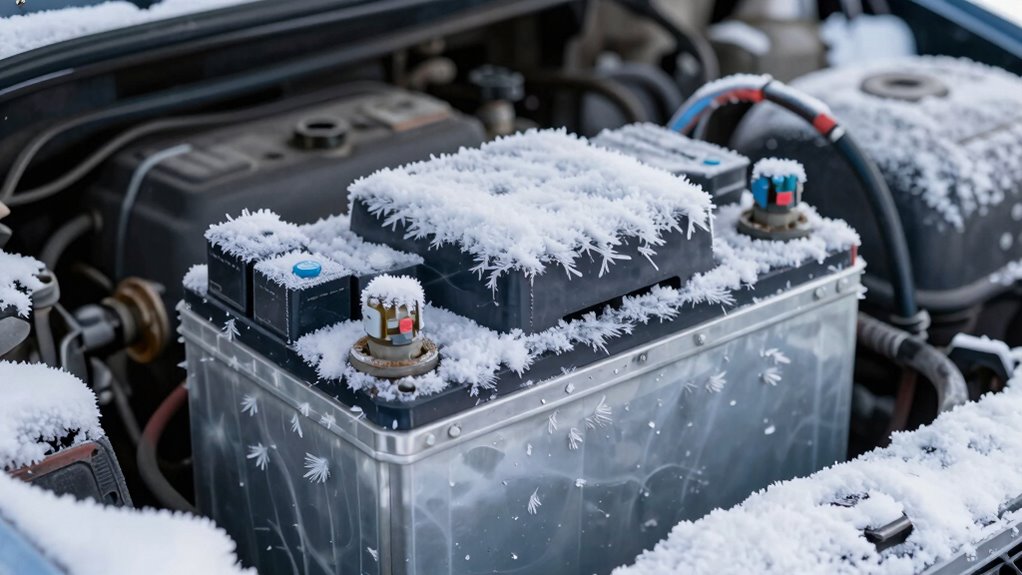

In cold weather, your battery’s chemical reactions slow down, reducing its ability to produce power. Increased internal resistance makes it harder for the battery to deliver current, which weakens your engine’s startup strength. The colder it gets, the more sluggish your battery becomes, leading to shorter runtime and difficulty starting your vehicle. Understanding how cold affects your battery can help you take steps to improve performance, so keep going to discover easy ways to stay ahead of winter troubles.

Get garden gear delivered free — and shop member deals
- Fast, free delivery on millions of items
- Access to Prime Big Deal Days deals on October 6–7
- Prime Video, Amazon Music and more included
Key Takeaways
- Cold temperatures slow chemical reactions inside the battery, reducing available current for starting the engine.
- Increased internal resistance at low temperatures hampers ion movement, decreasing battery efficiency.
- Chemical activity diminishes in winter, leading to lower battery capacity and shorter runtime.
- Cold climate batteries are designed to resist freezing and maintain performance despite sluggish reactions.
- Proper maintenance and using cold-specific batteries help mitigate winter-related performance loss.

When temperatures drop, your vehicle’s battery can struggle to deliver reliable power, often leaving you stranded in cold weather. The main reason behind this is how cold affects battery chemistry, which is essential for generating the electrical energy your car needs to start and run smoothly. In colder conditions, chemical reactions inside your battery slow down significantly, reducing the amount of current available. This means your battery’s capacity diminishes, making it harder to turn over the engine. You might notice your car cranking more slowly or having trouble starting altogether.
To combat these issues, understanding cold climate adaptation is vital. Cold climate adaptation involves designing and maintaining batteries in ways that help them perform better in low temperatures. Modern automotive batteries are often made with specific chemistries that can withstand cold conditions more effectively. For example, AGM (Absorbed Glass Mat) batteries and other advanced lead-acid types are built to retain charge and deliver power more reliably in the cold. These batteries use different materials and internal structures that minimize the impact of freezing temperatures on their chemical processes.
Cold climate batteries use special chemistries and designs to perform reliably in low temperatures.
Additionally, cold climate adaptation isn’t just about the battery itself; it also involves how you care for it. Making sure your battery is properly charged and free of corrosion helps maximize its performance in winter. A well-maintained battery is less likely to suffer from the sluggish chemical reactions caused by cold weather. Some vehicles also come equipped with battery heaters or insulation to keep the battery’s temperature within an ideal range, further enhancing cold weather performance.
You should also be aware that as temperatures plummet, your battery’s internal resistance increases, making it harder for it to deliver the necessary power. This is why you might experience a sudden drop in runtime during winter months. The cold slows down the movement of ions within the battery, which is vital for producing electrical current. When this movement is hindered, the battery’s ability to start your car diminishes. It’s a simple but important effect of battery chemistry under cold stress. Additionally, knowledge of high-quality battery technology can help you choose batteries designed to perform better in low temperatures.
To stay ahead of these issues, consider getting your battery tested before winter hits. If it’s nearing the end of its lifespan, replacing it with one designed for cold climates can prevent unexpected breakdowns. Proper cold climate adaptation not only prolongs your battery’s life but also ensures your vehicle remains dependable during the coldest days. Ultimately, understanding how battery chemistry responds to cold and taking proactive steps can keep your engine running smoothly, no matter how low the thermometer drops.
As an affiliate, we earn on qualifying purchases.
Frequently Asked Questions
How Can I Extend My Battery’s Lifespan in Winter?
To extend your battery’s lifespan in winter, focus on proper charging techniques and understanding your battery chemistry. Keep your battery charged between 20% and 80%, avoiding full discharges. Use a charger suited for your battery type and avoid rapid charging in cold weather. Store your battery in a warm, dry place when not in use, and regularly check its health to prevent damage caused by cold temperatures.
Do Different Battery Types Respond Differently to Cold Weather?
Think of batteries as different musical instruments reacting uniquely to cold. Your lead-acid battery may handle low temperatures better than lithium-ion, which can become sluggish. The chemistry differences mean temperature effects vary, impacting performance and longevity. While some batteries lose capacity quickly in cold weather, others maintain stability. Understanding these distinctions helps you choose the right type for winter, ensuring your device keeps running smoothly despite the chilly conditions.
What Signs Indicate My Battery Is Failing in Winter?
If your battery shows slow engine cranking, dim headlights, or electrical issues in cold climate, it’s a sign it’s failing. Battery chemistry becomes less efficient in cold weather, reducing power. You might notice it struggles more in winter, indicating decreased capacity. Weak or corroded terminals are also common signs. If these symptoms appear, get your battery tested promptly, especially since cold reduces overall performance and can accelerate failure.
Can Battery Insulation Improve Cold Weather Performance?
A stitch in time saves nine, so yes, battery insulation can substantially boost cold weather performance. By adding insulation and improving thermal management, you help keep your battery warmer, ensuring it operates efficiently and lasts longer. Proper thermal management minimizes the effects of freezing temperatures, reducing the risk of capacity loss. Investing in quality insulation is a smart move to maintain reliable power and extend your battery’s life during winter months.
Are There Specific Maintenance Tips for Winter Battery Care?
You should regularly clean your battery terminals to remove dirt and corrosion, ensuring a solid connection. Protect the terminals with terminal protectors or anti-corrosion spray to prevent winter-related corrosion. Check your battery’s charge level frequently, especially during cold spells, and keep it securely mounted to reduce vibrations. Additionally, consider using a battery warmer or insulating cover to help maintain ideal temperature and extend your battery’s life during winter.
Conclusion
Just like a car struggles to start on a freezing morning, your battery faces a tough time in cold weather. The low temperatures slow down chemical reactions, draining your battery’s energy faster than you’d like. To keep your device running smoothly, think of winter as a frosty mountain—you’ll need extra warmth and care to reach the summit. Stay proactive, keep batteries warm, and you’ll avoid getting stranded in the cold.
Fall Picks
fall essentials
As an affiliate, we earn on qualifying purchases.