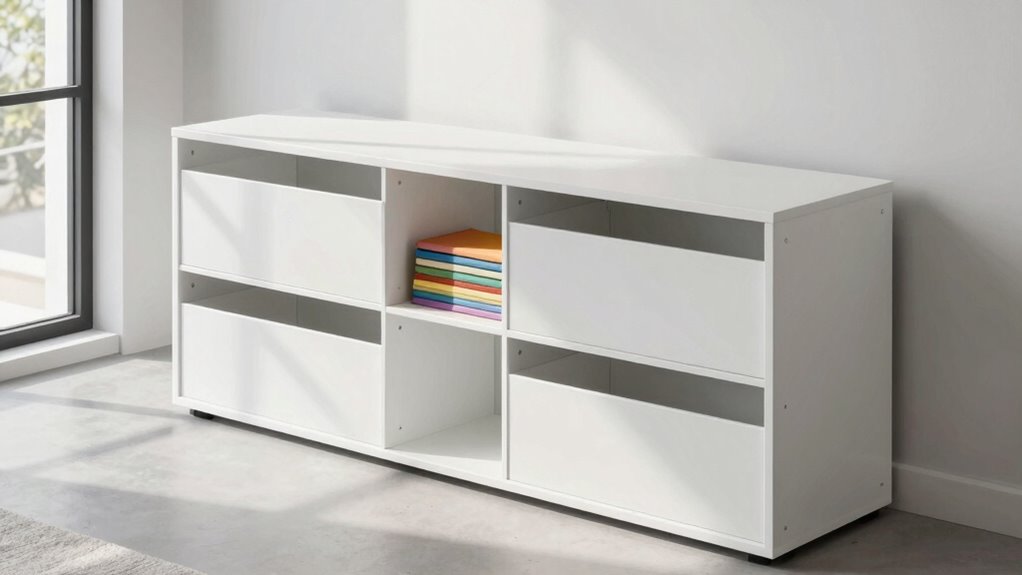

Modular storage seems simple because you think choosing sizes, colors, and configurations will be straightforward. But it gets tricky when you consider customization, space optimization, and durability. You’ll need to carefully measure your space, plan how modules interact, and pick durable materials that stand up over time. It’s not just about looks or quick fixes—effective storage requires effort and detailed planning. Keep exploring, and you’ll discover how to make the most of your setup.
Open a free Amazon Business account
Business pricing, bulk buying and tax-exempt orders.
As an affiliate, we earn on qualifying purchases.
Key Takeaways
- Customization options are extensive, making initial selection seem straightforward but complex to optimize effectively.
- Precise measurement and spatial planning are required to maximize capacity and avoid wasted space.
- Visualizing module interaction is essential but can be challenging, complicating layout decisions.
- Balancing aesthetics, functionality, and future needs adds layers of complexity beyond simple assembly.
- Material durability considerations are critical for long-term reliability, requiring careful evaluation.
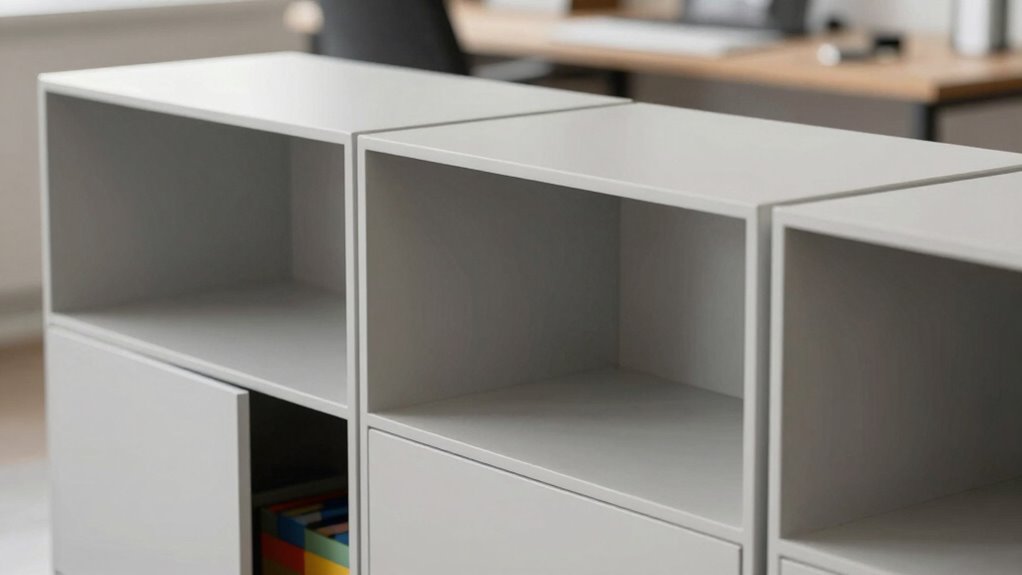
Modular storage solutions have revolutionized the way you organize your space, making it easier to customize and adapt to your needs. It might seem straightforward at first—just pick a few pieces, put them together, and you’re done. But the reality is a bit more complex. While the idea of modular storage sounds simple, the process of choosing the right configuration, materials, and accessories involves several considerations. It’s not just about stacking boxes or assembling units; it’s about creating a system that truly fits your lifestyle, aesthetic, and spatial constraints.
One of the main reasons modular storage isn’t as simple as it appears is the abundance of customization options. You’re faced with a wide range of sizes, colors, and configurations that can be overwhelming. It’s tempting to select what looks good in the store or what fits the space temporarily, but without careful planning, your setup might fall short of your needs. Customization isn’t just about appearance—it’s about functionality. You need to think about what you’re storing, how often you access it, and how the storage system can grow or change over time. This requires you to consider different modules, accessories, and even future expansion possibilities. Recognizing the importance of system flexibility can help you make choices that accommodate your evolving needs.
Space optimization is another critical factor that complicates what seems like a simple task. Modular units are designed to maximize capacity in a given area, but achieving this requires precise measurements and strategic planning. You can’t just throw in parts and hope everything fits. Each piece must be carefully selected and placed to utilize every inch efficiently. If you ignore this, you might end up with wasted space or a cluttered look. Proper space optimization involves understanding your storage needs, measuring your space accurately, and visualizing how different modules will work together. It’s a balancing act that demands attention to detail, patience, and sometimes, trial and error. Recognizing that customization options can be overwhelming highlights the importance of deliberate planning and thorough assessment before making a decision. Additionally, understanding spatial planning can greatly improve the effectiveness of your modular setup, ensuring it’s both functional and visually appealing. Being aware of storage capacity and how it scales with your needs can prevent future frustrations and costly modifications. Furthermore, considering material durability can ensure your storage system remains reliable over time, especially with frequent access or heavy loads.
modular storage system with customizable units
As an affiliate, we earn on qualifying purchases.
As an affiliate, we earn on qualifying purchases.
Frequently Asked Questions
How Do I Choose the Right Modular Storage System for My Needs?
To choose the right modular storage system, start by evaluating your storage needs and space constraints. Consider material options like wood, metal, or plastic for durability and style. Think about aesthetic considerations—do you want a sleek modern look or something more traditional? Measure your space carefully, then select a system that fits comfortably while offering flexibility and easy access. Prioritize versatility and quality to guarantee your storage system meets your long-term needs.
What Are the Common Installation Challenges With Modular Storage?
Think of installing modular storage like building a puzzle—assembly complexity can trip you up, especially when space is limited. You might find pieces don’t align perfectly or need adjustments. Common challenges include ensuring all components fit snugly and managing space limitations without overcrowding. To avoid frustration, double-check measurements beforehand and follow manufacturer instructions carefully, making the installation smoother and avoiding costly rework.
Can Modular Storage Solutions Be Easily Expanded or Reconfigured Later?
Yes, modular storage solutions are designed for flexible configurations, making it easier for you to expand or reconfigure your setup later. You can add or rearrange modules as your storage needs grow, ensuring future expansion is seamless. However, keep in mind that some systems may require specific components or tools for reconfiguration, so plan ahead and choose a solution compatible with your evolving storage demands to maximize flexibility.
How Does the Cost of Modular Storage Compare to Traditional Options?
Think of modular storage as a flexible friend—initially, it might cost more than traditional options, but it offers long-term savings. The cost comparison depends on your needs; while it can be pricier upfront, you save on future reconfigurations and expansions. Budget considerations should include these potential savings, making modular systems a smart investment. Over time, their adaptability often outweighs the initial expense, providing value you can’t ignore.
Are There Durability Concerns With Modular Storage Over Time?
You might worry about durability with modular storage over time, but it’s generally reliable. The material longevity of modular units is designed to withstand regular use, and structural stability is maintained through smart design features. If you choose high-quality components and properly assemble and maintain your system, it can last for years without issues. While some wear and tear are possible, modular storage is built to be durable and adaptable to your needs.
Conclusion
While modular storage may seem straightforward, it’s like a well-choreographed dance—you need to understand the steps to make it truly shine. Beneath its simple facade lies a delicate balance of choices and adjustments. If you approach it with patience and a keen eye, you’ll find it’s more about mastering the rhythm than just fitting pieces together. Embrace the process, and you’ll discover that the true magic lies in the details.
Fall yard work Picks
leaf blowers
As an affiliate, we earn on qualifying purchases.