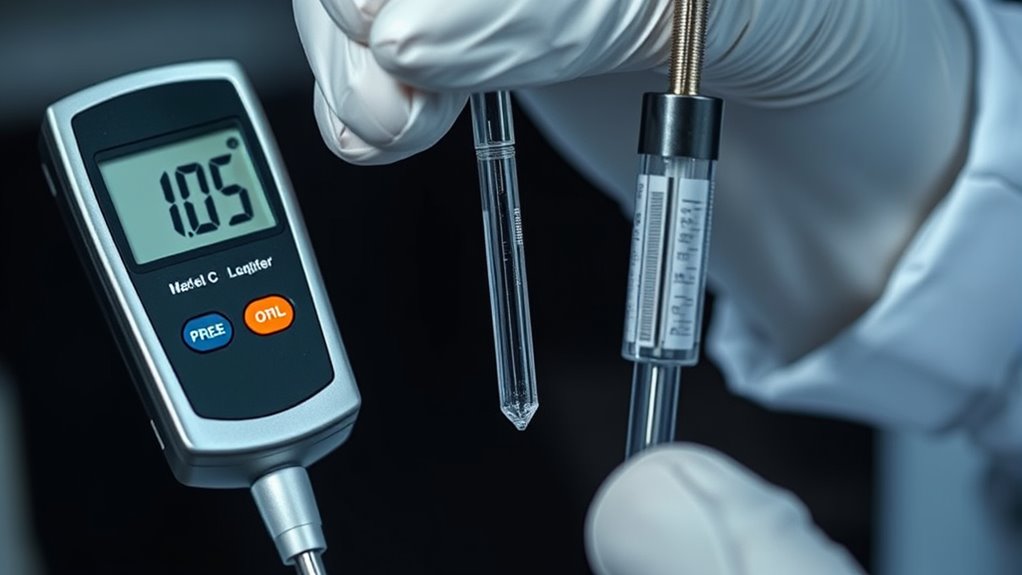

To calibrate your EC, pH, and temperature sensors, start by cleaning them thoroughly to prevent contamination. Use standard solutions or buffer solutions at known pH values, conductivity, and temperature. Regularly check and adjust the sensors according to manufacturer instructions, and keep a detailed record of each calibration. Performing calibration consistently helps maintain accuracy and prolongs sensor life. If you keep exploring, you’ll find detailed steps to ensure your measurements stay precise and reliable.
Key Takeaways
- Use appropriate calibration standards: buffer solutions for pH, standard conductivity solutions for EC, and reliable thermometers for temperature.
- Regularly calibrate sensors according to a set schedule to prevent drift and maintain accuracy.
- Clean sensors thoroughly before calibration to ensure precise readings.
- Record calibration data, including dates, standards used, and adjustments made, for traceability.
- Perform calibration in a stable environment, following manufacturer instructions for each sensor type.
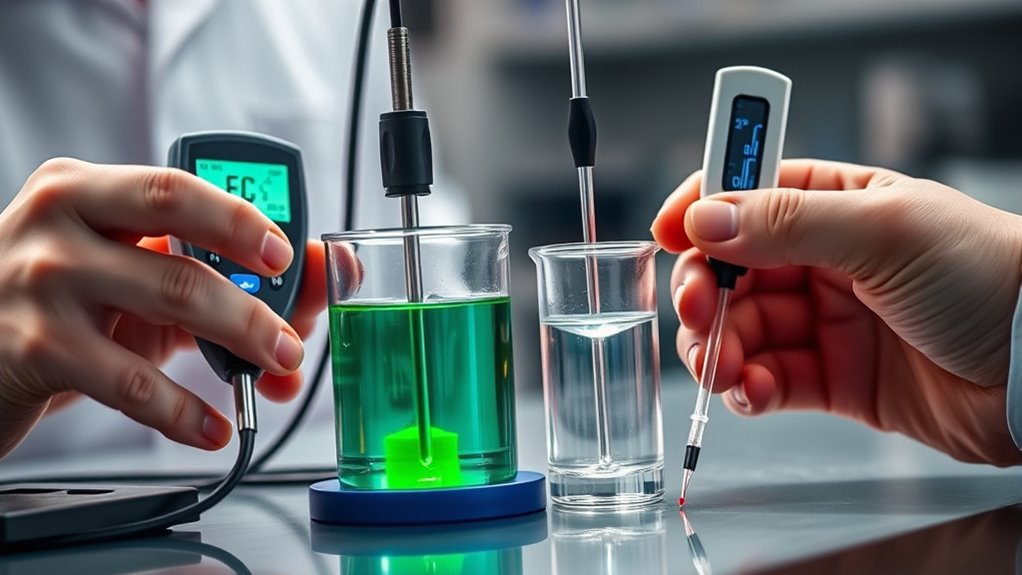
Calibrating sensors is a crucial step to guarantee their measurements are accurate and reliable. When working with sensors that measure parameters like electrical conductivity (EC), pH, or temperature, ensuring their sensor accuracy is essential for obtaining trustworthy data. Without proper calibration, your readings can drift, leading to incorrect conclusions or poor decision-making. That’s why understanding and executing effective calibration procedures is critical for maintaining sensor performance over time.
In practice, calibration procedures involve exposing your sensors to known standards or reference solutions that have well-defined values. For instance, when calibrating a pH sensor, you’d immerse it in buffer solutions at specific pH levels—commonly pH 4, 7, and 10—to establish accurate baseline readings. This process helps you identify any discrepancies between the sensor’s output and the true value, allowing you to adjust the device accordingly. Similarly, for EC sensors, calibration typically involves using standard solutions with set conductivity values. You submerge the sensor in these solutions, compare the readings to the known standards, and then calibrate the device if necessary. Temperature sensors require calibration against a reliable thermometer to correct any offsets and ensure precise measurements.
Following proper calibration procedures isn’t just about initial setup; it’s a recurring task. Regular calibration helps compensate for sensor drift caused by environmental factors, aging, or contamination. You should establish a calibration schedule based on your sensor’s usage and manufacturer recommendations—daily, weekly, or monthly—to maintain sensor accuracy consistently. When calibrating, always ensure the reference standards are fresh and stored properly, as degraded or contaminated standards can lead to inaccurate adjustments. Additionally, keep detailed records of calibration activities, including calibration dates, standards used, and any adjustments made, to track sensor performance over time.
It’s also important to handle sensors carefully during calibration. Clean the sensors thoroughly before calibration to remove any residues that might skew results. Use appropriate cleaning solutions that won’t damage the sensor components. During calibration, make sure you’re operating in a stable environment—avoid sudden temperature changes or vibrations that could interfere with the process. Always follow the manufacturer’s instructions for calibration procedures, as different sensors may require specific steps or settings to achieve ideal accuracy. Maintaining proper calibration practices can also extend sensor lifespan and improve overall measurement reliability.
Upgrade Version 4PK Seedling Heat Mat with ETL Listed,Warm Hydroponic Heating Pad for Seed Starting,Indoor Gardening,Brewing and Greenhouses,Durable Waterproof Black Plant Heat Mat
Consistent & Even Heat: Ruyyi Seedling Heat Mat provides stable, uniform temperatures that elevate the root zone by...
As an affiliate, we earn on qualifying purchases.
Frequently Asked Questions
How Often Should EC, Ph, and Temperature Sensors Be Calibrated?
You should calibrate your EC, pH, and temperature sensors regularly to guarantee accurate readings. Typically, calibration frequency depends on usage, but it’s recommended to calibrate these sensors at least once a month. Regular sensor maintenance, including cleaning and calibration, helps prevent drift and extends sensor lifespan. Always follow the manufacturer’s guidelines for calibration intervals and procedures to maintain peak performance and reliable data.
What Are Common Signs of Sensor Calibration Drift?
You’ll notice sensor calibration drift when readings suddenly jump or become wildly inconsistent, as if the sensor’s losing its mind. Sensor degradation often causes these signs, making measurements unreliable. If calibration frequency isn’t maintained, these issues worsen, leading to inaccurate data. Keep an eye out for unexpected fluctuations, slow response times, or drifting values—these are clear signs your sensors need recalibration to stay accurate and reliable.
Can Calibration Be Performed Without Specialized Equipment?
Yes, you can perform DIY calibration without specialized equipment, but it’s not always ideal. You’ll need basic calibration tools like calibration solutions and a reliable reference. Follow manufacturer instructions carefully, and verify your calibration standards are fresh and accurate. While DIY calibration is possible, using proper calibration tools helps ensure precision, especially for critical measurements like EC, pH, and temperature. Always double-check your results for consistency.
How Do Environmental Factors Affect Sensor Calibration Accuracy?
Environmental factors, like ambient conditions and sensor interference, directly impact calibration accuracy. You should regularly check for temperature fluctuations, humidity, and electrical noise, as they can cause readings to drift. To maintain precision, perform calibrations in stable environments and shield sensors from interference sources. By controlling these factors, you guarantee your sensors provide reliable data, reducing errors caused by external environmental influences.
Are There Specific Calibration Standards for Different Industries?
Think of calibration standards like a universal language, but each industry speaks its own dialect. You must follow specific industry regulations and calibration procedures to guarantee accuracy and compliance. For example, medical, agricultural, and water treatment sectors each have unique standards that guide calibration practices. Staying aligned with these standards ensures your sensors perform reliably, helping you avoid costly errors and meet regulatory requirements effortlessly.

BN-LINK Seedling Heat Mat with Thermostat Controller Combo Set, 10" x 20.75" Plant Heating Mat for Seed Starting with Temperature Control for Indoor Growing, Plants Germination, ETL Listed
✓ Consistent & Uniform Heating: BN-LINK seedling heat mat maintains temperatures around 70–85℉, creating ideal conditions for seed...
As an affiliate, we earn on qualifying purchases.
Conclusion
Just like tuning a fine instrument, calibrating your sensors guarantees they sing true. By regularly checking and adjusting your EC, pH, and temperature sensors, you keep your system reliable and accurate. Think of calibration as sharpening a blade—without it, your measurements dull and imprecise. Stay attentive and proactive, and your sensors will perform at their best, guiding you with precision and confidence every step of the way.

59Ft Soil Heating Cable with Thermostat, Rubber Heated Warming Cable for Seed Starting, Outdoor Greenhouse, Cold Frame & Garden Beds, Plant Root Winter Protection Kit Includes Ground Stakes
Boost Seed Germination & Plant Growth with Soil Heating Cable: Ideal for gardening enthusiasts, this 59-foot (9m x...
As an affiliate, we earn on qualifying purchases.

VIVOSUN 10"x 20.75" Seedling Heat Mat and Digital Thermostat Combo Set, UL & MET-Certified Warm Hydroponic Heating Pad for Germination, Indoor Gardening, Greenhouse
Reliable Results: The VIVOSUN professional heat mat maintains optimal temperatures around 68-86℉ (20-30℃), perfect for Seedling start and...
As an affiliate, we earn on qualifying purchases.