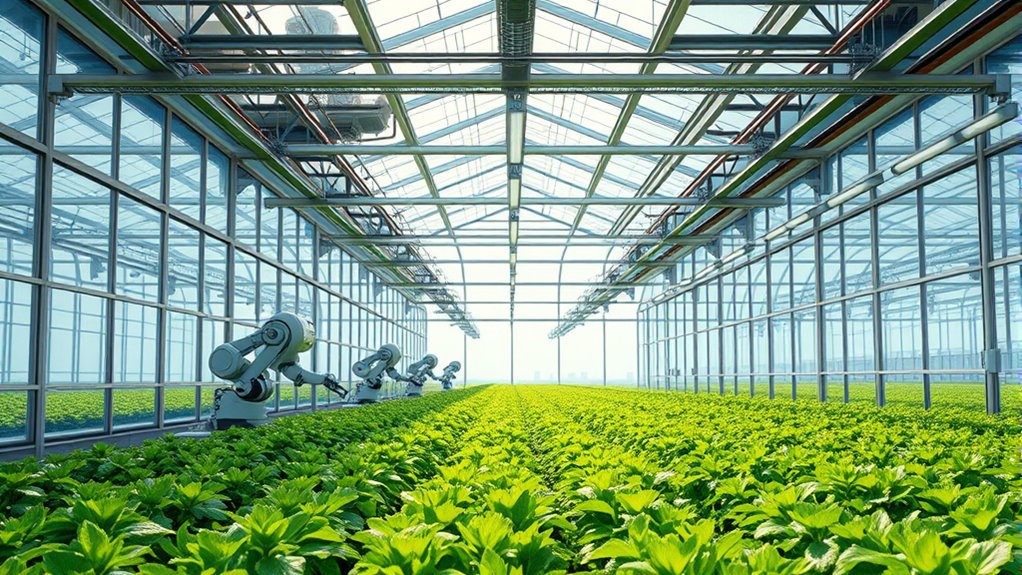

Biotech is transforming greenhouse farming by helping you develop crops tailored to controlled environments. You can modify plant genes to improve growth, resilience, and resource efficiency, making crops better suited for limited light, humidity, or temperature variations. These innovations also support pest and disease resistance, reducing chemical use. As a result, you get higher yields, better quality, and more sustainable practices. Keep exploring to discover how these advancements can maximize your greenhouse’s potential.

Get garden gear delivered free — and shop member deals
- Fast, free delivery on millions of items
- Access to Prime Big Deal Days deals on October 6–7
- Prime Video, Amazon Music and more included
Key Takeaways
- Genetic modification enables crops to thrive in high humidity, limited light, and temperature-controlled greenhouse conditions.
- Biotechnology develops pest- and disease-resistant varieties, reducing chemical use and crop losses.
- Biotech enhances resource efficiency by creating drought- and salt-tolerant crops suited for controlled environments.
- Genetically engineered crops have faster maturation, improved flavor, nutrition, and longer shelf life for market advantages.
- Future innovations focus on tailored crops with optimized traits to improve resilience, productivity, and sustainability in greenhouses.
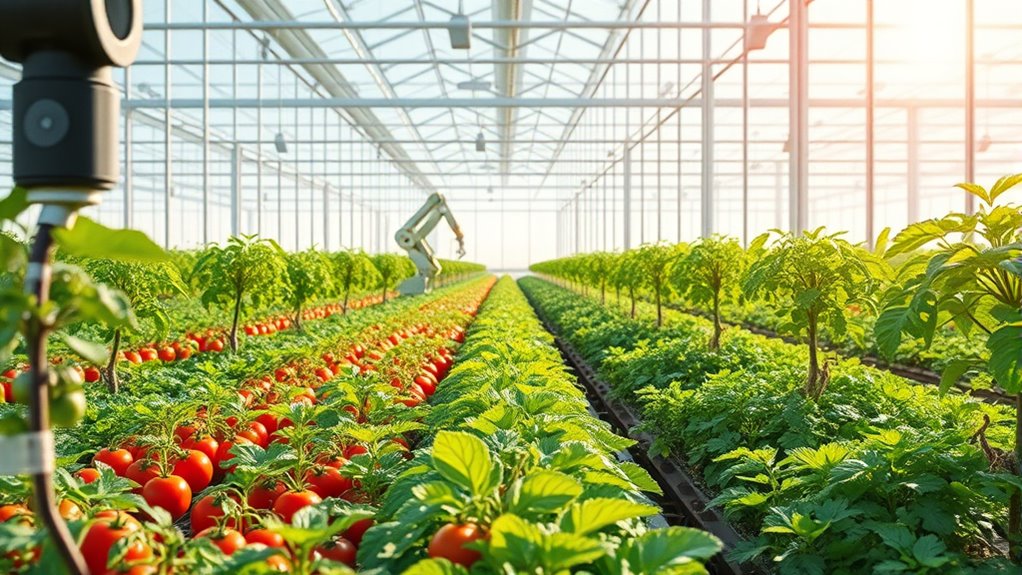
Biotech innovations are transforming greenhouses by offering targeted solutions that boost crop yields, improve resilience, and reduce environmental impact. One of the most significant developments is genetic modification, which allows you to alter the DNA of plants to better suit controlled environments. By tweaking specific genes, you can create crops that are more adaptable to the unique conditions of a greenhouse, such as high humidity, variable temperatures, or limited light. This precision engineering means you can develop plants with enhanced traits, like faster growth rates or improved nutrient uptake, leading to more efficient production cycles.
Genetic modification also plays a critical role in increasing crop resilience. In a greenhouse setting, resilient crops are essential because they can withstand pests, diseases, and environmental stresses that might otherwise compromise your harvest. Through biotech, you can develop varieties that resist common pathogens or tolerate fluctuations in temperature and humidity. This resilience reduces your reliance on chemical pesticides and fungicides, making your operation more environmentally friendly. It also means fewer crop losses, providing you with more consistent yields and greater economic stability.
Resilient crops reduce pesticide use, improve yields, and enhance sustainability in your greenhouse operations.
You’ll find that biotech-driven genetic improvements enable crops to thrive under the controlled conditions of greenhouses. For example, creating drought-tolerant or salt-tolerant plants means you can expand your cropping options without worrying about external environmental constraints. Similarly, crops engineered for faster maturation help you maximize your production within limited growing seasons. These advancements allow you to optimize resources like water, nutrients, and energy, reducing waste and lowering costs. Additionally, advances in biotech research are paving the way for even more precise and beneficial modifications.
Moreover, the integration of genetic modification into greenhouse farming supports sustainability initiatives. By developing crops that require fewer inputs, you’ll cut down on resource consumption and minimize the environmental footprint of your operation. Resilient crops also mean less need for chemical interventions, which benefits both your health and the environment. As biotech continues to evolve, expect even more sophisticated modifications that can improve flavor, nutritional content, and shelf life, giving you a competitive edge in the market.
In essence, genetic modification empowers you to tailor crops specifically for your greenhouse environment, enhancing resilience and productivity. These innovations make your farming more precise, sustainable, and profitable. By leveraging biotech, you’re not just growing plants; you’re actively shaping the future of controlled environment agriculture to meet the demands of a growing population and a changing climate. Additionally, advances in biotech enable the development of crops with improved traits, further supporting sustainable greenhouse practices.
As an affiliate, we earn on qualifying purchases.
Frequently Asked Questions
How Does Biotech Improve Pest Resistance in Greenhouse Crops?
You might wonder how biotech enhances pest resistance in crops. Through genetic enhancement, scientists introduce genes that empower plants to fend off pests naturally, reducing your reliance on chemical pest management. This approach creates crops with built-in defenses, making them more resilient in greenhouse conditions. As a result, your pest control becomes more sustainable, cost-effective, and environmentally friendly, ensuring healthier crops and a more efficient growing process.
What Are the Ethical Concerns of Genetically Modifying Greenhouse Plants?
You might wonder about the ethics of genetically modifying greenhouse plants, especially since gene flow could unintentionally spread modified genes to wild species. Concerns also focus on the long-term impacts, like unforeseen ecological shifts or reduced biodiversity. While biotech offers benefits, you should consider whether these changes could disrupt natural ecosystems or create dependency on specific biotech firms, raising questions about environmental safety and moral responsibility.
How Cost-Effective Is Biotech Compared to Traditional Breeding Methods?
You’ll find that biotech often proves more cost-effective than traditional breeding through economic analysis, especially when considering rapid development and higher yields. Market adoption speeds up as farmers see biotech’s benefits, like pest resistance and drought tolerance, reducing input costs. Although initial investments can be higher, over time, biotech’s efficiency and productivity gains make it a financially smarter choice for many growers.
Can Biotech Crops Adapt to Changing Climate Conditions Inside Greenhouses?
Think of biotech crops as chameleons, adapting swiftly to their environment. Inside greenhouses, you can enhance their genetic adaptability to boost climate resilience, helping them thrive despite shifting conditions. With precise genetic modifications, these crops can better withstand temperature swings, humidity changes, and pest pressures. So yes, biotech crops can adapt to changing climate conditions in greenhouses, giving you a reliable edge in maintaining healthy, productive plants regardless of environmental fluctuations.
What Regulatory Hurdles Exist for Commercial Biotech Greenhouse Crops?
You’ll face regulatory hurdles like securing regulatory approval and protecting intellectual property rights when commercializing biotech greenhouse crops. Agencies require thorough safety assessments to guarantee environmental and human health, which can delay market entry. Additionally, safeguarding your innovations through patents can be complex and time-consuming. Managing these regulations demands careful planning, documentation, and compliance to successfully bring your biotech crops to market.
Conclusion
As you explore biotech for greenhouses, you realize that developing crops for controlled environments isn’t just about innovation—it’s about nature and science working together in harmony. Sometimes, the most remarkable breakthroughs happen when technology aligns with nature’s rhythms, reminding you that progress often springs from unexpected coincidences. Embrace these moments, and you’ll see how your efforts can cultivate a sustainable future where science and nature grow side by side, seamlessly.
Fall yard work Picks
leaf blowers
As an affiliate, we earn on qualifying purchases.