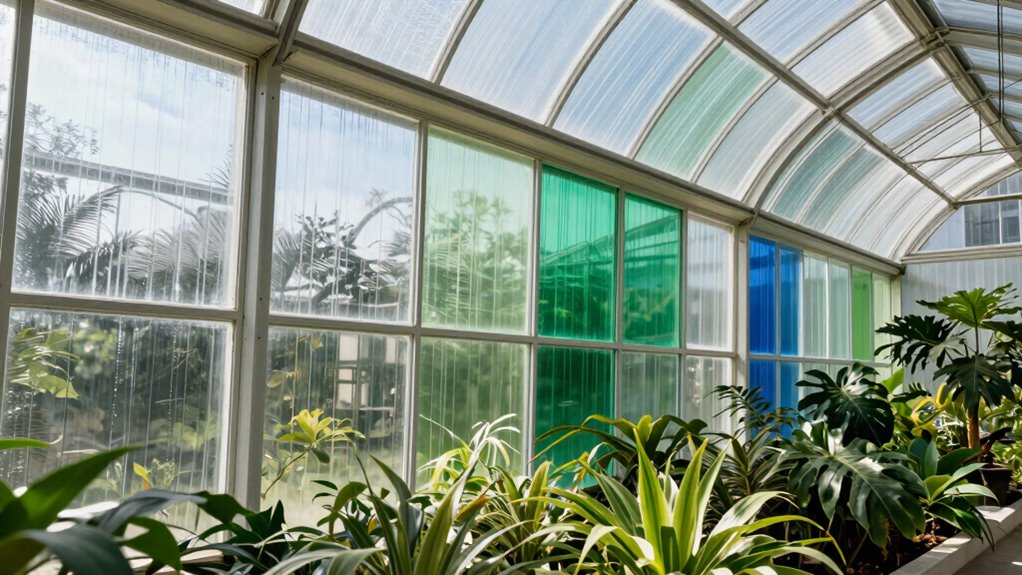

Your glazing choices play a key role in how your greenhouse performs throughout the year. Proper glazing traps heat in winter, keeps temperatures stable, and allows enough light for healthy plant growth. In warmer months, it can reduce excess heat and prevent overheating. Using coatings or tinted materials helps manage temperature fluctuations and improve energy efficiency. If you want to discover more about optimizing your greenhouse for all seasons, keep exploring how different glazing options work best.
Get ready for Prime Big Deal Days — try Prime free
Exclusive member deals on October 6–7, plus fast free delivery. Cancel anytime.
As an affiliate, we earn on qualifying purchases.
Key Takeaways
- Glazing determines heat retention, impacting temperature stability and reducing energy costs in both winter and summer.
- High light transmission glazing supports photosynthesis, while diffusing features prevent overheating.
- Climate-specific glazing strategies optimize solar heat gain or limit heat, depending on seasonal needs.
- Coatings and treatments control infrared radiation, enhancing temperature regulation and energy efficiency.
- Insulating and sustainable glazing materials promote year-round environmental stability and eco-friendly greenhouse operations.
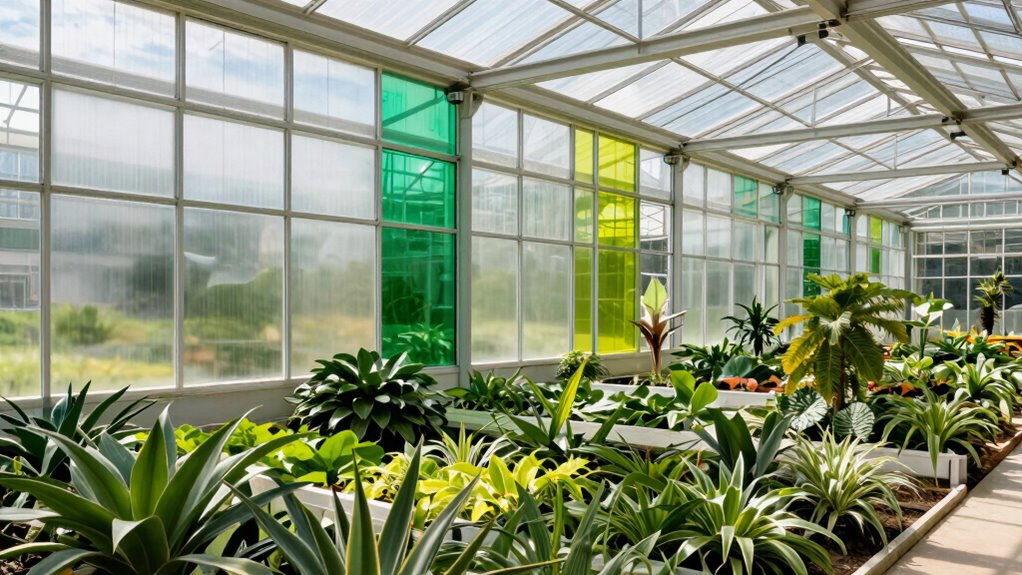
Choosing the right glazing for your greenhouse is essential because it directly impacts how efficiently it traps heat, transmits light, and maintains a stable environment for your plants. The type of glazing you select determines how much solar heat enters the space and how well light passes through to support photosynthesis. If your goal is to maximize warmth during colder months, you’ll want glazing options that excel at capturing solar heat, such as double-pane or insulated glass, which reduce heat loss and keep temperatures stable. Conversely, if you’re in a warmer climate or want to prevent overheating, choosing glazing that limits solar heat gain, like tinted or low-emissivity materials, can help you control internal temperatures more effectively.
Light transmission is another critical factor. High light transmission allows more sunlight to reach your plants, promoting healthy growth, especially during the low-light winter months. Clear acrylic or glass provides excellent light transmission, giving your plants the natural sunlight they need. However, too much direct sunlight can cause overheating or scorching, so consider glazing options that diffuse light or incorporate shading features. Films with light-scattering properties can reduce harsh glare while still allowing ample sunlight to penetrate, creating a more evenly lit environment.
The balance between solar heat and light transmission influences your greenhouse’s performance throughout the year. During winter, you might prioritize glazing that enhances solar heat absorption and has high light transmission to keep the environment warm and well-lit. In summer, the focus shifts to reducing solar heat gain and controlling light to prevent overheating. Many glazing materials come with coatings or treatments designed to block infrared radiation, which carries heat, while still allowing visible light to pass through. Such solar control coatings help you achieve a comfortable temperature without sacrificing essential sunlight for your plants’ growth. Additionally, selecting insulating glazing can further improve energy efficiency and temperature regulation year-round. This consideration is especially important for reducing energy costs, making your greenhouse more sustainable in the long run. Understanding the impact of different glazing options on heat retention and light transmission can also help in selecting environmentally friendly and biodiversity-conscious materials that support sustainable practices.
As an affiliate, we earn on qualifying purchases.
Frequently Asked Questions
How Does Glazing Impact Greenhouse Energy Costs Annually?
Your glazing choices greatly impact your greenhouse’s annual energy costs. High-quality glazing reduces heat loss in winter and minimizes overheating in summer, leading to cost savings. Implementing cost-saving strategies, like proper glazing maintenance, guarantees peak performance and longevity. Regular inspections prevent damage, maintain insulation efficiency, and avoid unnecessary energy expenses. By choosing the right glazing and maintaining it well, you can lower your energy bills and create a more sustainable, cost-effective greenhouse environment year-round.
What Is the Lifespan of Different Glazing Materials?
Did you know that polycarbonate glazing can last up to 10-15 years, while glass often exceeds 25 years? Your choice impacts glazing durability and material longevity considerably. Polycarbonate offers good durability but may degrade faster under UV exposure, whereas glass is more resilient over time. Selecting the right material depends on your climate and maintenance plans, ensuring your greenhouse remains efficient and functional for years to come.
Are There Any Eco-Friendly Glazing Options Available?
Yes, eco-friendly options are available for greenhouse glazing. You can choose sustainable materials like recycled polycarbonate, glass made from eco-conscious manufacturing processes, or bio-based plastics. These options reduce environmental impact and help you maintain a more sustainable operation. By selecting eco-friendly glazing, you contribute to environmental conservation while ensuring your greenhouse remains efficient year-round. Prioritizing sustainable materials aligns your project with green building principles and promotes long-term ecological benefits.
How Do Glazing Choices Influence Pest and Disease Control?
Your glazing choices play a vital role in pest prevention and disease regulation. Clear, UV-filtered glass or polycarbonate can reduce pest entry by limiting their access points. Additionally, certain glazing materials help regulate humidity and temperature, creating less favorable conditions for disease development. By selecting the right glazing, you maintain a healthier environment, making it easier to control pests and diseases effectively, ultimately leading to healthier plants and better yields.
Can Glazing Be Upgraded After the Greenhouse Is Built?
Upgrading your greenhouse’s glazing isn’t impossible; it’s a strategic choice. While glazing installation typically occurs during construction, post-construction upgrades can improve insulation, light transmission, or durability. Think of it as giving your greenhouse a new lease on life—just like upgrading windows in a home. You can replace or add layers, making your structure more efficient without starting from scratch, ensuring year-round performance and better plant health.
Conclusion
Choosing the right glazing can transform your greenhouse into a year-round oasis, maximizing light, insulation, and energy efficiency. Your decision isn’t just a small detail; it’s the key to opening a thriving, lush paradise that could outshine even the most magnificent botanical gardens. By understanding how different glazings impact performance, you guarantee your plants flourish through every season. Don’t settle for mediocrity—let your greenhouse shine brighter than the sun itself!
Fall yard work Picks
leaf blowers
As an affiliate, we earn on qualifying purchases.