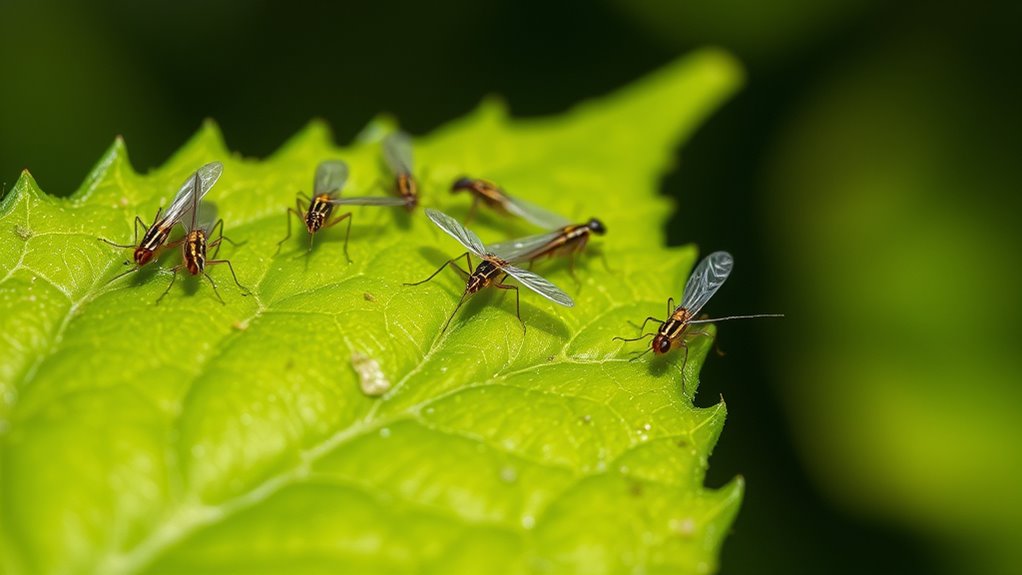

To manage thrips and whiteflies effectively, start with biological controls like releasing ladybugs or lacewing larvae, and create a habitat that attracts beneficial insects. Combine this with targeted, carefully applied chemical treatments when pests appear, and keep plants healthy through proper watering and sanitation. Regular inspections help catch infestations early, and physical barriers can prevent pests from reaching your plants. For detailed strategies to keep pests at bay, continue exploring proven methods inside.
Key Takeaways
- Introduce beneficial insects like ladybugs and lacewing larvae to naturally reduce thrips and whitefly populations.
- Use targeted, insecticide labels specific to thrips and whiteflies, following application instructions carefully.
- Combine biological control with selective chemical treatments for effective, integrated pest management.
- Maintain plant health through proper watering, pruning, and sanitation to make plants less attractive to pests.
- Regularly inspect plants for early pest detection and use physical barriers like row covers to prevent pest access.

Thrips and whiteflies are common pests that can quickly damage your plants if not managed effectively. These tiny insects feed on plant sap, causing leaves to yellow, wilt, and sometimes die. Their rapid reproduction makes them particularly challenging to control once they establish themselves. Fortunately, there are strategies you can implement to keep these pests in check and protect your garden or indoor plants.
One of the most sustainable methods is biological control. You can introduce natural predators such as ladybugs, lacewing larvae, or predatory mites that feed specifically on thrips and whiteflies. These beneficial insects work silently and effectively, reducing pest populations without harming your plants or the environment. To encourage their presence, avoid broad-spectrum insecticides that can kill beneficial insects along with pests. Instead, create a welcoming habitat with diverse plantings and avoid chemical treatments that could disrupt the natural balance.
However, if infestations become severe, chemical treatments may be necessary. When using insecticides, choose products labeled specifically for thrips and whiteflies. Apply them carefully, following the instructions on the label to minimize impact on beneficial insects and avoid resistance buildup. Systemic insecticides, which are absorbed by the plant and target pests feeding on it, can be particularly effective for persistent infestations. Always consider the timing and frequency of applications to maximize effectiveness and reduce potential harm to pollinators or other beneficial organisms.
Combining biological control with targeted chemical treatments offers a balanced approach. Start with introducing natural predators to manage small populations. If pests persist or spread rapidly, supplement with selective insecticides, ensuring you don’t overuse chemicals that could lead to resistance or environmental harm. Regularly inspect your plants to catch early signs of infestation, allowing you to respond promptly and minimize damage.
Proper sanitation also plays a crucial role. Remove heavily infested leaves, debris, and weeds that can harbor pests. Keep your plants healthy by providing proper watering, fertilization, and pruning, as strong, vigorous plants are less attractive to pests. Using physical barriers like row covers can prevent adult thrips and whiteflies from reaching your plants altogether.
Frequently Asked Questions
What Are Natural Predators for Thrips and Whiteflies?
You can use beneficial insects as natural predators for thrips and whiteflies, promoting biological control in your garden. Ladybugs, lacewing larvae, and predatory mites target whiteflies, while minute pirate bugs and certain predatory thrips help control thrips populations. Introducing these beneficial insects encourages a balanced ecosystem, reducing the need for chemical pesticides. By supporting biological control, you protect your plants and create a sustainable, eco-friendly pest management approach.
How Can I Prevent Thrips and Whiteflies in My Greenhouse?
To prevent thrips and whiteflies in your greenhouse, start with biological control by releasing natural predators like ladybugs or predatory mites. Use pest-resistant varieties of plants to reduce susceptibility. Keep your greenhouse clean, remove infected plants promptly, and maintain proper humidity and airflow. Regularly inspect your crops and apply organic insecticides if needed. These proactive steps help keep pest populations low and protect your plants effectively.
Are Organic Pesticides Effective Against These Pests?
Like a knight in shining armor, organic pesticides can be quite effective at pest control. You’ll find they work well against thrips and whiteflies, especially when used correctly. While they might not be as fast-acting as synthetic options, many organic solutions are environmentally friendly and safe for your plants. Just remember, their effectiveness depends on proper application and consistent use, so don’t give up too soon.
How Often Should I Monitor for Infestation Signs?
You should monitor for infestation signs weekly, especially during peak pest lifecycle periods. Keep an eye out for damage symptoms like silvery spots, distorted leaves, or sticky residues, which indicate thrips and whiteflies presence. Regular inspections help catch infestations early, making control more effective. By staying vigilant, you prevent severe damage and reduce the need for extensive treatments, keeping your plants healthy and pest-free.
Can Thrips and Whiteflies Transmit Plant Diseases?
Imagine tiny pests acting as hidden couriers—thrips and whiteflies do transmit plant diseases through their feeding behavior patterns. When they pierce plant tissues, they can spread viruses and bacteria, causing damage that’s often hard to spot early. Their pest behavior patterns make them efficient disease carriers, so monitoring and controlling these pests isn’t just about preventing bites but also stopping the transmission of serious plant diseases.
Conclusion
By staying vigilant and implementing effective control measures, you can keep thrips and whiteflies under control. Regular monitoring and early intervention make all the difference in protecting your plants. Remember, isn’t it worth the effort to enjoy healthy, thriving crops? With a proactive approach, you’ll reduce damage and ensure your garden’s success. So, are you prepared to take charge and keep those pests at bay? Your plants will thank you!