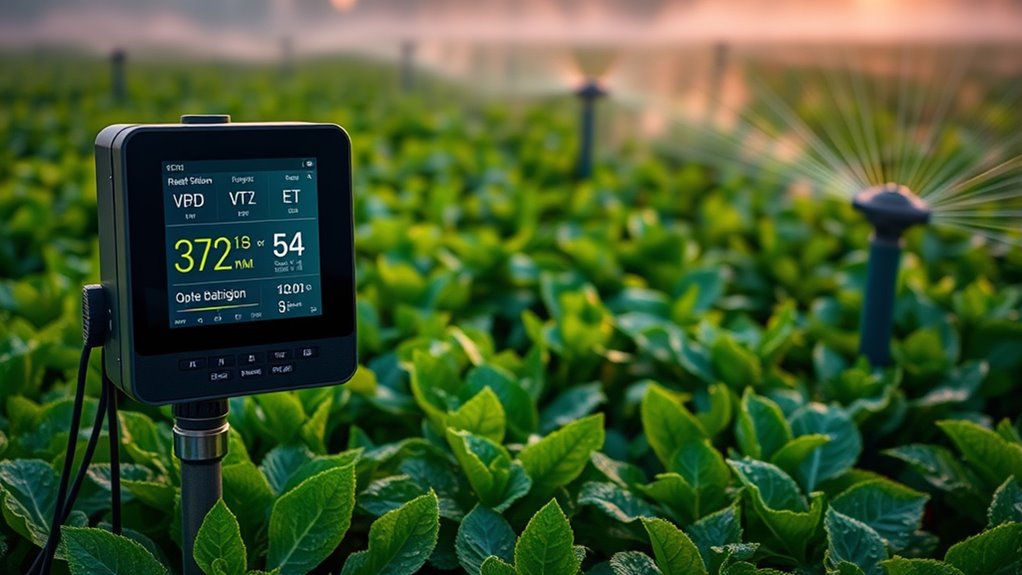
To optimize your irrigation schedule using VPD and ET, you should monitor real-time VPD data to gauge air dryness and determine when plants need water. Combine this with ET estimates to understand how much water your crops are losing daily through evaporation and transpiration. By integrating soil moisture levels alongside these parameters, you can tailor watering precisely, avoiding waste and stress. Keep going to discover how these tools can help you develop sustainable, efficient irrigation plans.
Listen free for 30 days with Audible
Thousands of audiobooks and originals — cancel anytime.
As an affiliate, we earn on qualifying purchases.
Key Takeaways
- VPD indicates air dryness, helping determine optimal irrigation timing to prevent plant water stress.
- ET estimates daily crop water loss, guiding precise water replacement to meet crop needs.
- Combining VPD and ET data allows for responsive, weather-based irrigation scheduling.
- Monitoring soil moisture alongside VPD and ET prevents over- or under-watering.
- Integrating these parameters enhances water efficiency, crop health, and sustainable farming practices.

Have you ever wondered how to make the most of your water resources while ensuring healthy crop growth? Effective irrigation scheduling is key, and understanding the dynamics of soil moisture and crop stress can make a significant difference. When you manage irrigation properly, you prevent your crops from experiencing water shortages or excess, both of which can hinder growth and reduce yields. Soil moisture levels directly impact plant health; too little moisture causes stress, while too much can lead to root diseases and nutrient leaching. By monitoring soil moisture closely, you can determine exactly when your crops need water, avoiding unnecessary irrigation that wastes resources and risking crop stress if you wait too long.
Using environmental parameters like vapor pressure deficit (VPD) and evapotranspiration (ET) helps fine-tune your irrigation schedule. VPD measures the difference between the moisture in the air and the moisture the air can hold when saturated. When VPD is high, the air is dry, and plants tend to lose water faster through transpiration. Recognizing this helps you decide when to irrigate so your crops don’t become stressed due to excessive water loss. Conversely, if VPD is low, plants are transpiring less, and you might delay watering without risking crop stress. Incorporating VPD data into your scheduling allows you to respond to real-time atmospheric conditions, optimizing water use and maintaining plant health.
Using VPD data helps optimize watering based on real-time atmospheric conditions.
Evapotranspiration, on the other hand, combines the effects of evaporation from the soil and transpiration from the plants. It provides an estimate of how much water your crops are losing daily. By calculating ET, you can determine the precise amount of water needed to replace losses, ensuring your crops stay adequately hydrated without overwatering. This helps prevent crop stress caused by inconsistent watering. ET-based scheduling encourages you to match water application with actual crop needs, promoting healthier growth and better resource management.
Together, VPD and ET form a powerful duo for irrigation planning. They enable you to tailor watering practices based on current weather conditions and crop requirements, reducing water waste and preventing crop stress. Regularly monitoring soil moisture alongside VPD and ET data lets you fine-tune your approach, ensuring your crops receive just the right amount of water at the right time. This precision not only boosts crop health but also conserves water, making your irrigation practices more sustainable and efficient. Ultimately, understanding and applying these concepts helps you grow healthier crops while making the best use of your water resources, leading to more productive and resilient farming.
Additionally, understanding plant stress indicators can further optimize your irrigation strategy and improve crop resilience.
soil moisture meter for irrigation
As an affiliate, we earn on qualifying purchases.
As an affiliate, we earn on qualifying purchases.
Frequently Asked Questions
How Do VPD and ET Interact in Irrigation Scheduling?
VPD and ET work together to optimize irrigation scheduling by reflecting crop water needs and environmental conditions. When VPD is high, plants lose more water, increasing ET rates, which signals you to irrigate sooner to support crop growth. By monitoring both, you can improve water efficiency, avoid overwatering, and ensure healthy crop development. This dynamic approach guarantees you’re meeting crop demands precisely while conserving water resources.
Can VPD and ET Be Used for All Crop Types?
Yes, you can use VPD and ET for all crop types, but you need to make crop-specific adjustments. Different crops have varying water needs, so you should consider soil moisture considerations and adjust your irrigation schedule accordingly. By monitoring VPD and ET closely, you can optimize watering for each crop, ensuring healthy growth while preventing over- or under-watering, no matter the crop type.
What Equipment Is Needed to Measure VPD and ET Accurately?
Ever wonder what equipment you need to measure VPD and ET accurately? You’ll want a reliable weather station to collect data like temperature, humidity, and solar radiation, which influence VPD. Soil moisture sensors are also essential to monitor moisture levels directly. Together, these tools help you precisely schedule irrigation, ensuring ideal water use and healthy crops. Do you have the right setup to get accurate readings?
How Does Weather Variability Affect Vpd-Based Irrigation Scheduling?
Weather variability can markedly impact VPD-based irrigation scheduling by causing fluctuations in vapor pressure deficit, which affects crop water demand. You need to adapt your schedules to changing conditions to maintain effective irrigation. This approach supports climate adaptation and enhances crop resilience, ensuring your plants get adequate water despite unpredictable weather. Regular monitoring and flexible adjustments help you optimize water use, reduce stress on crops, and improve overall yield.
Are There Software Tools That Integrate VPD and ET Data?
Yes, several software tools integrate VPD and ET data to help you optimize irrigation scheduling. These platforms often feature software integration and data visualization, making it easier to interpret complex data quickly. You can monitor real-time conditions, analyze trends, and adjust your irrigation practices accordingly. Popular options include CropX, Hortau, and CropX, which provide user-friendly interfaces and extensive data integration to support precise watering decisions.
Conclusion
So, next time you’re tempted to ignore VPD and ET in your irrigation schedule, remember: plants aren’t begging for water just to make your life easier. They actually know what they need—unlike some humans who forget to drink. Using VPD and ET isn’t just smart; it’s the secret to avoiding overwatering disasters and keeping your crops thriving. Because, really, who wants a soggy root system or a crop that’s as parched as your sense of humor?
NFL season / tailgating Picks
team gear
As an affiliate, we earn on qualifying purchases.