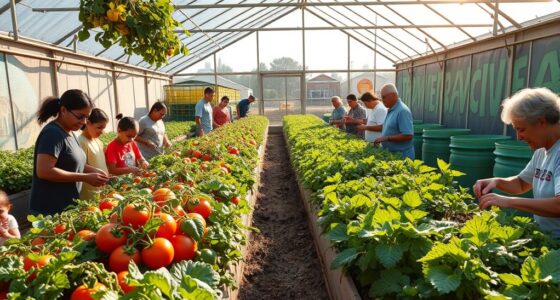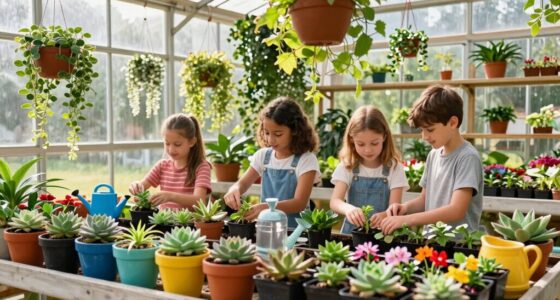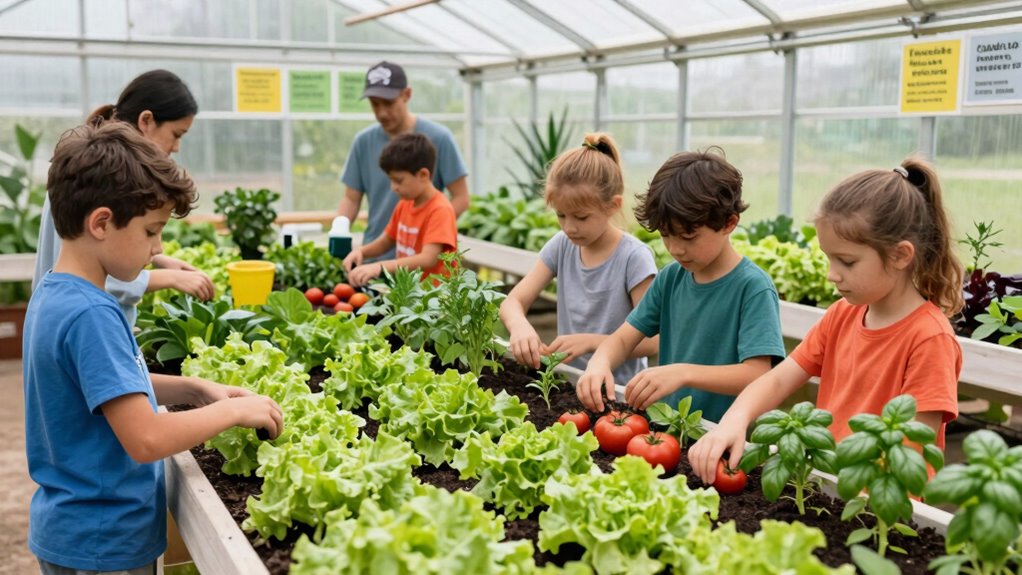

Community greenhouses support your food literacy by turning urban spaces into hands-on learning environments. They allow you to grow, see, and taste fresh produce, making complex food systems easier to understand. These spaces teach you eco-friendly practices like composting and water harvesting, promoting sustainable habits. By participating in workshops and community projects, you can build confidence in your ability to grow food and make healthier choices. Keep exploring how these green spaces empower you to shape a more sustainable city.
Open a free Amazon Business account
Business pricing, bulk buying and tax-exempt orders.
As an affiliate, we earn on qualifying purchases.
Key Takeaways
- Community greenhouses serve as hands-on learning spaces for residents to understand plant biology and sustainable gardening practices.
- They provide access to fresh, healthy produce, encouraging practical knowledge of local food sources.
- Greenhouses promote eco-friendly methods like composting and water conservation, fostering environmental awareness.
- They facilitate community involvement through workshops, volunteer activities, and shared food-growing experiences.
- Greenhouses empower residents with skills and confidence to grow food, supporting local food systems and sustainable urban living.

Community greenhouses are transforming urban spaces into thriving hubs of food education and sustainability. These structures bring fresh opportunities for residents to engage with urban agriculture and learn about sustainable practices firsthand. As you step into a community greenhouse, you quickly realize how essential these spaces are for fostering food literacy. They serve as living classrooms where you can see, touch, and taste the fruits of your labor, making the abstract concepts of food systems tangible and understandable.
In an urban environment, community greenhouses break down barriers to access fresh, healthy produce. They demonstrate how urban agriculture can be integrated into city life, encouraging residents to grow their own food regardless of limited space. This hands-on experience helps you understand the importance of local food production and the benefits it offers, such as reducing food miles and lowering your carbon footprint. By participating in planting, watering, and harvesting, you gain practical knowledge about plant biology, soil health, and crop management—all essential components of food literacy.
Sustainable practices are at the core of community greenhouse initiatives. You learn that sustainable agriculture isn’t just about growing food; it’s about doing so responsibly. Greenhouses often employ eco-friendly methods like composting, rainwater harvesting, and organic pest control, which you can observe and even practice yourself. These practices teach you how to minimize environmental impact while maximizing food production. As you become more familiar with these techniques, you develop a deeper appreciation for sustainable living and how it can be incorporated into your daily routine. Additionally, understanding the environmental benefits of sustainable practices can motivate you to adopt eco-friendly habits in your own life. Developing a food literacy also enables you to make informed decisions that support local ecosystems and reduce waste.
Moreover, community greenhouses foster a sense of collective responsibility and community involvement. When you participate in workshops or volunteer days, you connect with others who share your interest in healthy eating and environmental stewardship. This sense of community enhances your food literacy by providing diverse perspectives and shared knowledge. You see firsthand how collective effort and sustainable practices help build resilient local food systems that benefit everyone.
You also learn about urban food systems, which broadens your understanding of how cities can support sustainable food production and distribution. Ultimately, community greenhouses serve as crucial tools for empowering you with the knowledge to make informed food choices. They make complex topics accessible and applicable, turning theory into practice. As you learn about urban agriculture and sustainable practices within these green spaces, you gain the confidence to grow your own food, advocate for sustainable policies, and contribute to a healthier, more sustainable city. Through these experiences, you not only enhance your food literacy but also become an active participant in shaping a more sustainable future.
As an affiliate, we earn on qualifying purchases.
Frequently Asked Questions
How Do Community Greenhouses Influence Local Food Sovereignty?
Community greenhouses boost local food sovereignty by empowering you to grow your own food sustainably. They promote sustainable agriculture practices, reducing dependency on external food sources and fostering resilience. By providing access to fresh produce and gardening knowledge, greenhouses encourage local empowerment, allowing you to take control of your food supply. This collective effort strengthens community bonds and guarantees that everyone has a say in their food systems, fostering long-term food security.
What Funding Options Are Available for Starting a Community Greenhouse?
Think of funding as the seed for your community greenhouse. You can explore grant opportunities from local government, nonprofits, or environmental agencies that support urban agriculture. Sponsorship programs from local businesses can also provide essential resources. By planting these financial seeds, you cultivate opportunities to grow your project, turning your vision into a thriving space that fosters food literacy and community resilience.
How Can Greenhouses Be Adapted for Urban Environments?
You can adapt greenhouses for urban environments by integrating vertical farming techniques, maximizing limited space vertically. Use solar integration to power the greenhouse sustainably, reducing energy costs and promoting eco-friendly practices. Incorporate compact, modular designs that fit into small plots or rooftops. These adaptations make urban greenhouses more efficient and accessible, enabling you to grow food in city settings while leveraging renewable energy and innovative farming methods.
What Are the Common Challenges Faced by Community Greenhouses?
You’ll often face challenges like managing pests and planning seasonal planting, which can be tricky in community greenhouses. Pests may damage crops, so effective pest management strategies are essential. Seasonal planting requires careful timing to maximize yield and avoid crop failure. Additionally, limited space and resources can make it harder to implement diverse planting schedules, but with proper planning and pest control, you can keep your greenhouse productive year-round.
How Do Greenhouses Promote Inclusivity in Food Education?
Greenhouses promote inclusivity in food education by offering accessible spaces for everyone to learn. You can participate in seed sharing programs, which encourage community involvement and diversity. Skill workshops provide hands-on experiences, ensuring people of all backgrounds can develop gardening and cooking skills. These initiatives break down barriers, fostering a sense of belonging and empowering individuals to take charge of their food choices and sustainability efforts.
Conclusion
Community greenhouses are the seeds of food literacy, sprouting skills and knowledge right in your neighborhood. They turn the soil of understanding, helping you nurture a deeper connection to where your food comes from. As you walk through these green oases, you’ll find that learning about planting, harvesting, and cooking transforms your relationship with food from mere sustenance to a vibrant, living story. In this garden of knowledge, you’re not just growing plants—you’re growing a healthier, more connected community.
NFL season / tailgating Picks
team gear
As an affiliate, we earn on qualifying purchases.