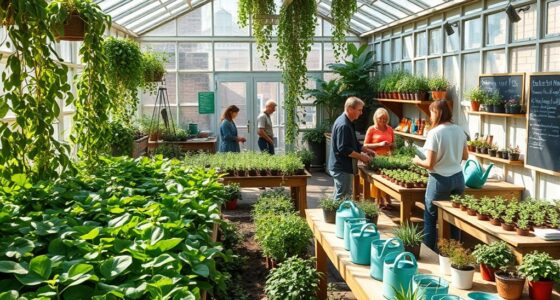
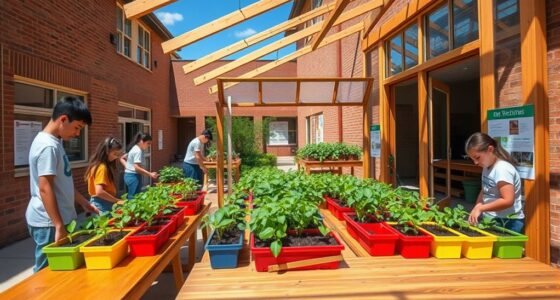
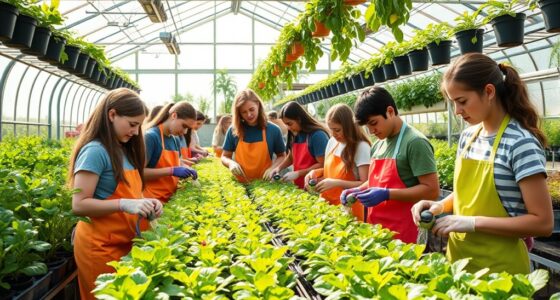
Community composting with greenhouse integration transforms urban waste into valuable soil, helping reduce landfill waste and boost local food production. By setting up compost bins, you can easily turn food scraps and yard debris into nutrient-rich compost. When combined with a greenhouse, this compost nourishes plants, creates a sustainable cycle, and extends growing seasons. Engaging your neighborhood in these efforts fosters environmental responsibility and greener spaces, and you’ll discover more ways to make this eco-friendly process work for your community.
Listen free for 30 days with Audible
Thousands of audiobooks and originals — cancel anytime.
As an affiliate, we earn on qualifying purchases.
Key Takeaways
- Integrating compost bins with greenhouses creates a closed-loop system that recycles waste into natural fertilizers for year-round plant growth.
- Community composting reduces landfill waste and pollution while enriching soil used within greenhouses and urban gardens.
- Greenhouses extend growing seasons, allowing continuous composting activities and sustainable food production in urban neighborhoods.
- Educational programs and volunteer efforts promote effective composting techniques and increase community engagement in eco-friendly practices.
- Combining composting with greenhouses fosters environmental awareness, responsible waste management, and healthier, greener neighborhoods.
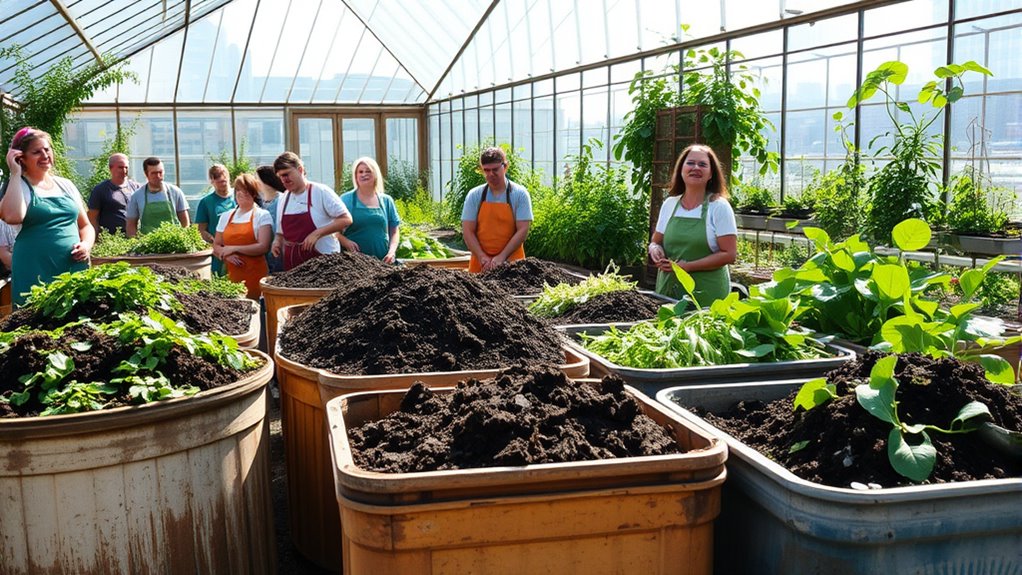
Have you ever wondered how neighborhoods turn everyday waste into valuable soil? It all begins with understanding urban waste and how it can be transformed through community composting efforts. Instead of letting food scraps and yard debris clutter landfills, local residents can set up compost bins to recycle these materials naturally. These bins serve as small ecosystems that break down organic waste into rich, nutrient-dense compost, which can be used to nourish community gardens, parks, and even private yards. When everyone participates, it creates a sustainable cycle that reduces waste and promotes greener urban spaces.
Transform urban waste into nutrient-rich soil through community composting efforts and shared green spaces.
Using compost bins in your neighborhood isn’t just about disposal; it’s about creating a shared resource. When residents contribute their compostable waste—fruit peels, coffee grounds, grass clippings—they help divert substantial amounts of urban waste from overflowing landfills. Regularly maintaining these compost bins ensures proper aeration and moisture levels, which speeds up decomposition and prevents odors. As the compost matures, you’ll notice it developing a dark, crumbly texture that’s perfect for enriching soil. By involving multiple households, you foster a sense of collective responsibility and environmental stewardship, making waste management a community effort.
Integrating composting with a greenhouse elevates this process even further. When you build or partner with a greenhouse, you create a closed-loop system where the compost produced from urban waste directly benefits plant growth. The compost can be used as a natural fertilizer, reducing reliance on chemical inputs and improving plant health. This synergy encourages residents to see their waste as a resource rather than trash. Plus, the greenhouse offers a protected environment for seedlings and plants, which thrive on nutrient-rich compost. This setup can extend growing seasons, boost local food production, and educate community members about sustainable practices.
Community composting with greenhouse integration also promotes environmental awareness and education. Workshops and volunteer days can teach residents about composting techniques, the importance of reducing waste, and how to maintain healthy compost bins. When people see their efforts resulting in flourishing plants and healthy soil, they’re more motivated to participate. Furthermore, the greenhouse provides a space for year-round composting activities, regardless of weather, ensuring continuous community engagement. Incorporating sound science and innovative approaches can further enhance compost efficiency and effectiveness. Combining these elements transforms waste management from a mundane task into a rewarding, educational experience that benefits everyone involved.
In the end, turning urban waste into valuable soil through community composting and greenhouse integration offers a practical, eco-friendly solution to urban waste challenges. It empowers residents to take action, reduces landfill contributions, and creates lush, productive green spaces. As you get involved, you’ll discover how simple steps—like setting up compost bins and nurturing a greenhouse—can lead to a healthier, more sustainable neighborhood.
compost bins for community gardens
As an affiliate, we earn on qualifying purchases.
As an affiliate, we earn on qualifying purchases.
Frequently Asked Questions
How Does Greenhouse Integration Affect Composting Temperature Control?
Greenhouse integration improves composting temperature control by providing a warmer environment, which helps regulate temperature fluctuations. You’ll notice more consistent microbial activity because the greenhouse maintains ideal heat levels, speeding up decomposition. This setup also protects compost from cold weather, preventing temperature drops that slow microbial processes. Overall, integrating a greenhouse allows you to better manage thermal conditions, ensuring efficient composting year-round and promoting healthier microbial growth.
What Are the Best Plant Choices for Greenhouse-Compatible Composting?
You should choose plants with specific nutrient requirements, like leafy greens, herbs, or tomatoes, which thrive in nutrient-rich compost. Use composting container options like tumblers or bins that promote aeration and temperature control, ensuring healthy microbial activity. This combination helps you produce high-quality compost tailored for your plants, supporting vigorous growth. Selecting the right plants and containers optimizes your greenhouse-compatible composting system for better plant health and productivity.
How Can Community Members Participate in Greenhouse-Based Composting Programs?
You can participate in greenhouse-based composting programs by joining local DIY composting initiatives and volunteering your time. Engage with community members through workshops or composting events, sharing tips and resources. Your active involvement helps reduce waste and enriches the greenhouse soil. By contributing your compostable materials and encouraging others to do the same, you foster community engagement and support sustainable practices that benefit everyone.
What Are Common Challenges in Combining Composting With Greenhouse Management?
You might face challenges like maintaining community engagement and resource allocation when combining composting with greenhouse management. Ensuring everyone stays involved requires ongoing education and outreach, while limited resources can hinder proper composting and greenhouse operations. Balancing these needs calls for strategic planning, clear communication, and dedicated funding. By actively addressing community participation and resource management, you can create a successful integration that benefits both composting efforts and greenhouse productivity.
How Does Greenhouse Integration Impact Composting Odor and Pest Control?
Greenhouse integration improves composting by enhancing odor mitigation and pest prevention. You’ll notice less smell escaping because the greenhouse contains odors and controls airflow. It also deters pests, as the enclosed environment makes it harder for them to access compost materials. By managing temperature and moisture levels inside the greenhouse, you create a cleaner, more controlled environment, reducing odors and keeping pests away, leading to more efficient composting.
Conclusion
By embracing community composting with greenhouse integration, you’re planting the seeds for a greener future. As each contribution adds up, it’s like tending a shared garden where every effort blooms into a healthier environment. Together, you create a cycle of growth and renewal that benefits everyone. Remember, just like a thriving garden, your collective actions nourish the planet—proving that even small steps can cultivate something truly extraordinary.
NFL season / tailgating Picks
team gear
As an affiliate, we earn on qualifying purchases.