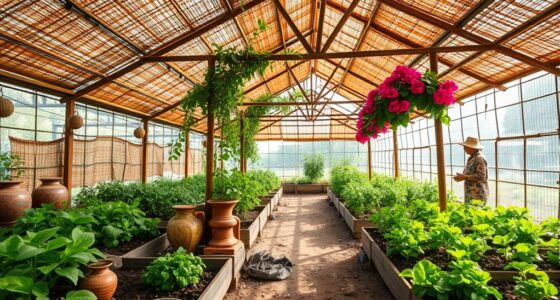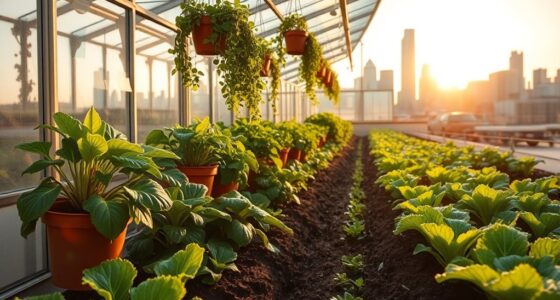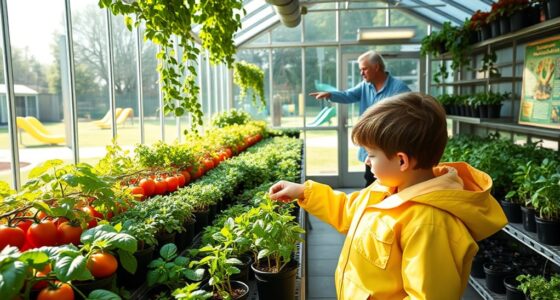

Building a CSA around a community greenhouse boosts local food access and strengthens community bonds. You can involve residents through volunteer programs, allowing them to help with planting, harvesting, and maintenance. Hosting workshops on gardening and sustainability fosters engagement and education, while simple sign-up processes and organized pick-up spaces make participation easy. Incorporating risk management guarantees the project stays resilient over time. Keep exploring to discover how to create a thriving, sustainable community greenhouse-based CSA.

Get garden gear delivered free — and shop member deals
- Fast, free delivery on millions of items
- Access to Prime Big Deal Days deals on October 6–7
- Prime Video, Amazon Music and more included
Key Takeaways
- Design the greenhouse layout to maximize space for diverse crops and facilitate easy access for volunteers and distribution.
- Establish a clear membership sign-up process and regular communication to engage community members.
- Implement volunteer programs for planting, maintenance, and harvesting to foster ownership and reduce staffing costs.
- Incorporate educational activities like workshops to increase awareness of sustainable farming and healthy eating.
- Develop risk management strategies to ensure project sustainability and resilience against unforeseen challenges.
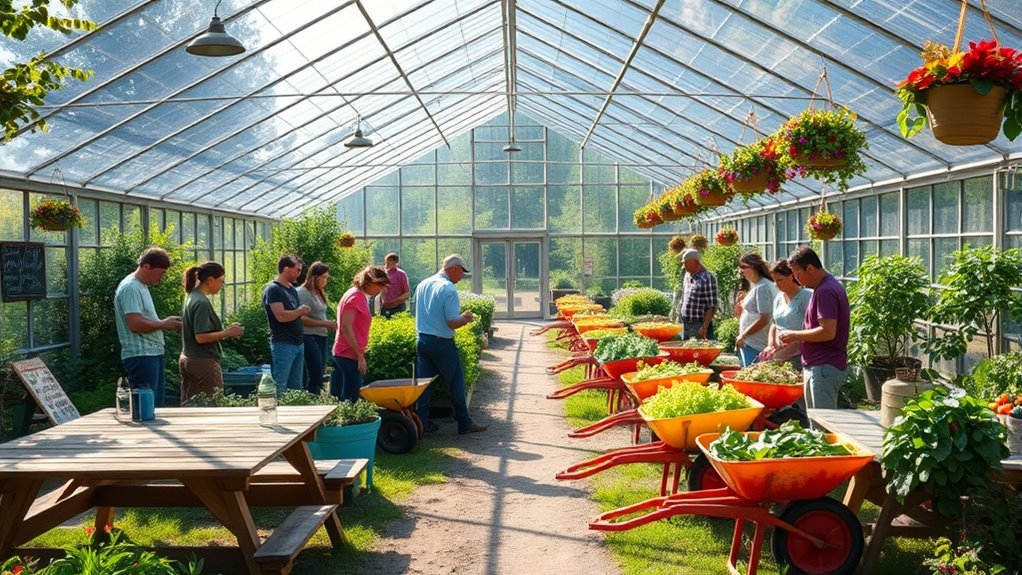
Community Supported Agriculture (CSA) and community greenhouses are powerful ways to connect local residents with fresh, sustainable food. When you build a CSA around a community greenhouse, you create a direct link between urban farming initiatives and the people who benefit from them. This setup not only provides access to healthy produce but also fosters a sense of ownership and involvement among community members. By integrating urban farming practices into your greenhouse, you can maximize the use of limited space and grow a diverse range of crops, ensuring that your CSA offers fresh, seasonal produce throughout the year. The key is to develop a system that encourages participation, education, and shared responsibility.
Volunteer programs play a pivotal role in establishing and maintaining this type of CSA. When residents volunteer their time and skills, they become more invested in the success of the project. You can organize weekly workdays where volunteers help with planting, watering, harvesting, and maintaining the greenhouse. Not only does this reduce staffing costs, but it also builds community bonds. Volunteers often gain a deeper appreciation for sustainable urban farming and learn valuable skills that they can apply elsewhere. Encouraging local schools, neighborhood groups, and eco-enthusiasts to participate in volunteer programs creates a diverse, committed team that keeps the greenhouse thriving.
Furthermore, involving volunteers in educational activities promotes awareness of sustainable agriculture and healthy eating. You can host workshops on gardening techniques, composting, or cooking classes using produce from your greenhouse. This educational component enhances the value of your CSA by empowering residents to grow their own food and make environmentally conscious choices. As the community becomes more engaged, your CSA can expand its reach, attracting more members and volunteers who want to contribute to a greener, healthier neighborhood.
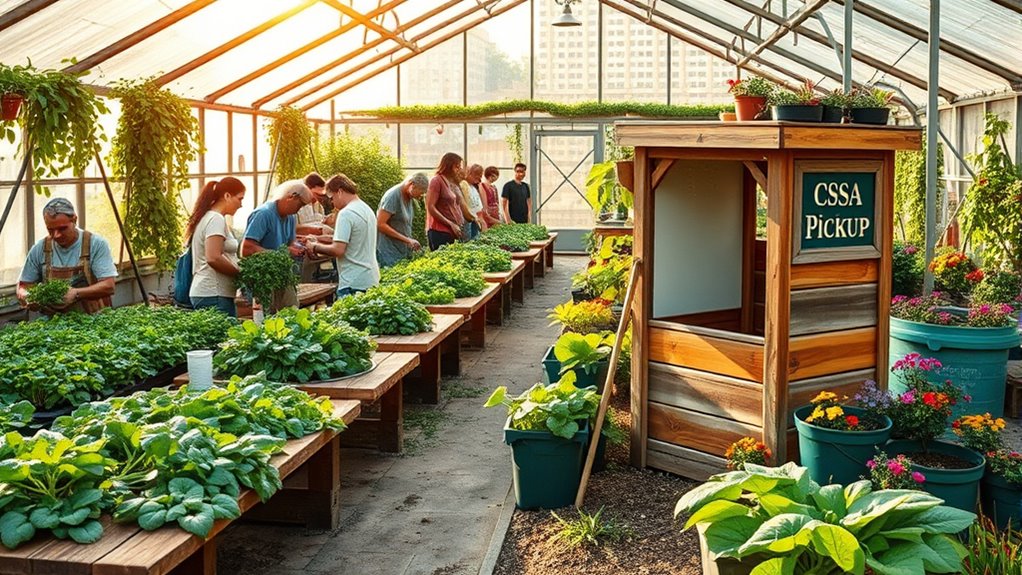
Building a CSA around a community greenhouse also requires thoughtful planning around distribution and membership management. You’ll want to establish a straightforward sign-up process, clear communication channels, and regular updates about what’s available each week. Having a dedicated space within the greenhouse for community members to pick up their shares fosters a sense of belonging and pride. Additionally, you can encourage members to participate in planting and harvesting, further strengthening the community’s connection to its food source. Incorporating risk management strategies can help ensure the ongoing success and security of your CSA in the face of unforeseen challenges.
community greenhouse gardening tools
As an affiliate, we earn on qualifying purchases.
As an affiliate, we earn on qualifying purchases.
Frequently Asked Questions
How Do I Become a Member of the CSA?
To become a member of the CSA, you typically sign up through the community greenhouse’s website or contact them directly. As a member, you’ll enjoy benefits like fresh, local produce and exclusive access to community events. You might also participate in harvest shares or volunteering opportunities. Joining is straightforward, and you’ll connect with others who share your interest in sustainable farming, making your experience rewarding and community-oriented.
What Are the Costs Associated With Joining?
Joining the CSA involves paying membership fees, which vary based on seasonal pricing. You’ll typically pay upfront or in installments, depending on the program’s structure. The fees cover your share of fresh produce and support the greenhouse’s operations. Be sure to ask about any additional costs, like optional add-ons or discounts for early sign-ups. Overall, the cost reflects the quality and variety of the seasonal produce you’ll receive.
How Is the Harvest Distributed Among Members?
In this CSA, harvest sharing is based on a fair distribution method that guarantees all members receive a portion of the produce. You’ll typically participate in weekly or bi-weekly pickups, where the distribution methods focus on equal or proportional shares, depending on the harvest size and member number. This approach promotes fairness and community engagement, so everyone benefits from the greenhouse’s bounty and shares in the seasonal harvest equally.
Can Members Volunteer to Help With Greenhouse Maintenance?
Yes, you can definitely volunteer to help with greenhouse upkeep. Your involvement opens up exciting volunteer opportunities that keep the greenhouse thriving. Imagine the satisfaction of contributing directly to the growth of fresh produce, feeling the warm sun on your face as you tend to plants. Your participation not only benefits the greenhouse but also strengthens community bonds. Don’t miss out—your help makes a real difference!
What Types of Produce Will Be Available Seasonally?
You’ll find seasonal crop varieties like leafy greens, tomatoes, and herbs available throughout the year, depending on the harvest planning. During spring and summer, expect fresh salads and sweet peppers, while fall brings root vegetables and hearty greens. In winter, you might see hardy varieties like kale and Brussels sprouts. The greenhouse helps extend the growing season, ensuring a steady supply of fresh produce tailored to each season’s peak.
Conclusion
Building a CSA around a community greenhouse not only boosts local food security but also fosters stronger bonds among neighbors. Did you know that community-supported agriculture can reduce food miles by up to 80%, notably cutting carbon emissions? By integrating a greenhouse, you can extend growing seasons and increase harvests. This approach creates a sustainable, resilient food system that benefits everyone—making your community greener, healthier, and more connected.
Fall yard work Picks
leaf blowers
As an affiliate, we earn on qualifying purchases.