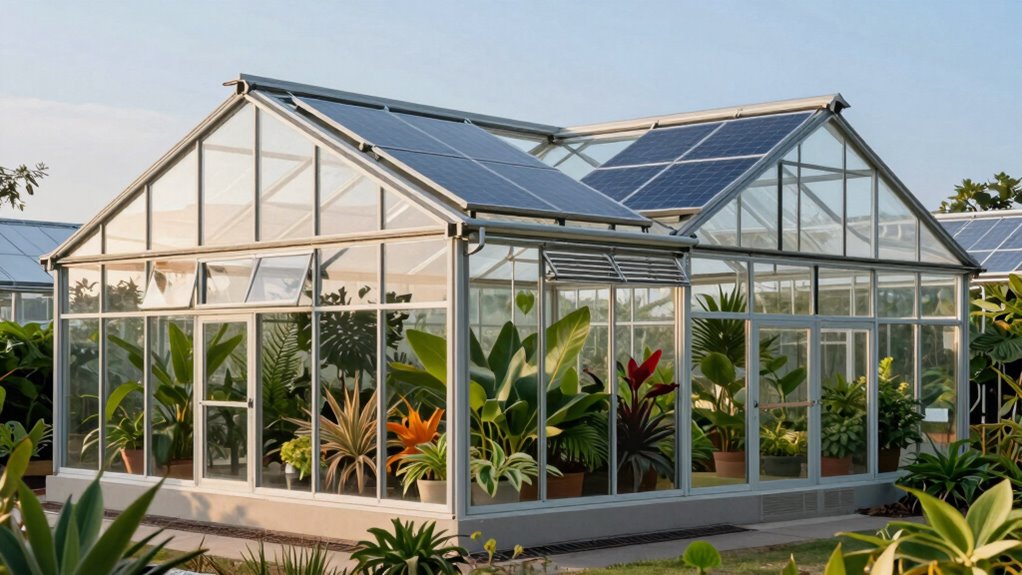

A truly low-energy greenhouse uses sustainable materials like recycled plastics, bamboo, or timber to reduce environmental impact and improve insulation. It also relies on passive ventilation, such as roof vents and side openings, to naturally regulate temperature and humidity without mechanical systems. Thoughtful design, including natural shading and insulation techniques, minimizes the need for artificial heating and cooling. Keep exploring to discover how these strategies work together to create an eco-friendly, cost-efficient environment for your plants.

Get garden gear delivered free — and shop member deals
- Fast, free delivery on millions of items
- Access to Prime Big Deal Days deals on October 6–7
- Prime Video, Amazon Music and more included
Key Takeaways
- Utilizing sustainable, durable materials reduces initial carbon footprint and enhances insulation for energy efficiency.
- Implementing passive ventilation promotes natural airflow, minimizing reliance on mechanical cooling or heating.
- Combining sustainable materials with passive ventilation stabilizes microclimates, decreasing energy needs for climate control.
- Applying insulation and shading techniques prevents heat loss and overheating, reducing energy consumption year-round.
- Designing with passive principles and natural integration ensures optimal performance and minimizes overall energy use.
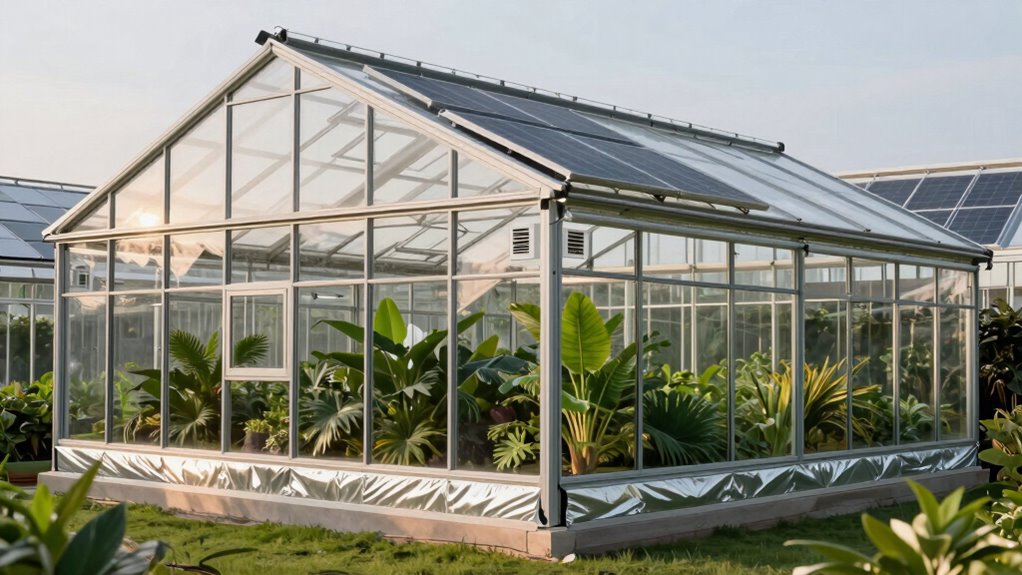
Have you ever wondered how greenhouses can maximize plant growth while minimizing energy use? The secret lies in their design and choice of materials, which work together to create an efficient environment. A truly low-energy greenhouse relies heavily on sustainable materials, which help reduce its carbon footprint from the start. These materials include recycled plastics, bamboo, or sustainably sourced timber, all chosen for their durability and eco-friendliness. Using sustainable materials not only decreases environmental impact but also enhances insulation, keeping the interior stable without excessive heating or cooling. This focus on sustainability guarantees your greenhouse remains energy-efficient over time.
Sustainable materials like recycled plastics, bamboo, and timber boost insulation and reduce environmental impact for a low-energy greenhouse.
Another key element is passive ventilation, which plays a critical role in maintaining ideal temperatures and humidity levels naturally. Instead of relying on energy-intensive fans or air conditioning systems, passive ventilation uses strategic design features like roof vents, side openings, and stack effect principles to promote natural airflow. When you incorporate passive ventilation, warm air naturally rises and escapes through vents, pulling cooler air inside through other openings. This process helps regulate temperature fluctuations and reduces the need for mechanical cooling, saving significant energy. Proper placement of vents and windows is essential; they should be positioned to maximize cross-ventilation, especially during warm days, and to prevent overheating in summer.
The combination of sustainable materials and passive ventilation creates a balanced microclimate inside your greenhouse. This stability minimizes the reliance on artificial heating and cooling systems, which are often the biggest energy consumers in traditional greenhouses. You’ll find that such design choices not only cut energy costs but also create a healthier environment for your plants and the planet. Incorporating energy-efficient design techniques further enhances overall sustainability and performance of your greenhouse. Thoughtful insulation made from sustainable materials further enhances efficiency by reducing heat loss during colder months. Additionally, incorporating shading techniques like retractable covers or natural shading from nearby trees can prevent overheating without extra energy.
Ultimately, a low-energy greenhouse is about smarter design choices. By selecting sustainable materials and integrating passive ventilation, you can craft a space that’s both eco-friendly and cost-effective. Incorporating passive design principles can significantly boost the effectiveness of your greenhouse in conserving energy. This approach empowers you to grow healthy plants while reducing your environmental impact. It’s not just about minimizing energy consumption but about creating a sustainable cycle that benefits your plants, your wallet, and the planet. When you prioritize these elements, you’re building a greenhouse that’s genuinely low-energy—one that works harmoniously with nature rather than against it.
recycled plastic greenhouse panels
As an affiliate, we earn on qualifying purchases.
As an affiliate, we earn on qualifying purchases.
Frequently Asked Questions
How Does Insulation Impact a Low-Energy Greenhouse’s Efficiency?
Insulation greatly boosts your low-energy greenhouse’s efficiency by maintaining stable temperatures. By adding thermal mass, you store heat during the day and release it at night, reducing energy needs. Airtight sealing prevents heat loss through drafts, keeping your greenhouse warm. Together, insulation, thermal mass, and airtight sealing work to minimize energy consumption, creating a more sustainable environment that requires less heating and cooling, ultimately saving you money and energy.
What Role Do Passive Solar Designs Play in Energy Reduction?
Passive solar designs harness the sun’s power by maximizing solar gain and utilizing thermal mass. Picture a greenhouse where thick concrete or stone walls absorb heat during the day, then slowly release it at night, creating a stable climate. This clever design reduces energy needs, as you rely on natural warmth instead of artificial heating. By carefully orienting and insulating, you dramatically cut energy consumption while keeping your plants thriving.
Are There Specific Materials Best for Low-Energy Greenhouse Construction?
You should choose materials like double-glazed glass or polycarbonate panels for ideal insulation, which helps reduce energy use. Incorporate natural materials like wood or recycled metal to enhance sustainability. Construction techniques such as airtight sealing, proper insulation, and strategic orientation maximize energy efficiency. By carefully selecting materials and applying effective construction methods, you create a low-energy greenhouse that maintains warmth with minimal external energy inputs.
How Can Ventilation Be Optimized for Energy Savings?
You can optimize ventilation by embracing a gentle dance of natural airflow and automated vents. Use automated vents to regulate temperature effortlessly, opening when it gets warm and closing as needed. Combine this with strategic placement to encourage natural airflow, reducing reliance on energy-intensive fans. This approach keeps your greenhouse comfortable and energy-efficient, turning ventilation into an elegant, low-energy solution that feels seamless and effortless.
What Maintenance Practices Help Maintain Low Energy Consumption?
You should regularly inspect and clean your greenhouse to maintain low energy consumption. Keep an eye on plant health to identify stress signs early, preventing energy waste from overcompensation. Implement pest control measures to avoid infestations that can damage plants and increase heating needs. Proper ventilation maintenance guarantees consistent airflow, reducing energy use. Consistent monitoring and timely cleaning help sustain an efficient environment, supporting healthy plants and minimizing energy expenses.
Conclusion
To make your greenhouse truly low-energy, you need to think of it as a delicate dance between insulation, natural sunlight, and ventilation. By smartly combining these elements, you’ll create a space that hums along efficiently, like a well-tuned orchestra. In the end, a low-energy greenhouse isn’t just about saving money; it’s about nurturing your plants while respecting the planet’s resources. With careful planning, you’ll turn your greenhouse into a sustainable sanctuary, flourishing in harmony with nature.
Fall yard work Picks
leaf blowers
As an affiliate, we earn on qualifying purchases.