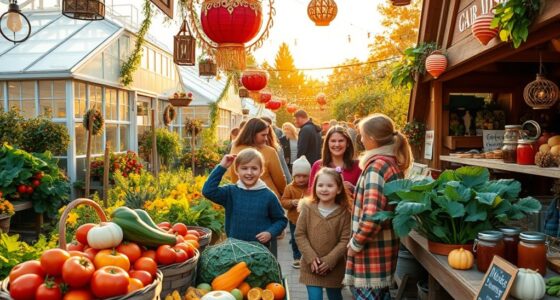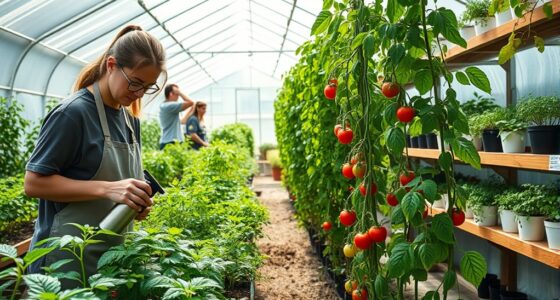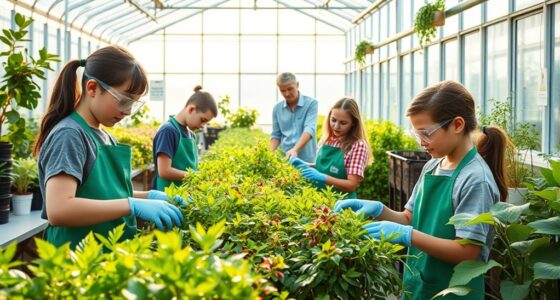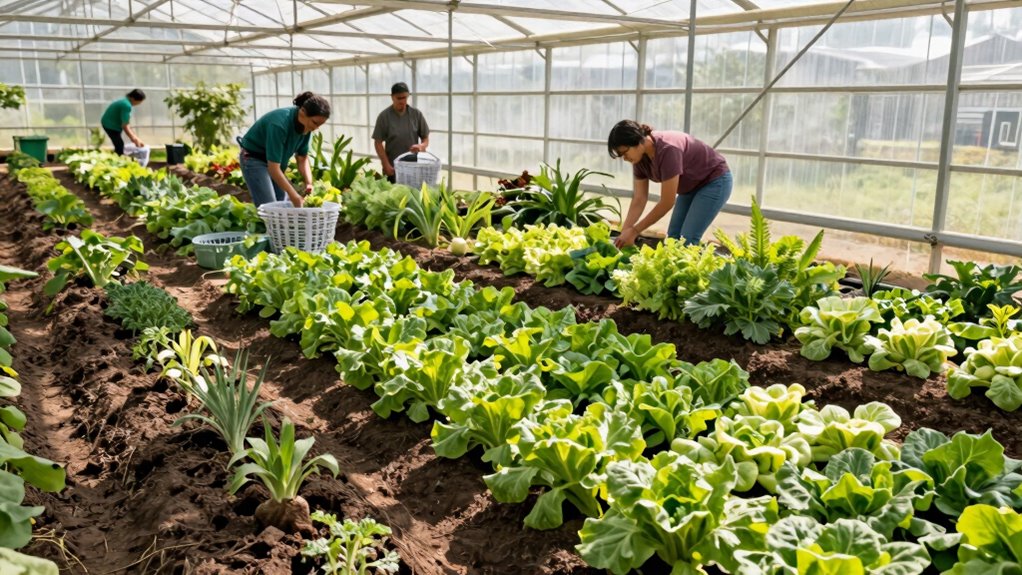

Greenhouse programs support your local food bank by providing fresh, nutritious produce all year, regardless of weather. They improve food quality, reduce transportation needs, and cut waste. These programs also foster community involvement through workshops, volunteer opportunities, and educational events, strengthening local ties. Urban farming creates jobs and promotes sustainable practices, making your food system more resilient. To discover how these initiatives can transform your community, keep exploring the many benefits they offer.

Get garden gear delivered free with Prime
- Fast, free delivery on millions of items
- Prime Video, Amazon Music and more included
- Member-only deals all year
Key Takeaways
- Provide fresh, nutritious produce year-round, reducing reliance on external supply chains.
- Minimize transportation costs and waste by growing food directly at the food bank location.
- Engage communities through educational events and volunteer opportunities, fostering ownership and trust.
- Support local economies by creating jobs and promoting sustainable urban farming practices.
- Enhance food security by enabling rapid response to community needs and culturally relevant crop production.
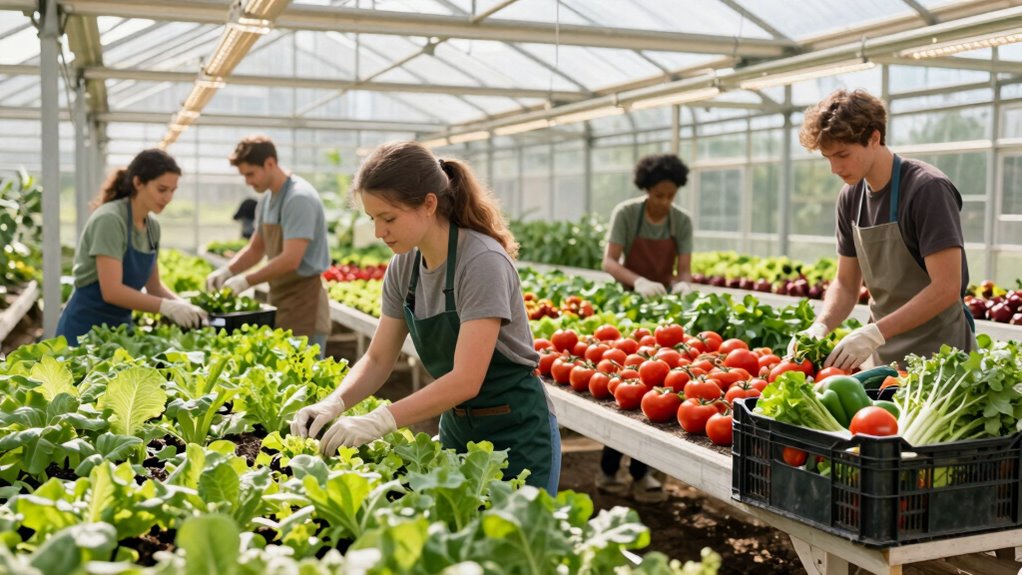
Greenhouse programs are becoming essential partners for food banks, providing fresh, nutritious produce to communities in need. These initiatives bring the benefits of urban farming directly into city environments, where space for traditional agriculture is limited. By establishing greenhouses, food banks can grow a variety of vegetables, herbs, and fruits year-round, regardless of weather conditions. This continuous supply of fresh produce enhances the nutritional quality of food distributions, helping to combat food insecurity with healthier options. Plus, greenhouses allow for controlled growing conditions, which means you can maximize yield and maintain high standards of quality—crucial factors in supporting community health.
Greenhouses enable year-round, high-quality, nutritious produce to support community health and fight food insecurity.
Your involvement in community outreach is a key element of a successful greenhouse program. When you engage local residents through workshops, volunteer opportunities, and educational events, you foster a sense of ownership and pride in growing their own food. This direct interaction builds trust and awareness, encouraging more people to participate in urban farming efforts. Community outreach also highlights the importance of sustainable practices, as residents learn how to grow food efficiently in limited spaces. By integrating educational components, greenhouses become not just food sources, but hubs for learning and empowerment, strengthening the connection between food banks and the communities they serve.
Urban farming through greenhouse programs also addresses logistical challenges faced by food banks. Transporting perishable items from farms to distribution centers can be costly and time-consuming. Growing produce on-site reduces transportation needs, ensuring that food remains fresh and reducing waste. It also allows food banks to respond swiftly to community demands, especially during emergencies or shortages. Additionally, these programs can be tailored to meet specific community needs, planting crops that are culturally relevant or highly nutritious, therefore making the food more appealing and beneficial to recipients. Incorporating VPS hosting deals and industry insights can help organizations manage their digital infrastructure efficiently as they expand their community outreach and operational capacity.
Your role in supporting greenhouse programs extends beyond just planting and maintenance. By promoting community outreach efforts and encouraging local participation, you help build resilient local food systems. These programs can create jobs, foster local economies, and educate people about sustainable agriculture. As you work with community members, you foster relationships rooted in shared goals of health, sustainability, and self-sufficiency. This collaborative approach also emphasizes the importance of urban agriculture as a sustainable solution for food security. Furthermore, integrating innovative technologies like vertical farming can optimize space and increase productivity within urban greenhouse setups. Ultimately, greenhouse programs serve as an indispensable bridge, connecting food banks to their communities through urban farming, and empowering residents to take an active role in improving their own food security.
As an affiliate, we earn on qualifying purchases.
Frequently Asked Questions
How Can Greenhouse Programs Be Scaled for Larger Food Banks?
You can scale greenhouse programs for larger food banks by expanding community engagement efforts, involving local volunteers, schools, and organizations to increase support. Securing diverse funding strategies, such as grants, donations, and sponsorships, helps finance larger facilities and equipment. Additionally, partnering with local businesses can create mutually beneficial relationships. This approach boosts production capacity, enhances resource availability, and strengthens community ties, making the greenhouse program more impactful and sustainable.
What Are the Initial Costs of Starting a Greenhouse for Food Banks?
Imagine a sunny, green haven where your food bank can grow fresh produce. The initial costs involve a thorough cost analysis and startup expenses, including purchasing or building the greenhouse structure, climate control systems, and soil or hydroponic setups. You’ll also need tools, seeds, and possibly training. While upfront investments can be significant, they’re balanced by the long-term benefits of sustainable, on-site food production that supports your community.
How Do Greenhouse Programs Impact Local Food Security Long-Term?
Greenhouse programs boost local food security long-term by promoting urban agriculture, allowing communities to grow fresh produce year-round. You help strengthen community resilience by providing consistent access to nutritious food, reducing reliance on external sources. These programs also empower residents with gardening skills, foster local food production, and create sustainable solutions to hunger. Ultimately, you’re building a more self-sufficient community that can better withstand economic or environmental challenges.
What Types of Crops Are Most Suitable for Food Bank Greenhouses?
You should focus on crop varieties like leafy greens, herbs, and cherry tomatoes, which grow well in greenhouses. These crops have quick harvest cycles and high yields, making them ideal for food banks. Use effective growing techniques such as controlled temperature, proper watering, and pest management to maximize output. Choosing versatile crop varieties and employing efficient growing methods help guarantee a steady, nutritious supply of fresh produce for those in need.
How Can Volunteers Effectively Assist in Greenhouse Programs?
Think of volunteers as the roots nurturing a thriving greenhouse. You can help by participating in volunteer training to learn proper planting and harvesting techniques, ensuring healthy crops. Engaging in community outreach spreads awareness about the program, attracting more helpers. Your hands-on support, from watering to organizing donations, directly boosts food production and distribution, making a tangible impact on local families in need.
Conclusion
As you see, greenhouse programs and food banks are more connected than you might think. It’s a coincidence that both thrive when communities come together, sharing resources and hope. By supporting greenhouse initiatives, you’re not just growing fresh produce—you’re helping to nourish those in need right in your own backyard. So, next time you think about community support, remember how a simple greenhouse can turn coincidence into a catalyst for change.
Columbus Day / Indigenous Peoples' Day Picks
long weekend sales
As an affiliate, we earn on qualifying purchases.