Hosting workshops in a greenhouse offers an engaging environment where you can combine education with hands-on plant care and pest management. You’ll benefit from a lush, natural space that makes learning memorable and helps participants connect with sustainability practices. By showcasing plant-specific routines and organic pest control, you create a dynamic atmosphere that encourages active participation. If you continue exploring, you’ll discover how to design an inspiring and effective greenhouse workshop experience.
Key Takeaways
- Choose a well-maintained greenhouse with adequate space and proper ventilation for optimal workshop comfort.
- Incorporate hands-on activities like plant care, pruning, and pest identification to enhance engagement.
- Use the greenhouse environment to demonstrate plant-specific care routines and sustainable practices.
- Plan activities that allow participants to handle plants and practice skills for better retention.
- Promote a natural, inspiring setting that encourages curiosity, interaction, and a deeper connection to gardening.
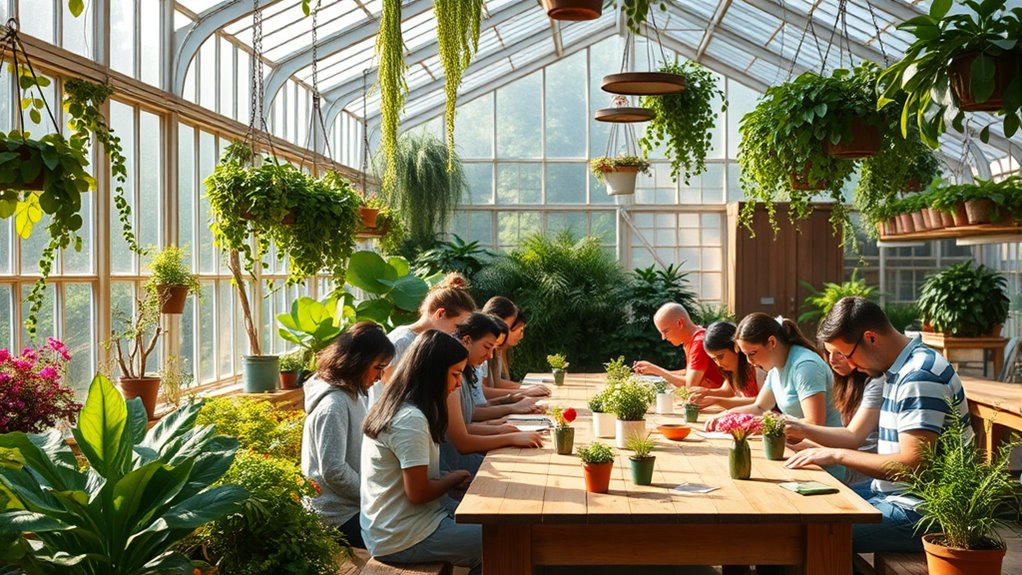
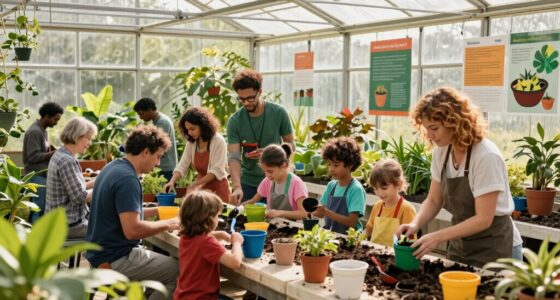
Hosting workshops in a greenhouse offers a unique opportunity to combine education with hands-on experience amidst lush, living surroundings. When you invite participants into this vibrant environment, you create an engaging space where they can directly observe and practice essential skills like plant care and pest management. This immersive approach helps attendees grasp complex concepts more effectively than through lectures alone, making your workshop memorable and impactful.
Hosting workshops in a greenhouse creates an engaging, hands-on learning environment for plant care and pest management.
As you guide your participants through plant care, emphasize the importance of understanding each plant’s specific needs. Show them how to check soil moisture, identify signs of overwatering or underwatering, and select appropriate fertilizers. Demonstrate proper pruning techniques to promote healthy growth and prevent disease. By working directly with the plants, attendees learn how to recognize early symptoms of issues, empowering them to become confident caregivers. Your hands-on approach ensures they leave with practical skills they can apply at home or in their own gardens.
Pest management is another critical topic you can cover effectively in a greenhouse setting. Since pests can quickly damage plants, teaching strategies for early detection and control is crucial. Show participants how to identify common pests, such as aphids, spider mites, or whiteflies, and discuss integrated pest management techniques. Highlight the importance of maintaining healthy plants through proper watering, nutrition, and sanitation, which naturally reduces pest problems. Demonstrate organic pest control methods, like introducing beneficial insects or using homemade organic sprays, giving your audience eco-friendly options to manage pests without chemical reliance. Engaging them in identifying pests and practicing removal methods builds confidence and ensures they understand how to maintain a pest-free environment.
Hosting workshops in a greenhouse also allows you to tailor your content to the specific plants growing there. You can showcase plant-specific care routines and pest prevention strategies, making the information more relevant and applicable. This environment encourages curiosity and questions, creating an interactive learning experience. Plus, the natural setting fosters a sense of connection to nature, inspiring attendees to develop a deeper appreciation for sustainable gardening practices. Incorporating personal development techniques such as mindfulness and goal setting can further enhance participants’ motivation and confidence in applying what they learn.
Throughout the workshop, keep the energy active and encourage participation. Invite your audience to handle the plants, try pruning, or practice pest identification. Use real-life examples from your greenhouse to illustrate common problems and solutions. This active engagement makes learning more effective and enjoyable. By the end of the session, your participants will have gained valuable skills in plant care and pest management, equipped to nurture healthy, thriving plants in their own spaces. Hosting in a greenhouse not only educates but also inspires a deeper connection to the living world around us.
organic pest control for greenhouse plants
As an affiliate, we earn on qualifying purchases.
As an affiliate, we earn on qualifying purchases.
Frequently Asked Questions
What Safety Precautions Are Necessary for Greenhouse Workshop Attendees?
You should guarantee attendees wear protective gear, like gloves and goggles, to prevent contact with pests or chemicals. Emphasize pest management to keep the environment safe and healthy. Maintain good greenhouse ventilation to avoid overheating and reduce humidity, which can cause mold. Clearly mark any hazardous areas and provide safety instructions beforehand. Regularly inspect the greenhouse for potential hazards, ensuring a safe, comfortable space for everyone during the workshop.
How Do I Handle Allergic Reactions During a Greenhouse Event?
Suddenly, an attendee shows signs of an allergic reaction—what do you do? Stay calm and act quickly by initiating allergy management protocols. Keep antihistamines and epinephrine auto-injectors on hand, and call emergency services immediately. Your emergency preparedness is essential; guiding others to stay clear and providing reassurance can save lives. Remember, quick action and proper tools make all the difference in handling allergic reactions effectively.
Can Workshops Be Conducted Year-Round in Any Climate?
Yes, you can conduct workshops year-round, but climate adaptability and seasonal scheduling are key. In warmer climates, outdoor or greenhouse settings work well year-round, while in colder regions, you’ll need a heated greenhouse or indoor space. Adjust your schedule based on seasonal weather patterns and guarantee your space stays comfortable for attendees. Proper planning allows you to host successful workshops regardless of climate, boosting engagement and learning.
What Equipment Is Essential for a Successful Greenhouse Workshop?
You need essential equipment like proper lighting, watering systems, and tools for plant maintenance to guarantee your greenhouse workshop runs smoothly. Include customizable workstations to allow workshop personalization, making it more engaging. Consider portable tables, storage for supplies, and safety gear. These elements help create an efficient environment, fostering learning and hands-on experience. Proper equipment supports workshop goals, encourages participant interaction, and ensures everyone leaves with new skills and knowledge.
How Do I Promote My Greenhouse Workshops Effectively?
Want your greenhouse workshops to fill up fast? Start with social media marketing—share vibrant photos and engaging videos to catch attention. Don’t forget to tap into community partnerships; collaborate with local groups to expand your reach. Create buzz through event listings and word-of-mouth. Keep your messaging consistent and inviting, and watch as curiosity grows. The right promotion turns your greenhouse workshops into must-attend events—are you ready to get started?
Conclusion
Hosting workshops in a greenhouse is like planting seeds of knowledge amidst lush, vibrant growth. As you guide your guests through this living classroom, watch ideas blossom and curiosity take root. The greenhouse’s glass walls become a window to discovery, bathing everyone in natural light and fresh inspiration. When the workshop ends, the seeds you’ve sown will sprout into new skills and connections, blooming into a garden of shared learning that continues to flourish long after the last session.