PPFD measures the instant light intensity your plants receive, affecting photosynthesis at any moment, while DLI sums up the total light they get each day, guiding your overall light schedule. Understanding both helps you fine-tune your grow lights—adjusting intensity with PPFD and duration with DLI—to optimize growth and yield. Mastering these terms guarantees your plants thrive, and if you keep exploring, you’ll discover how to implement them effectively for a successful harvest.

Get garden gear delivered free — and shop member deals
- Fast, free delivery on millions of items
- Access to Prime Big Deal Days deals on October 6–7
- Prime Video, Amazon Music and more included
Key Takeaways
- PPFD measures instant light intensity, indicating how much light plants receive at a specific moment.
- DLI sums daily light exposure, reflecting the total amount of light accumulated over a 24-hour period.
- Properly managing PPFD optimizes photosynthesis during different growth stages, while DLI guides overall light schedule planning.
- Combining PPFD and DLI ensures plants receive adequate light intensity and duration for healthy development.
- Understanding both metrics helps growers maximize yield quality and prevent light stress or deficiency.
Understanding the difference between PPFD (Photosynthetic Photon Flux Density) and DLI (Daily Light Integral) is fundamental for optimizing your grow lights and guaranteeing healthy plant development. These two metrics are essential in controlling light conditions, but they serve different purposes. PPFD measures light intensity at a specific moment, indicating how much photosynthetically active radiation hits a square meter per second. In contrast, DLI sums up the total amount of light your plants receive over a day, providing a cumulative measure of light exposure. Grasping these concepts helps you fine-tune your lighting setup to promote ideal photosynthesis efficiency, which directly impacts plant growth and yield.
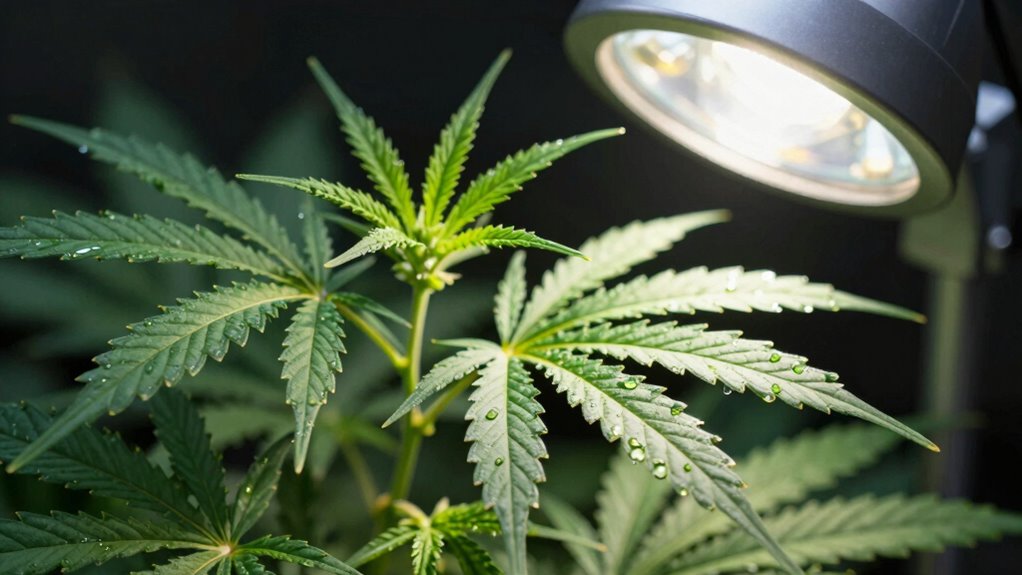
When you’re adjusting your grow lights, understanding light intensity through PPFD is vital. Think of PPFD as the instantaneous snapshot of light hitting your plants. Higher PPFD values mean your plants are getting more light at that moment, which boosts photosynthesis efficiency. Guaranteeing your plants receive the right PPFD level depends on the species and growth stage. For example, seedlings need lower PPFD, while flowering plants require higher levels. If your light intensity is too low, photosynthesis slows down, hampering growth. Conversely, excessively high PPFD can cause light stress, leading to leaf burn or other damage. Monitoring PPFD allows you to strike a balance, providing enough light to maximize photosynthesis without causing harm.
DLI, on the other hand, helps you plan the overall light schedule for your plants. It accounts for how much light they receive throughout the day, which influences their development stages. If your DLI is too low, your plants might struggle to produce enough energy for flowering or fruiting. Too high, and you risk overstimulating them, which can lead to stress or uneven growth. By calculating DLI, you can determine the ideal daily light exposure needed for your plant type, guaranteeing they get consistent, sufficient light each day. This understanding helps you set timers and adjust light durations, creating a stable environment that promotes healthy, vigorous growth.
Additionally, understanding the relationship between light intensity and duration enables you to optimize your grow cycle for maximum efficiency and yield. In practice, combining knowledge of PPFD and DLI gives you a thorough control over your grow environment. You can use PPFD measurements to adjust your light intensity during different growth phases and set your light schedule based on DLI targets. This synergy ensures your plants receive the right amount of light, boosting photosynthesis efficiency and maximizing yield potential. Ultimately, understanding these terms empowers you to make informed decisions about your lighting setup, leading to healthier plants and better harvests.
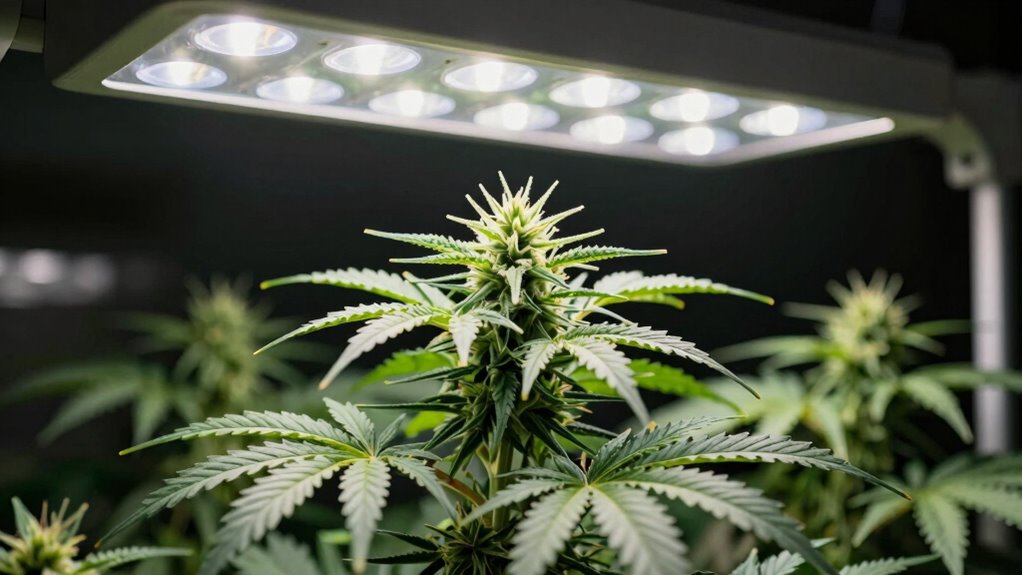
LED grow light with adjustable PPFD
As an affiliate, we earn on qualifying purchases.
As an affiliate, we earn on qualifying purchases.
Frequently Asked Questions
How Do PPFD and DLI Influence Plant Growth Stages?
You influence plant growth stages through PPFD and DLI by adjusting light intensity and duration. During vegetative growth, higher PPFD boosts photosynthesis, promoting lush leaves and stems. In flowering, precise DLI guarantees plants receive enough light without stress, maximizing yield. Monitoring these metrics helps you optimize light exposure, supporting healthy development across all growth phases, ultimately leading to a more successful harvest.
Can PPFD and DLI Be Adjusted for Different Plant Species?
Imagine your grow space as a tailor, customizing a suit for each plant species. You can adjust light parameters like PPFD and DLI, tailoring them to meet the needs of different species. By implementing species-specific lighting and making these adjustments, you guarantee ideal growth conditions. This flexibility helps your plants thrive, whether they’re requiring more intense light or gentler illumination, leading to healthier, more productive harvests.
What Are the Ideal PPFD and DLI Levels for Cannabis?
You should aim for a PPFD of around 600-900 µmol/m²/sec and a DLI of 20-40 mol/m²/day during your cannabis grow. Make certain your light spectrum emphasizes blue and red wavelengths to maximize photosynthesis efficiency. Adjust these levels based on your plant’s growth stage, with higher PPFD and DLI during flowering. Proper lighting optimizes photosynthesis, boosts yields, and improves overall plant health.
How Do Environmental Factors Affect PPFD and DLI Measurements?
Environmental factors like weather variability and light pollution directly impact PPFD and DLI measurements. For example, overcast days can reduce PPFD by up to 50%, while light pollution from nearby sources can cause inconsistent light levels. These fluctuations make it challenging to maintain ideal lighting conditions, so you should monitor your environment closely and adjust your lighting setup accordingly to guarantee your plants receive consistent, adequate light for healthy growth.
Are There Affordable Tools to Measure PPFD and DLI Accurately?
Yes, you can find affordable tools to measure PPFD and DLI accurately. Look for cost-effective sensors like quantum light meters that offer good precision. It’s essential to regularly calibrate these sensors using simple calibration methods, such as comparing readings with a known light source or professional calibration service. This guarantees your measurements stay reliable without breaking the bank, helping you optimize your grow environment effectively.
Conclusion
Now that you know the difference between PPFD and DLI, you’re practically a lighting wizard! With this knowledge, your harvests will be so epic, they’ll make legends jealous. Imagine plants so happy and healthy, they’ll practically sing your praises. Get those numbers right, and you’ll turn your grow into the stuff of gardening greatness—so powerful, even your neighbors will beg for tips. Go on, light up your world and make that harvest legendary!
Fall yard work Picks
leaf blowers
As an affiliate, we earn on qualifying purchases.