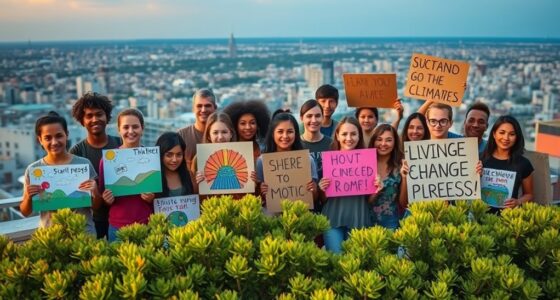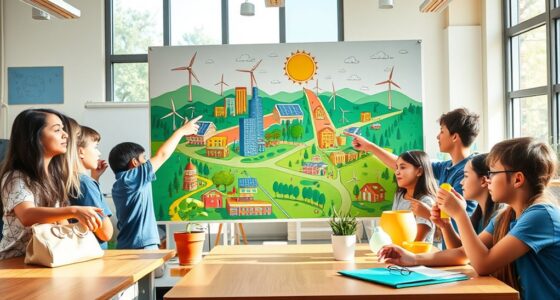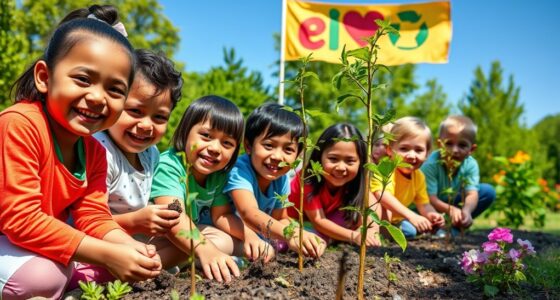
Using citizen science in the classroom lets you involve students directly in real research projects, making learning engaging and meaningful. You encourage them to develop scientific skills like careful observation and data recording while contributing to local environmental or societal studies. This approach boosts motivation, teamwork, and critical thinking, showing students that they can make a real difference. If you’re curious about how to integrate these ideas effectively, there’s more to explore below.
Key Takeaways
- Integrate authentic research projects to engage students in real-world scientific data collection.
- Develop scientific skills through hands-on activities like careful observation and accurate recording.
- Boost motivation and collaboration by involving students in meaningful citizen science efforts.
- Connect classroom lessons to environmental issues, fostering critical thinking and problem-solving skills.
- Use proper equipment and protocols to ensure high-quality data and meaningful research outcomes.
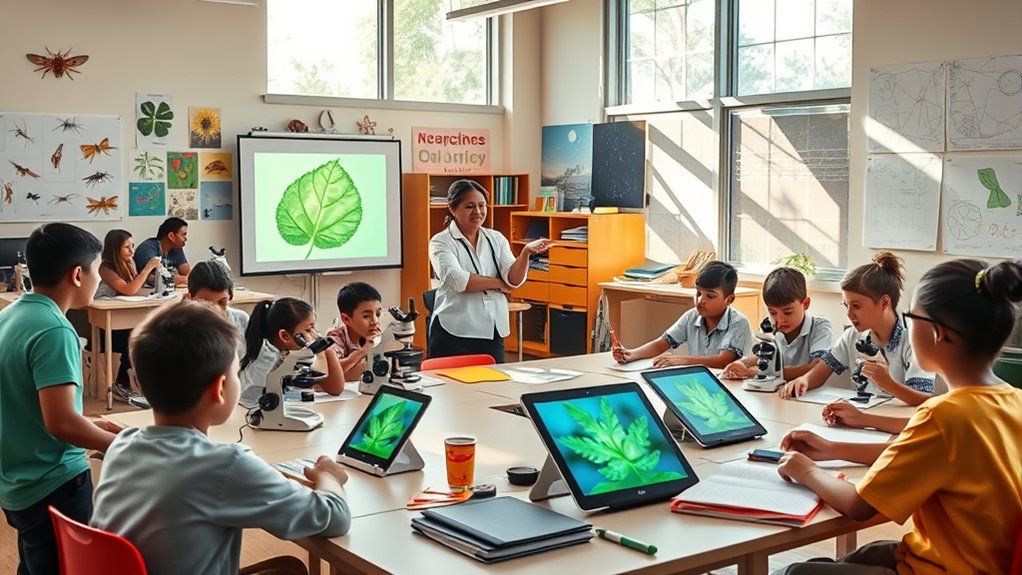
Have you ever wondered how students can contribute to real scientific research while still in the classroom? Citizen science offers a fantastic opportunity for students to engage directly with authentic research projects. When you involve students in citizen science activities, you’re not just teaching them about science—you’re actively helping them participate in data collection that can impact ongoing studies. This approach transforms the classroom into a dynamic research environment where students become contributors rather than just passive learners. By collecting data on local wildlife, weather patterns, or environmental changes, students develop a deeper understanding of scientific processes and see firsthand how their efforts matter.
Data collection is at the heart of citizen science, and it provides students with a tangible way to practice scientific skills. When students gather data, they learn to observe carefully, record accurately, and follow protocols—skills essential for any budding scientist. This hands-on experience helps demystify complex scientific concepts, making them more accessible and meaningful. Furthermore, students realize that science isn’t just about textbooks or experiments in a lab; it’s about real-world problem-solving. As they participate in data collection, they understand the importance of precision and reliability, which are vital for producing credible scientific results. This engagement fosters a sense of ownership and responsibility, encouraging students to take their roles seriously.
Data collection in citizen science helps students develop observation, recording, and protocol-following skills essential for future scientists.
Student engagement skyrockets when they see their work contributing to actual research efforts. Participating in citizen science projects makes science relevant and exciting. Kids often feel a sense of pride knowing their observations can help scientists track endangered species, monitor pollution levels, or understand climate change. This authentic involvement boosts motivation, making students more eager to learn and explore. It also encourages collaboration, as they work together to collect, analyze, and interpret data. This teamwork not only builds communication skills but also demonstrates how scientific research is a collective effort.
Integrating citizen science into your teaching provides a meaningful way to connect classroom lessons with real-world issues. It empowers students to see themselves as scientists, capable of making a difference. As they engage in data collection, they develop critical thinking and problem-solving skills that go well beyond the classroom. Plus, they get to experience the excitement of discovery firsthand. When students participate in citizen science, they’re not just learning about science—they’re living it. This active involvement creates a memorable educational experience that can inspire lifelong curiosity and a passion for understanding the world around them. Additionally, utilizing upfitting fundamentals and proper equipment can enhance the quality and reliability of student-collected data, ensuring meaningful contributions to scientific research.

Halloscume 4 Pack Insect Bug Viewer for Kids with Tweezers Magnifying Box Observation Kit Catcher Container Cage Jar for Science Nature Exploration Collecting Kit
Insert Bug Outdoor Exploration Kit: each pack includes 4 insect box and 4 tweezers; Whether it's a group…
As an affiliate, we earn on qualifying purchases.
As an affiliate, we earn on qualifying purchases.
Frequently Asked Questions
How Can Citizen Science Be Integrated Into Existing Curriculum Standards?
You can integrate citizen science into your curriculum by aligning projects with standards, ensuring they support learning goals. Start by identifying activities that fit existing lessons, then incorporate them through project integration. This way, you enhance engagement and reinforce core concepts while meeting curriculum requirements. By carefully selecting citizen science projects that align with standards, you make learning interactive and meaningful without disrupting your teaching flow.
What Are the Best Tools for Tracking Student Participation in Citizen Science Projects?
Imagine your students tracking local wildlife sightings; digital apps like iNaturalist make this easy. These apps automatically record participation data, which you can visualize through built-in data visualization tools. This helps you monitor engagement, see patterns, and celebrate student contributions. By using such tools, you foster a sense of achievement and connect students’ efforts to real scientific research, making participation meaningful and trackable.
How Do Teachers Assess Student Learning Through Citizen Science Activities?
You assess student learning in citizen science activities through peer assessment and reflective journaling. Peer assessment encourages students to evaluate each other’s work, fostering critical thinking and collaboration. Reflective journaling allows you to gauge their understanding, insights, and growth over time. Combining these methods helps you see how well students grasp scientific concepts, develop skills, and connect real-world data collection to their learning journey.
What Challenges Might Teachers Face When Implementing Citizen Science Projects?
You might face resource constraints that limit access to equipment or technology needed for citizen science projects. Additionally, keeping students engaged can be challenging, especially if activities seem disconnected from their interests. Studies show that only 40% of teachers feel adequately supported in implementing these projects. To overcome these obstacles, you can seek community partnerships and tailor activities to student passions, making science both accessible and exciting.
How Can Citizen Science Promote Diversity and Inclusion in the Classroom?
Citizen science promotes diversity and inclusion by ensuring cultural representation and fostering equitable participation. You can encourage students from diverse backgrounds to share their unique perspectives and knowledge, making science more relevant and engaging for everyone. By designing projects that reflect different cultures and interests, you create an inclusive environment where all students feel valued and empowered to contribute, enriching the learning experience for the entire class.

2 Set Magnetic Animal and Plant Cell Model Clearly Magnets Anatomy Models Educational Science Kits Back to School Biology Classroom Decor for Lab Decorations Teacher Must Haves Learning Teaching Aid
Package includes: This educational science kit contains 2 large base magnets and 22 small shape magnets, ideal for…
As an affiliate, we earn on qualifying purchases.
As an affiliate, we earn on qualifying purchases.
Conclusion
By embracing citizen science, you open the door to a world where students become explorers and creators of knowledge. It’s like planting seeds of curiosity that grow into a forest of understanding. When you guide them through real-world projects, you’re not just teaching facts—you’re shaping confident, curious minds ready to navigate the vast landscape of science. Ultimately, citizen science transforms your classroom into a vibrant hub of discovery, where learning blossoms with every contribution.

Assessment and Diagnosis for Organization Development
As an affiliate, we earn on qualifying purchases.
As an affiliate, we earn on qualifying purchases.

Lab Notebook Chemistry Laboratory Notebook for Science Students and Researchers – 105 Pages, 8.5 x 11 Inch – Perfect Bound Composition Book for Scientific Experiments, and Research Documentation
【Ideal for Laboratory】 This lab notebook is designed for professionals and students alike, Perfect for recording experiment data,…
As an affiliate, we earn on qualifying purchases.
As an affiliate, we earn on qualifying purchases.