

To create accessible educational materials, focus on universal design principles that prioritize clarity, simplicity, and flexibility. Use high-contrast text, include alternative descriptions for visuals, and provide adjustable features like font size and layout. Incorporate multiple representations such as visual and auditory elements to reach diverse learners. Employ assistive technologies and proactively design content to remove barriers. If you’re interested, there’s more to explore on practical strategies that can enhance inclusivity and engagement for all students.

Get garden gear delivered free with Prime
- Fast, free delivery on millions of items
- Prime Video, Amazon Music and more included
- Member-only deals all year
Key Takeaways
- Apply Universal Design principles to develop materials that are clear, flexible, and usable by diverse learners from the start.
- Incorporate assistive technology features such as alternative text, captions, and adjustable font sizes to enhance accessibility.
- Use high-contrast visuals and provide text summaries to improve readability and comprehension for all students.
- Ensure content offers multiple representations—visual, auditory, and kinesthetic—to cater to different learning styles.
- Continuously evaluate and update materials based on feedback and technological advances to promote inclusivity and effectiveness.
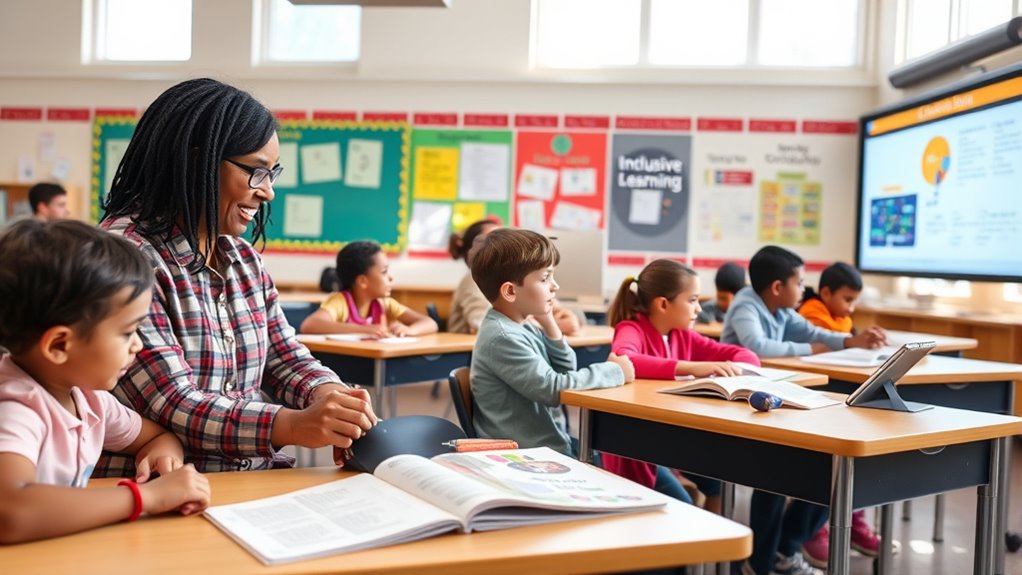
Have you ever wondered how to make educational materials truly accessible for all learners? It’s a question that challenges educators and content creators to think beyond traditional methods. The key lies in integrating assistive technology and adopting universal design principles. Assistive technology includes tools like screen readers, speech-to-text software, and adjustable text sizes that help students with diverse needs access information more effectively. When you incorporate these tools into your materials, you remove barriers that might otherwise hinder learning. For example, providing captions for videos or audio descriptions helps students with hearing or visual impairments engage with content just as easily as their peers. But assistive technology isn’t the only piece; it works best when combined with universal design. Universal design is a proactive approach that creates materials accessible from the outset, making them usable by everyone without the need for adaptation. It emphasizes clarity, simplicity, and flexibility, ensuring that content caters to a wide range of learning styles and abilities. When designing educational materials with universal design in mind, you focus on clear language, logical organization, and multiple representations of information—such as visual, auditory, and kinesthetic formats. This approach benefits all learners, not just those with disabilities. For instance, using high-contrast text and backgrounds improves readability for students with visual challenges, while providing text summaries alongside complex diagrams supports those who process information differently. By combining assistive technology with universal design principles, you’re creating an inclusive environment where every student has equal opportunities to succeed. It’s about anticipating diverse needs and addressing them proactively. You can also consider features like adjustable font sizes, flexible layouts, and alternative text descriptions, which enhance accessibility without sacrificing the quality of your educational materials. These strategies empower learners by giving them control over how they access content, fostering independence and confidence. Furthermore, adopting universal design encourages collaboration and innovation, prompting you to think creatively about how information is presented and accessed. An understanding of latest machine learning advancements can also inform how you develop adaptive learning systems that personalize content to individual needs. Remember, the goal is to make learning seamless and engaging for everyone, regardless of their individual needs. By thoughtfully integrating assistive technology and universal design principles into your educational materials, you’re not only promoting equity but also setting a standard for quality and inclusivity. It’s a continuous process of refinement, but the impact on learners’ engagement and achievement makes it well worth the effort. Ultimately, accessible educational materials aren’t just a legal or moral obligation—they’re essential for creating an equitable learning environment where all students can thrive.
assistive technology for education
As an affiliate, we earn on qualifying purchases.
As an affiliate, we earn on qualifying purchases.
Frequently Asked Questions
How Do I Evaluate the Accessibility of My Current Educational Materials?
You can evaluate your educational materials’ accessibility by checking font readability and color contrast. Make sure your fonts are clear, large enough, and easy to read, avoiding overly decorative styles. Use tools like contrast checkers to verify that text and background colors meet accessibility standards. Also, consider getting feedback from users with disabilities, such as those with visual impairments, to identify any barriers and improve overall accessibility.
What Are Common Barriers Faced by Students With Disabilities?
Students with disabilities often face barriers like inaccessible content that ignore assistive devices and inclusive design principles. You might notice difficulties with visual or auditory materials, limited physical access, or formats that don’t support screen readers. These challenges can hinder their learning. To help, you should incorporate inclusive design strategies and guarantee your materials are compatible with assistive devices, creating a more equitable learning environment for all students.
How Can Technology Enhance Accessibility in Education?
Technology enhances accessibility in education by leveraging Assistive Technology and Inclusive Design. You can use screen readers, speech-to-text tools, and captioning software to support diverse learning needs. Incorporating inclusive design principles guarantees materials are usable for all students, regardless of disabilities. This approach creates an equitable learning environment where everyone can participate fully, fostering independence and confidence in your students’ educational journeys.
What Training Is Available for Educators on Accessibility Best Practices?
Think of training options as your toolkit for inclusive teaching. You can attend workshops, webinars, and online courses focused on Universal Design and Inclusive Pedagogy. Many universities and organizations offer certifications and professional development programs tailored to accessibility best practices. These trainings help you embed accessibility into your teaching, ensuring all students can thrive. Embracing continuous learning keeps you ahead in creating an equitable learning environment for every learner.
How Do Accessible Materials Impact Overall Student Engagement?
Accessible materials boost your students’ engagement by promoting inclusive design and ensuring universal access. When you incorporate these principles, all students can participate fully, which encourages active learning and boosts motivation. By making content easier to understand and navigate, you help students feel valued and supported, leading to increased participation and better academic outcomes. Ultimately, accessible materials foster a more inclusive classroom environment where every student can thrive.
Conclusion
Think of creating accessible educational materials as planting a garden that everyone can enjoy. When you include diverse seeds—images, text, audio—you nurture a space where every learner blossoms. Your efforts turn a plain patch into a vibrant, inclusive landscape where all can thrive. By designing with accessibility in mind, you’re not just building materials; you’re cultivating a future where knowledge blooms for everyone, no matter their path.
Halloween Picks
halloween
As an affiliate, we earn on qualifying purchases.