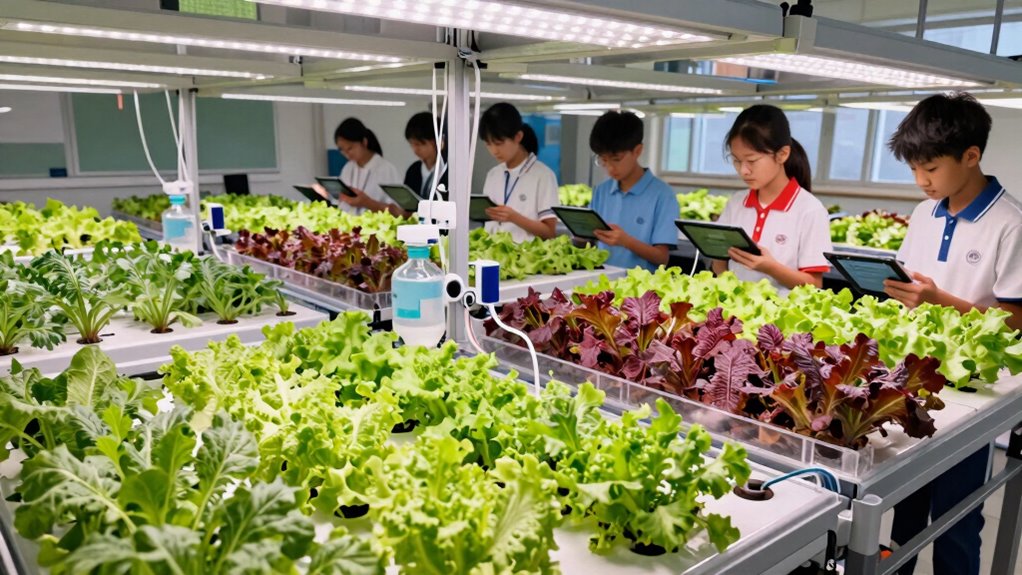

Classroom hydroponics teaches systems thinking by showing you how water, nutrients, and oxygen all work together to affect plant health. As you manage the system, you see how tweaking one element impacts the whole setup, creating a ripple effect. It encourages you to observe closely, adjust with care, and understand the interconnections. If you explore further, you’ll discover even more ways this hands-on approach helps you see systems as a whole.
Listen free for 30 days with Audible
Thousands of audiobooks and originals — cancel anytime.
As an affiliate, we earn on qualifying purchases.
Key Takeaways
- Hydroponics demonstrates the interconnectedness of system components like water, nutrients, and oxygen, illustrating holistic thinking.
- It highlights how small adjustments in one element affect the entire system, fostering understanding of feedback loops.
- Managing the system requires ongoing observation and adaptation, reinforcing dynamic system management skills.
- It showcases cause-and-effect relationships, helping students grasp the ripple effects of decisions within complex systems.
- The hands-on nature encourages experiential learning of system stability, balance, and sustainability principles.

Have you ever wondered how integrating hydroponics into the classroom can foster a deeper understanding of systems thinking? When you set up a hydroponic system, you’re fundamentally creating a mini-ecosystem that requires careful coordination of various components. You’ll quickly see that plant nutrition and water management are at the core of this system, illustrating how interconnected elements influence one another. As you monitor plant growth, you realize that providing the right nutrients isn’t just about adding fertilizer; it’s about understanding how plant roots absorb these nutrients and how they’re delivered through water. This process highlights the importance of precise plant nutrition management, which in turn emphasizes the delicate balance necessary within systems.
Hydroponics teaches us that plant nutrition depends on understanding nutrient delivery and root absorption within a balanced, interconnected system.
Water management in hydroponics becomes a vivid lesson in control and feedback loops. You need to guarantee that water levels stay ideal—not too much to cause root rot, and not too little to stress the plants. This constant adjustment teaches you that water flow, nutrient concentration, and oxygen levels are all linked, and changes in one aspect ripple through the entire system. When you tweak the water pH or nutrient mix, you observe immediate effects on plant health, reinforcing the idea that small adjustments can have big consequences. This hands-on experience makes it clear that managing water isn’t just about keeping the plants alive; it’s about maintaining a balanced, sustainable system. Recognizing how the interconnected components work together reinforces the importance of viewing the system as a whole. Additionally, understanding the system components helps in predicting how changes in one part can influence the entire setup.
You also see how feedback loops in water quality and plant responses help maintain overall system stability, illustrating core principles of systems thinking. The ongoing monitoring and adjustments mimic real-world situations where feedback mechanisms are essential for maintaining equilibrium. As you oversee the hydroponic setup, you come to appreciate how each variable interacts within the whole. For example, if you increase nutrient concentration, the plants may grow faster, but you might also risk nutrient imbalances or salt buildup. Conversely, reducing water flow might save resources but could lead to oxygen deprivation for the roots. These scenarios teach you that every decision impacts the entire system, embodying the core principles of systems thinking. You begin to see that solutions aren’t always straightforward and that solving one problem may introduce another. This interconnectedness encourages a mindset that looks beyond individual parts and considers the broader picture. Understanding system dynamics is essential to effectively manage and adapt these complex interactions. Recognizing how these dynamics operate allows for more effective troubleshooting and optimization of the system.
Ultimately, classroom hydroponics offers a tangible way to grasp systems thinking’s complexity. It demonstrates that managing plant nutrition and water isn’t isolated but part of a larger, dynamic system that requires ongoing observation and adaptation. You learn that effective problem-solving involves understanding relationships, feedback, and the delicate balance necessary for sustainability. Engaging directly with these processes helps reinforce the importance of considering system dynamics and how they influence outcomes — a lesson that extends well beyond the classroom into real-world challenges.
As an affiliate, we earn on qualifying purchases.
Frequently Asked Questions
How Does Hydroponics Compare to Traditional Soil Gardening?
Hydroponics differs from traditional soil gardening by eliminating soil health concerns and reducing pest management issues. You control nutrient levels precisely, leading to faster growth and higher yields. Since there’s no soil, pests and diseases are less common, meaning fewer chemicals. You can grow plants indoors or outdoors with less space and water, making hydroponics an efficient, sustainable alternative that teaches you about systems thinking through balancing nutrients, environment, and plant health.
What Age Group Benefits Most From Classroom Hydroponics?
You’ll find that elementary and middle school students benefit most from classroom hydroponics. It helps them grasp plant physiology by observing growth without soil, and they learn how controlled environments impact plant health. Plus, students become aware of environmental impact, understanding sustainable practices. This hands-on approach encourages curiosity and critical thinking, making complex systems accessible and engaging for younger learners, while fostering a deeper appreciation for ecology and science.
Are There Any Safety Concerns With Classroom Hydroponic Systems?
Are there safety concerns with classroom hydroponic systems? Absolutely, but they’re manageable. You need to follow safety protocols carefully and handle chemicals responsibly. While nutrient solutions are generally safe, you must prevent spills and avoid ingestion or skin contact. Proper training and supervision minimize risks. When you stay vigilant and adhere to safety guidelines, you create a safe environment where students can learn and explore without worry.
How Much Does Setting up a Classroom Hydroponic System Cost?
Setting up a classroom hydroponic system typically costs between $100 and $500, depending on the size and complexity. You should do a detailed cost analysis and budget planning to determine what’s feasible for your classroom. Basic kits with essential equipment are more affordable, while larger, more advanced systems cost more. Remember to take into account ongoing expenses like nutrients and replacement parts for a thorough budget.
Can Hydroponics Be Integrated Into Existing Science Curricula Easily?
Did you know that over 80% of educators find integrating hydroponics into science curricula straightforward? You can easily incorporate it by highlighting sustainability benefits and demonstrating technological integration. Hydroponics fits well with existing lessons, enriching students’ understanding of plant biology and environmental science. It promotes hands-on learning, making lessons more engaging. Plus, it offers a practical way to teach systems thinking, essential for understanding complex ecological and technological interactions.
Conclusion
By diving into classroom hydroponics, you get a hands-on way to grasp systems thinking. It’s a clear example of how different parts—plants, water, nutrients—interact to create a thriving whole. You’ll see firsthand that everything’s interconnected, and nothing exists in isolation. When you understand these relationships, you realize the whole is greater than the sum of its parts. It’s true what they say—sometimes you’ve got to see the forest for the trees to truly understand it all.
Fall Picks
fall essentials
As an affiliate, we earn on qualifying purchases.