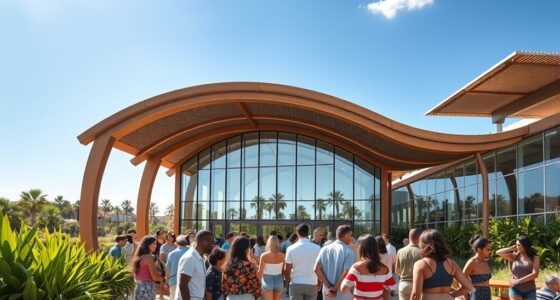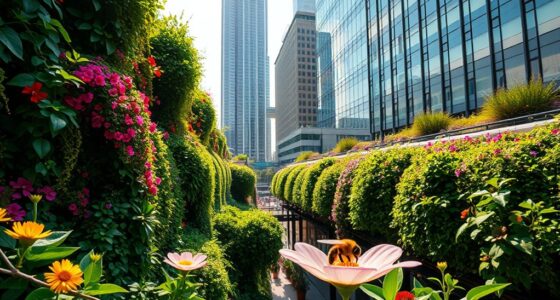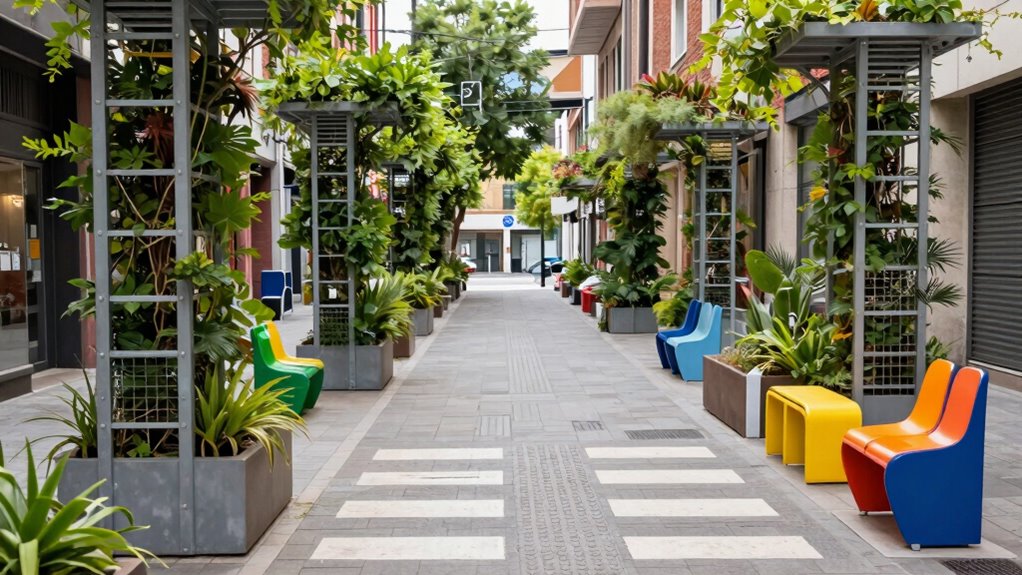

Small urban design moves, like planting street trees or creating parks, make your city greener and healthier. These changes improve air quality, reduce heat, and encourage walking and biking, which cuts pollution and traffic. Restoring walkable features from the city’s past supports sustainable growth. Engaging with community ideas guarantees these efforts match residents’ needs. Keep exploring to discover more ways tiny adjustments can make your city more sustainable every day.

Get garden gear delivered free with Prime
- Fast, free delivery on millions of items
- Prime Video, Amazon Music and more included
- Member-only deals all year
Key Takeaways
- Small design changes like adding street trees improve air quality and reduce urban heat island effects.
- Enhancing walkability and bike infrastructure decreases reliance on cars, lowering emissions.
- Restoring original compact, walkable city features supports sustainable urban mobility.
- Community involvement ensures sustainable, well-supported urban improvements tailored to local needs.
- Incremental modifications are cost-effective, adaptable, and promote long-term urban resilience.

Small changes in urban design can have a big impact on sustainability, making cities more livable and eco-friendly. When you consider the historical context of urban development, you realize that many city layouts have evolved over centuries, often prioritizing transportation and industry over green spaces and community needs. Recognizing this history allows you to see how small design tweaks today can reshape urban environments into healthier, more connected places. Community engagement plays an essential role in this process because it guarantees that these small moves reflect residents’ needs and values. When you involve local voices, you help create solutions that are practical, accepted, and sustainable over the long term.
For example, planting trees along streets or creating small parks in densely populated areas might seem minor, but these efforts markedly improve air quality, reduce heat, and foster social interaction. You’re not just adding greenery—you’re building community resilience and encouraging healthier lifestyles. Small urban design moves like these also promote walkability and bike-friendly infrastructure, reducing reliance on cars. This shift cuts emissions and decreases traffic congestion, contributing directly to sustainability goals. When residents feel safer and more comfortable walking or biking, they’re more likely to do so, creating a virtuous cycle of environmental and social benefits.
Understanding the historical context helps you see that many cities were originally designed to be walkable, with compact neighborhoods and public spaces. Over time, suburban expansion and car-centric planning disrupted this balance. By making minor adjustments—such as narrowing roads to create wider sidewalks or adding crosswalks—you’re restoring some of that original walkability. These small moves are often easiest to implement and maintain, making them practical steps toward sustainability. Recognizing the importance of urban planning history can guide more effective and enduring improvements. Additionally, incorporating small-scale interventions allows cities to test and refine strategies incrementally, ensuring long-term success. Emphasizing incremental changes can also help communities adapt more easily without overwhelming existing infrastructure. Moreover, understanding urban design evolution can inspire innovative solutions that blend old and new approaches for sustainable growth.
Community engagement guarantees these small design changes are tailored to local needs. When residents participate in planning, they’re more likely to support and maintain the initiatives. You might organize local workshops or surveys to gather input on what improvements matter most, whether that’s better lighting, community gardens, or safer bike lanes. These efforts foster a sense of ownership and pride, ensuring that the small moves you make are embraced and sustained over time.
In essence, small urban design moves, rooted in understanding history and driven by community involvement, have the power to transform cities gradually but effectively. They make everyday life more sustainable, social, and environmentally friendly—proving that sometimes, less is truly more.
As an affiliate, we earn on qualifying purchases.
Frequently Asked Questions
How Do Small Urban Design Moves Impact Local Biodiversity?
Small urban design moves boost local biodiversity by protecting native habitats and creating pollinator corridors. When you incorporate native plants into your community spaces, you support local wildlife and preserve the natural ecosystem. Pollinator corridors connect these habitats, allowing bees, butterflies, and other pollinators to thrive and move freely. These efforts encourage a healthier environment, fostering biodiversity even in limited urban settings, making your neighborhood more vibrant and ecologically resilient.
What Is the Cost-Effectiveness of Implementing These Small Changes?
Implementing small urban design moves is highly cost-effective when you consider the cost analysis and investment return. These changes often require minimal investment but deliver significant benefits, like improved air quality and increased community engagement. You’ll find that the long-term savings from energy efficiency and reduced infrastructure costs outweigh initial expenses. Overall, these small moves provide a smart, sustainable return on your investment, boosting urban resilience and quality of life.
How Quickly Can Neighborhoods See the Benefits of Urban Design Moves?
You might see benefits from small urban design moves like green roofs and street art within months. Green roofs reduce heat and improve air quality quickly, while street art boosts community pride and engagement almost immediately. These small changes can transform neighborhoods faster than you think, making urban spaces more sustainable and vibrant in a short period. Your neighborhood might start feeling more lively and eco-friendly sooner than expected.
Are These Small Moves Adaptable to Different City Sizes and Types?
Yes, these small urban design moves can be adapted to different city sizes and types, but you’ll face scalability challenges. You need to customize your designs to fit each city’s unique layout, culture, and infrastructure. By focusing on flexible, scalable solutions, you guarantee that your small moves effectively enhance sustainability across diverse urban environments, making positive impacts regardless of city size or type.
How Do Small Urban Design Moves Influence Community Engagement?
Small urban design moves boost community engagement by creating inviting public spaces where people naturally gather and interact. Enhancing pedestrian flow encourages residents to explore their neighborhood, fostering a sense of connection. When you prioritize accessible sidewalks, benches, and open areas, you invite diverse groups to participate, strengthening community bonds. These simple changes make public spaces more welcoming, motivating residents to engage, collaborate, and build a vibrant, connected neighborhood.
Conclusion
By embracing small urban design moves, you create spaces that breathe sustainability, encourage connection, and foster resilience. You prioritize green corridors that refresh, install bike lanes that energize, and add benches that invite pause. You build neighborhoods that nurture community, promote mobility, and support environment. In these simple, intentional acts, you shape a future where everyday choices make a lasting difference—turning small actions into powerful steps toward a more sustainable, vibrant city for everyone.
Columbus Day / Indigenous Peoples' Day Picks
long weekend sales
As an affiliate, we earn on qualifying purchases.