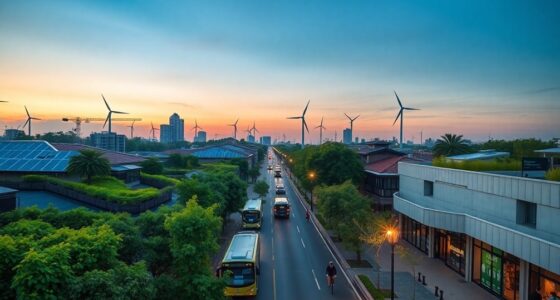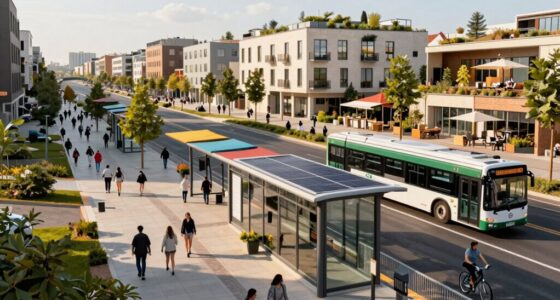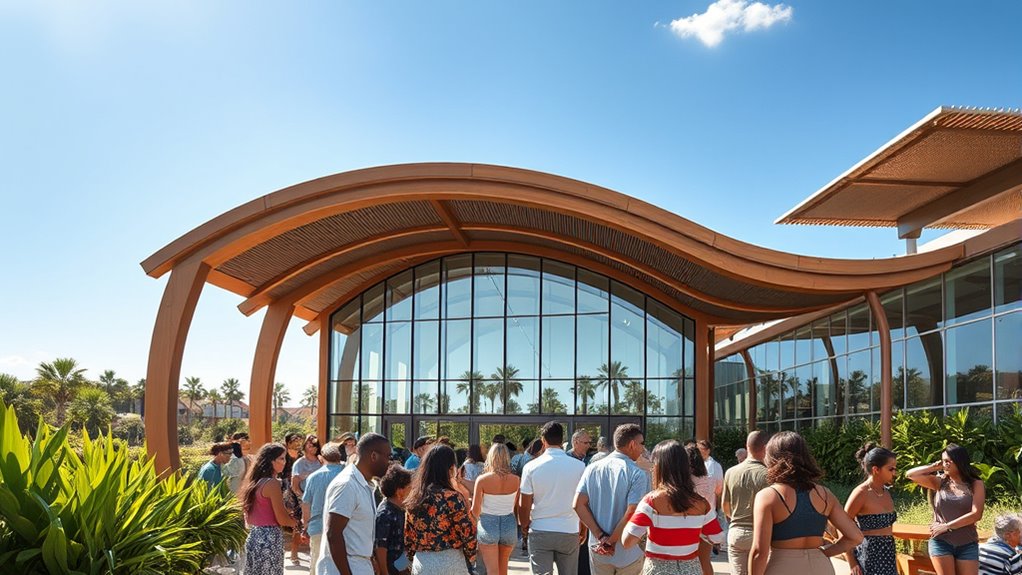

Heat resilience hubs are community centers designed to help you stay cool and safe during heatwaves. They provide comfortable spaces, incorporate shady trees, reflective surfaces, and green areas to lower local temperatures. These hubs involve residents and local groups, ensuring solutions meet your community’s needs. By participating, you help create safer, more resilient neighborhoods. To discover how these hubs work and why they matter, keep exploring the ways they protect you and your loved ones during extreme heat.

Get garden gear delivered free — and shop member deals
- Fast, free delivery on millions of items
- Access to Prime Big Deal Days deals on October 6–7
- Prime Video, Amazon Music and more included
Key Takeaways
- Heat resilience hubs are safe, cool community spaces designed to protect residents during heatwaves.
- They help reduce heat-related health risks, especially for vulnerable populations.
- These hubs incorporate urban cooling strategies like planting trees and using reflective surfaces.
- Community involvement ensures hubs are accessible, culturally appropriate, and effectively meet local needs.
- They strengthen community resilience by fostering social connections and promoting heat safety awareness.
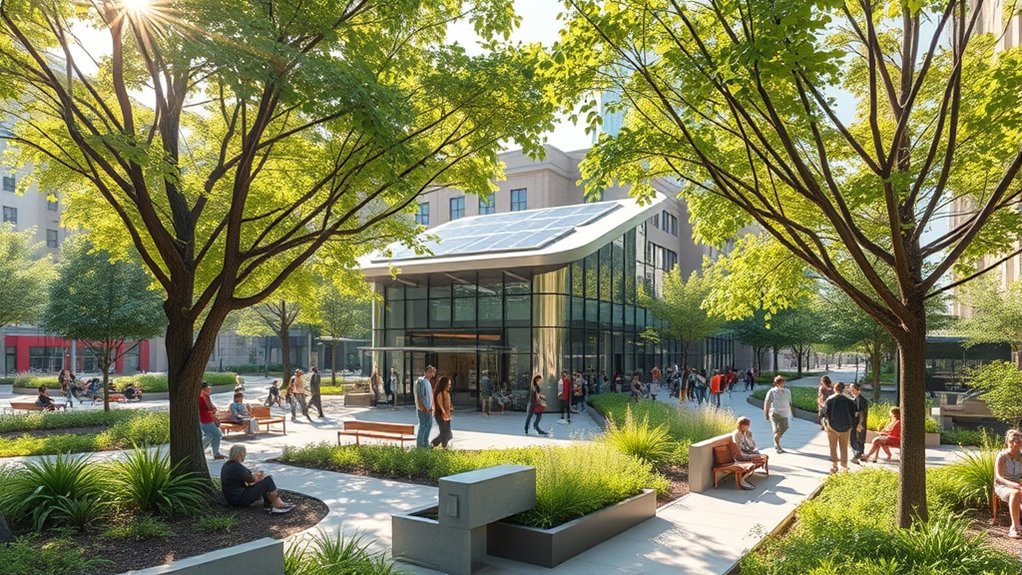
Have you ever wondered how communities can stay safe during rising temperatures? As global temperatures climb, heatwaves become more intense and frequent, posing serious health risks, especially for vulnerable populations. To combat this, many communities are turning to innovative solutions like Heat Resilience Hubs. These hubs are designed to provide safe, cool spaces where residents can find relief from the heat and gather support. Central to their effectiveness is urban cooling, which involves creating environments within the city that help reduce heat buildup and offer refuge during heatwaves. Urban cooling strategies include planting shade trees, installing reflective surfaces, and creating green spaces that naturally lower temperatures. But simply having cooler spots isn’t enough; community engagement plays a crucial role. When residents actively participate in planning and running these hubs, they’re more likely to trust and utilize them. Community engagement ensures that the hubs meet local needs and that everyone understands their purpose, fostering a sense of ownership and responsibility. It also helps spread awareness about heat risks and safety measures, empowering people to take proactive steps during extreme weather events.
You might wonder how exactly community engagement works in this context. It involves local residents, organizations, and leaders working together to identify the most vulnerable populations, design accessible cooling spaces, and promote their use. For example, community meetings can reveal specific needs, such as language barriers or mobility issues, which can then be addressed in the hub’s design. When residents feel involved in the decision-making process, they’re more likely to utilize the resources available. Additionally, community engagement fosters trust, making it easier to disseminate essential information about heat safety, hydration, and emergency procedures. It also encourages local volunteers to help operate the hubs, creating a network of support that extends beyond just providing a cool space.
Involving the community in urban cooling initiatives helps build resilience from the ground up. It turns passive infrastructure into active, community-driven solutions that adapt to local circumstances. When people take ownership of these heat resilience efforts, they’re more motivated to maintain and improve them over time. Plus, community engagement can spark innovative ideas that city officials or planners might not have considered. Ultimately, combining urban cooling techniques with active community participation creates a robust defense against rising temperatures, safeguarding health and well-being during heatwaves. It’s a strategy that not only cools the city physically but also strengthens social bonds and resilience, making communities better prepared for the challenges ahead.
As an affiliate, we earn on qualifying purchases.
Frequently Asked Questions
How Are Heat Resilience Hubs Funded and Sustained Long-Term?
You can fund and sustain heat resilience hubs long-term through diverse funding strategies like grants, government support, and private donations. Engaging your community helps build trust and encourages local investment, ensuring continued support. By involving residents in planning and decision-making, you foster ownership and commitment. Regularly demonstrating the hubs’ benefits secures ongoing funding, while partnerships with organizations and businesses keep resources flowing, making the hubs resilient and lasting.
Who Can Access Services Provided by Heat Resilience Hubs?
You can access services provided by heat resilience hubs through community outreach programs designed to guarantee equitable access. These hubs prioritize serving vulnerable populations, including seniors, low-income families, and those with health conditions. By actively participating in local events and programs, you can benefit from cooling centers, educational resources, and support services. The goal is to make sure everyone in the community, regardless of background, can stay safe during extreme heat events.
What Specific Technologies Are Used in Heat Resilience Hubs?
You’ll find that heat resilience hubs use a range of technologies like cooling systems, including fans and air conditioning, to help you stay comfortable during extreme heat. They also incorporate renewable energy sources, such as solar panels, to power these systems sustainably. These technologies work together to reduce heat risks, make energy more efficient, and create a safe, cool environment for you and your community during hot weather.
How Do Heat Resilience Hubs Collaborate With Local Communities?
Think of heat resilience hubs as bridges connecting you to your community’s well-being. You’re actively involved through community engagement, sharing insights and resources that address local needs. These hubs boost public awareness by hosting events, providing information, and fostering partnerships. By working together, you help create a resilient environment where everyone understands heat risks and takes collective action, making your neighborhood safer and more prepared for extreme heat conditions.
What Measurable Impacts Have Heat Resilience Hubs Achieved so Far?
You’ll see that heat resilience hubs have markedly reduced urban heat and improved community health. They’ve increased green spaces, provided cooling centers, and distributed heat-resistant materials, leading to lower temperatures during heatwaves. These efforts have resulted in fewer heat-related illnesses, especially among vulnerable populations. Overall, the hubs’ measurable impacts include decreased urban heat levels and enhanced well-being, making communities safer and more resilient against climate extremes.
Conclusion
Heat Resilience Hubs are your frontline defense against rising temperatures, offering safe spaces and resources when you need them most. They’re like cool oases in a scorching desert, helping communities stay resilient and healthy. By supporting these hubs, you’re investing in a future where everyone can withstand the heat’s bite. Together, we can turn the tide on climate challenges and create a cooler, safer world for all.
Fall yard work Picks
leaf blowers
As an affiliate, we earn on qualifying purchases.