
Food deserts in urban areas are neighborhoods where you struggle to find affordable, healthy food nearby. Limited access to grocery stores often means relying on convenience stores or fast-food outlets that lack nutritious options. Transportation barriers, socioeconomic challenges, and lack of investment keep these communities underserved. Addressing these issues requires improving store access, infrastructure, and policies to support healthier choices. Keep exploring to discover how communities are working to overcome these barriers and improve food access.
Key Takeaways
- Food deserts are neighborhoods with limited access to affordable, healthy, and fresh food options, often due to distant grocery stores.
- Proximity to grocery stores significantly impacts residents’ ability to maintain healthy diets and overall health.
- Transportation barriers, such as lack of personal vehicles or unreliable public transit, worsen urban food access issues.
- Systemic underinvestment and lack of infrastructure perpetuate food deserts in many urban communities.
- Solutions include building local grocery stores, supporting farmers’ markets, and improving bike and walk infrastructure.

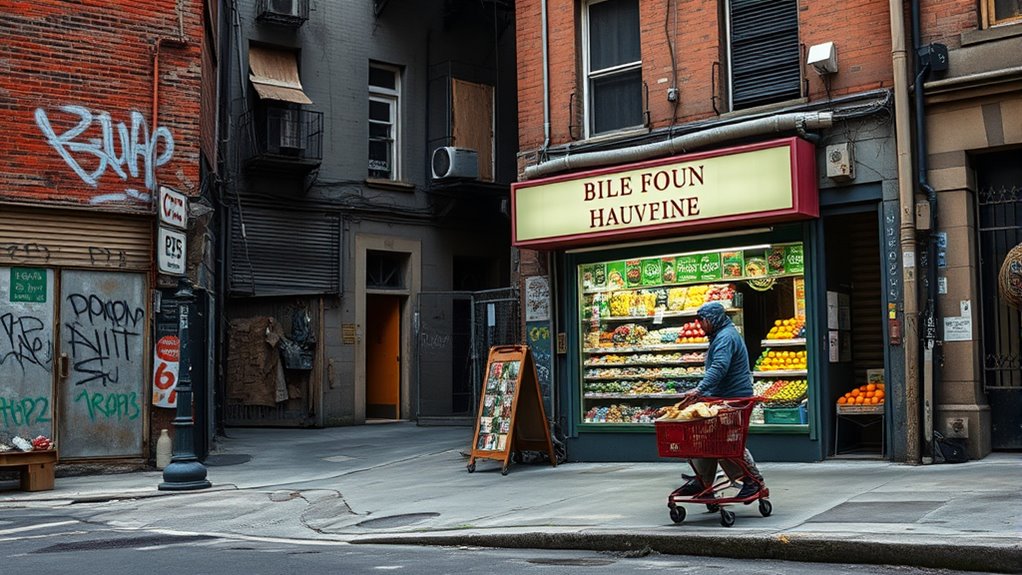
Food deserts are neighborhoods where residents struggle to find affordable, healthy, and fresh food options within a convenient distance. In these areas, grocery store proximity is a major issue, making it difficult for you to access fresh produce, lean meats, and other nutritious staples. Instead, you might find yourself relying on convenience stores or fast-food outlets that often lack healthy choices or charge higher prices for what little fresh food they carry. This lack of nearby grocery stores isn’t just a matter of inconvenience; it’s a direct barrier to maintaining a balanced diet and good health. Socioeconomic barriers further complicate the issue, as residents in these neighborhoods often face financial constraints that limit their ability to buy nutritious food regularly. If you’re living in a food desert, you may find yourself choosing between paying rent, bills, or buying healthy food, which can lead to poor nutrition and related health problems over time.
The proximity of grocery stores significantly influences your ability to maintain a healthy diet. When stores are far away, it takes more time, effort, and money to make trips, especially if transportation options are limited. Public transit may be sparse or unreliable, and owning a car might not be feasible for everyone. This means you might end up skipping grocery trips or resorting to less healthy options because they’re more accessible. Socioeconomic barriers amplify these challenges because lower-income households often have fewer resources to overcome transportation hurdles or to pay premium prices for fresh food in distant stores. These barriers create a cycle: limited access to healthy food leads to poorer health outcomes, which can further hinder your ability to work, earn, and improve your circumstances. Additionally, Bike infrastructure can play a role in improving access to food, especially in urban settings where walking or cycling might be the most feasible options for some residents.
Communities caught in food deserts often see a lack of investment from local governments and private businesses, which perpetuates the cycle. Without targeted efforts to improve grocery store proximity or reduce socioeconomic barriers, residents find themselves stuck in a cycle of limited options and poor health. This isn’t just an individual issue; it’s a systemic problem that affects entire neighborhoods, making it harder for you and your neighbors to achieve better health and well-being. Addressing these challenges requires an all-encompassing approach—building more grocery stores within walking distance, supporting local farmers’ markets, and implementing policies to reduce socioeconomic barriers. Only then can you break free from the cycle of limited food access and work towards a healthier, more equitable community.

Our Modern Space Shopping Cart & 360° Swivel Wheels | Foldable Collapsible & Lightweight | Perfect for Groceries Laundry Utility Cart – Black
- Lightweight and Portable: Only 8 lbs, easy to carry
- Durable Stainless Steel Construction: Supports 60 lbs, rust-proof and scratch resistant
- Space-Saving Foldable Design: Folds to 5.5 inches for easy storage
As an affiliate, we earn on qualifying purchases.
As an affiliate, we earn on qualifying purchases.
Frequently Asked Questions
How Do Food Deserts Impact Local Community Health?
Food deserts negatively impact your community’s health by increasing nutrition disparities, making it harder for residents to access fresh, healthy foods. Limited access leads to poor diet choices, raising the risk of chronic diseases like diabetes and heart disease. When healthy options are scarce, you may struggle to maintain good nutrition, which worsens overall community health and strains local healthcare resources. Addressing these gaps is essential for healthier, more resilient neighborhoods.
What Policies Effectively Reduce Urban Food Deserts?
Imagine stumbling upon a neighborhood where fresh produce is scarce; policies can change that. You can support grocery subsidies that make healthy food affordable or promote urban agriculture projects that bring fresh produce directly to communities. These policies effectively reduce urban food deserts by increasing access and encouraging local food production. When you advocate for such initiatives, you’re helping eliminate food deserts and fostering healthier, more equitable neighborhoods.
How Do Transportation Options Influence Food Access?
You find that transportation options greatly influence your food access. When public transit is reliable and affordable, you can easily reach grocery stores without hassle. Additionally, bike infrastructure encourages you to bike to nearby markets, especially in areas with limited transit. These options empower you to access fresh food more conveniently, reducing the time and cost involved, and helping you maintain a healthier diet despite urban challenges.
What Role Do Local Businesses Play in Alleviating Food Deserts?
Local businesses, like grocery stores and community-supported agriculture programs, play a crucial role in reducing food deserts. They often fill gaps left by larger chains, offering fresh, affordable produce directly within neighborhoods. By supporting local stores, you help boost community resilience and guarantee access to healthy food. Your involvement in community-supported agriculture also encourages sustainable practices and strengthens local food systems, making healthy options more accessible for everyone.
How Can Residents Advocate for Better Food Access?
You can advocate for better food access by joining or starting community gardens and food co-ops. Attend local meetings and voice your concerns about food deserts, encouraging support for these initiatives. Collaborate with neighbors to push for policies that fund fresh food programs and improve transportation to grocery stores. Your active participation helps create sustainable solutions that make healthy food more accessible for everyone in your community.
Conclusion
Imagine traversing a vast forest where some paths are blocked, leaving you stranded without nourishment. Food deserts are like these tangled woods—obstacles blocking your way to healthy food. But with effort and community effort, you can clear the way, creating open roads for everyone to access fresh, nutritious options. Together, you can transform these barriers into bridges, ensuring no one remains lost or hungry in the maze of urban food access.