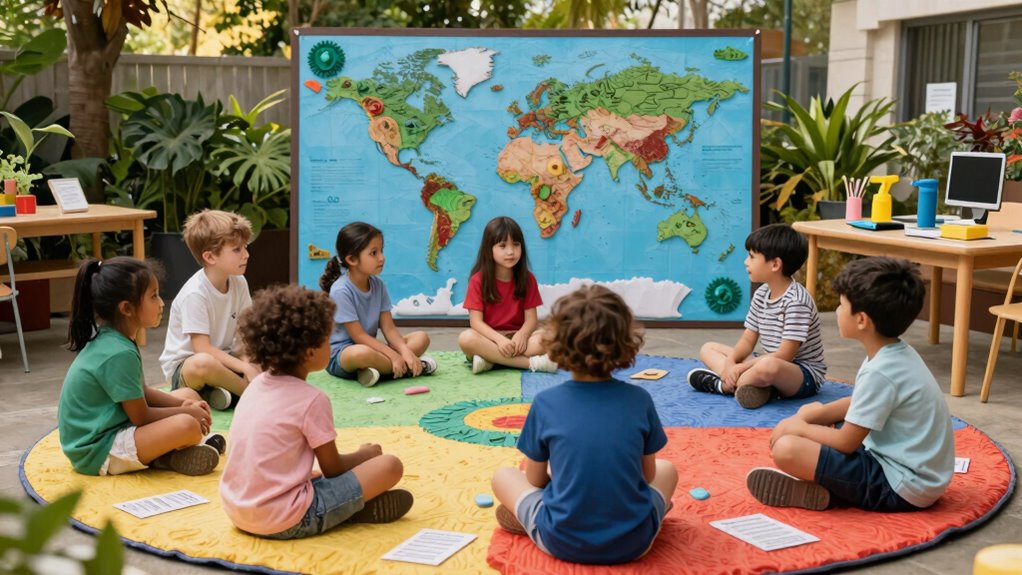

Accessible materials are essential in environmental education because they let everyone participate fully, no matter their abilities or learning styles. When resources are inclusive, you create opportunities for diverse groups to explore and understand environmental issues. This promotes equity, engagement, and a sense of belonging. By considering accessibility, you foster a more effective and respectful learning environment. Keep exploring to discover how accessible tools and strategies can make a real difference in fostering environmental awareness for all.

Get garden gear delivered free with Prime
- Fast, free delivery on millions of items
- Prime Video, Amazon Music and more included
- Member-only deals all year
Key Takeaways
- They ensure all learners, regardless of abilities, can engage with environmental topics effectively.
- Accessible materials foster inclusive participation, enriching diverse perspectives in environmental education.
- They promote equity by providing adaptable resources suited to various learning styles and needs.
- Accessible tools enhance understanding of complex environmental concepts through multisensory experiences.
- Using inclusive materials encourages respect, empathy, and active involvement in environmental stewardship.

Accessible materials play an essential role in guaranteeing that environmental education is inclusive for all learners. When you provide accessible resources, you create opportunities for everyone to engage with environmental topics, regardless of their abilities or learning styles. These materials allow you to reach a broader audience, fostering curiosity and understanding across diverse groups. For example, incorporating interactive simulations can transform complex scientific concepts into engaging, hands-on experiences. Instead of just reading about ecological systems, students can manipulate virtual environments, observe outcomes, and develop a deeper comprehension. These simulations are particularly valuable for learners who benefit from visual and tactile learning methods, making abstract ideas more tangible. By integrating them into your curriculum, you ensure that no student is left behind due to accessibility barriers.
In addition to interactive simulations, inclusive field trips are a crucial component of accessible environmental education. You might think that field trips are inherently inaccessible for some, but with thoughtful planning, they can become inclusive experiences. Consider providing transportation options, accessible paths, and materials in multiple formats—like large-print guides or audio descriptions—to accommodate different needs. When you design inclusive field trips, you open the door for students with mobility challenges, sensory sensitivities, or other disabilities to participate fully. This not only enriches their learning but also promotes empathy and understanding among all students. Such trips become powerful tools for experiential learning, helping students connect with nature firsthand while feeling valued and supported. Incorporating accessible educational tools ensures that all students can actively participate and benefit from these experiences. Additionally, promoting awareness about universal design principles helps educators create environments that are naturally inclusive and adaptable to various needs. Recognizing the importance of accessible design can further enhance the effectiveness of these educational experiences.
Offering accessible materials isn’t just about compliance; it’s about creating an equitable learning environment. When you choose resources that are adaptable and inclusive, you empower every student to explore environmental issues actively. This approach encourages critical thinking and fosters a sense of agency, as learners see that their perspectives are recognized and valued. Moreover, understanding the significance of inclusive educational practices can guide educators in creating more engaging and effective learning environments. By using accessible materials, you also demonstrate the importance of inclusion and respect for diversity, which are essential principles in environmental stewardship. The more you invest in making your educational activities accessible—whether through interactive simulations or inclusive field trips—the more you cultivate a learning atmosphere where everyone can thrive and contribute to understanding our planet. Ultimately, accessible materials are the key to building an engaging, equitable, and inspiring environmental education experience for all learners.
Popular right now

Ninja Luxe Café Mini Plus Espresso and Coffee Maker with AutoFroth, Bone & Champagne

TCL 55 T7 Series 4K 120Hz QLED Smart Google TV (55T7)

LG 55-Inch QNED73B Mini LED 4K Smart TV (2026)
As an affiliate, we earn on qualifying purchases.
Frequently Asked Questions
How Do Accessible Materials Improve Student Engagement in Environmental Topics?
Accessible materials boost your student engagement in environmental topics by making content more understandable and appealing. You can include interactive visuals that invite students to explore concepts actively, and use inclusive language to guarantee everyone feels welcome and valued. These strategies help students connect with the material, foster curiosity, and participate confidently. As a result, they become more motivated and enthusiastic to learn about the environment, leading to deeper understanding and lasting interest.
What Are Common Challenges in Creating Accessible Environmental Education Resources?
Like Daedalus forging wings, you face challenges in creating accessible environmental resources. Common hurdles include balancing inclusive design with technical complexity, and effectively removing barriers that hinder diverse learners. Limited resources and lack of awareness can also impede progress. To succeed, you must innovate, prioritize barrier removal, and adapt materials to meet all needs, ensuring everyone can soar in understanding environmental issues without constraints.
How Can Teachers Assess the Accessibility of Environmental Materials?
You can assess the accessibility of environmental materials by examining their diversity and how well they meet assessment criteria tailored for all learners. Start by reviewing whether the resources include diverse formats, like audio, visual, and tactile options. Then, evaluate if they align with established accessibility standards, such as clarity, usability, and inclusivity. Regular feedback from students helps identify gaps, ensuring your materials effectively reach everyone.
Are There Specific Tools to Develop Accessible Environmental Education Content?
Did you know that 15% of the world’s population has some form of disability? To develop accessible environmental education content, you can use tools like assistive technologies and embrace inclusive design. These tools help create materials that everyone can engage with, whether through screen readers, subtitles, or tactile options. By actively incorporating these resources, you guarantee your lessons are inclusive, empowering all students to connect with environmental topics meaningfully.
How Does Accessibility in Environmental Education Support Diverse Learning Needs?
Accessibility in environmental education supports diverse learning needs by using inclusive strategies and adaptive technologies that cater to everyone’s abilities. You can design lessons that include visual aids, audio descriptions, and tactile materials, ensuring all students can engage fully. By embracing these methods, you create an inclusive environment where learners of all backgrounds and abilities can understand and connect with environmental topics, fostering greater awareness and participation.
Conclusion
By now, you see how accessible materials empower everyone to connect with the environment, much like the scholars of the Enlightenment who sought knowledge for all. When you choose inclusive resources, you help bridge gaps, fostering a more equitable understanding of our planet. Remember, in this digital age, ensuring everyone can participate isn’t just progress—it’s the future. So, take action today and champion accessible environmental education; after all, every voice matters in this grand quest for sustainability.