To get more power without risking cable damage, consider wiring your panels in a combination of series and parallel setups. Series wiring increases voltage, helping push more power into your batteries, but it can be risky if panels are shaded or dirty. Parallel wiring boosts current and offers resilience against shading, reducing overheating. Opting for a balanced mix guarantees efficient power delivery while keeping cables safe. Continue exploring to discover how to optimize your system safely and effectively.

Get garden gear delivered free — and shop member deals
- Fast, free delivery on millions of items
- Access to Prime Big Deal Days deals on October 6–7
- Prime Video, Amazon Music and more included
Key Takeaways
- Series wiring increases voltage, helping push more power into batteries, but requires careful insulation to prevent overheating.
- Parallel wiring boosts current, reducing cable heating and minimizing the risk of melting cables under high load.
- Combining series and parallel configurations balances voltage and current for optimal power without excessive cable stress.
- Proper wire thickness and fusing are essential in both setups to prevent overheating and ensure safety.
- Choosing the right wiring method depends on system voltage needs, shading conditions, and safety considerations to avoid cable damage.

Are you wondering whether to connect your solar panels in series or parallel? The decision impacts how much power you generate, how efficiently your system works, and how safe your wiring remains. Understanding the differences can help you optimize your setup without risking damage or reducing battery efficiency.
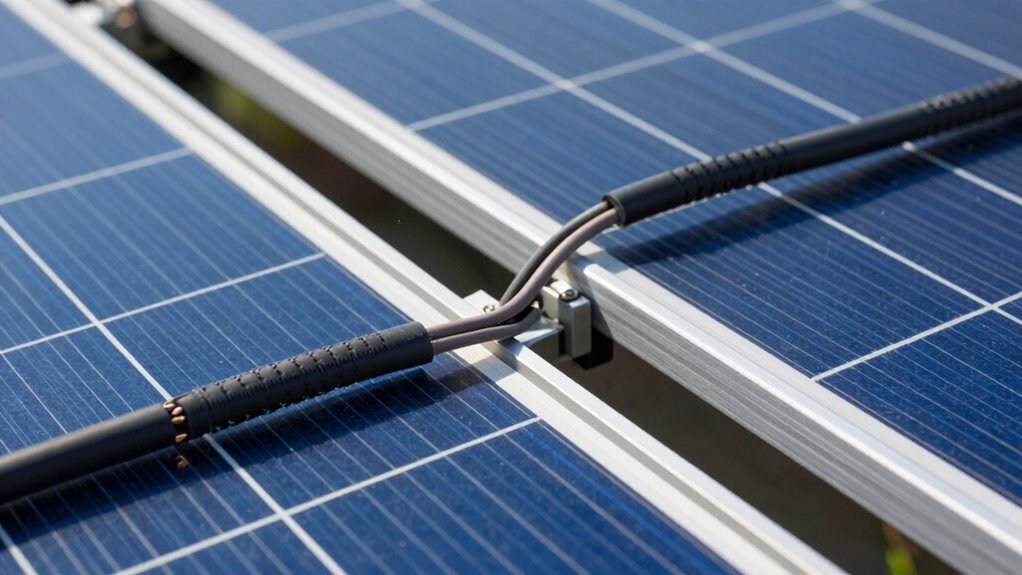
When connecting solar panels in series, you combine the positive terminal of one panel with the negative terminal of the next. This setup increases the total voltage while keeping the current the same. Higher voltage can push more power into your batteries, especially if you have a system designed for higher voltage inputs. However, wiring safety becomes a key concern. Because the voltage is higher, any loose connections or damaged cables can pose a serious risk of electrical shock or fire if not handled carefully. Proper insulation and secure connections are essential to avoid shorts or overheating. Additionally, a series connection means that if one panel underperforms or gets shaded, the entire string’s productivity drops. This setup can lower overall battery efficiency if shading or dirt impacts one panel.
In contrast, connecting panels in parallel involves linking all the positive terminals together and all the negatives together. This configuration keeps the voltage the same as a single panel but increases the total current. The benefit is improved battery efficiency, especially in partially shaded conditions, since each panel operates independently. If one panel is shaded or dirty, it won’t significantly affect the rest of the system. Wiring safety is generally easier in parallel because the voltage remains lower, reducing the risk of shock or damage. However, the increased current requires thicker wiring and proper fusing to handle the higher amperage, which adds to installation complexity and cost. Additionally, wiring safety considerations are especially important to prevent hazards associated with higher current flows.
Choosing between series and parallel wiring depends on your specific needs. If you aim for higher voltage to match your inverter’s requirements and are confident in managing higher voltage wiring safety, series might be the way to go. But if you want better resilience to shading and higher overall current for increased battery efficiency, parallel offers advantages. Some systems even combine both methods in a series-parallel arrangement to balance voltage and current effectively.
Ultimately, understanding the implications for battery efficiency and wiring safety helps you make an informed decision. Properly wired, your solar panels can deliver maximum power safely, ensuring your investment pays off without risking damage or hazards.
As an affiliate, we earn on qualifying purchases.
Frequently Asked Questions
How Do Temperature Changes Affect Series and Parallel Wiring Efficiency?
Temperature changes affect your wiring efficiency by causing thermal expansion, which can loosen connections and increase resistance. In series wiring, this may lead to voltage drops and reduced power output, while in parallel wiring, insulation integrity might be compromised, risking shorts. To maintain efficiency, verify your cables are rated for temperature variations, and regularly check connections for signs of thermal expansion or insulation damage, preventing performance issues and potential hazards.
Can Hybrid Wiring Configurations Optimize Solar System Performance?
Think of hybrid configurations as a Swiss Army knife for your solar system, offering unmatched system flexibility. Yes, they can optimize performance by combining series and parallel wiring, balancing voltage and current to match your specific needs. This adaptable setup helps prevent overheating, improves efficiency, and maximizes power output. With hybrid wiring, you gain control, ensuring your solar system runs smoothly and efficiently, no matter the weather or load demands.
What Are the Best Cable Types to Prevent Melting in High-Current Setups?
You should choose cables with high-quality insulation, like those with thermoplastic or silicone coatings, to prevent melting under high current. Opt for a thicker wire gauge, such as 10 or 8 AWG, to handle increased power safely. Ensuring proper insulation and appropriate wire gauge reduces heat buildup, minimizes melting risk, and keeps your solar system running efficiently and safely, especially in high-current setups.
How Does Shading Impact Series Versus Parallel Solar Arrays?
Shading effects impact your array layout differently in series and parallel setups. In series arrays, shading on one panel reduces the entire string’s output, so you should design your layout to minimize shading on any single panel. In parallel arrays, shading affects only individual panels, leaving others unaffected. To optimize performance, verify your array layout considers shading effects, placing panels in less shaded areas and avoiding obstructions that could reduce overall efficiency.
Are There Safety Concerns Unique to Each Wiring Method?
Did you know that improper wiring can increase fire hazard risks by up to 40%? With series wiring, you face a higher risk of electrical shock if a panel is damaged, since current flows through the entire string. Parallel wiring reduces this risk, but you must guarantee connections are secure. Both methods require careful attention to safety standards to prevent fire hazards and electrical shocks.
Conclusion
Remember, a chain is only as strong as its weakest link. Whether you choose series or parallel wiring, understanding your system’s needs guarantees you get the most power without risking damage. Always weigh the pros and cons, and don’t put all your eggs in one basket. By making informed choices, you’ll keep your solar setup efficient and safe—because a well-wired system is like a well-tended garden, flourishing and trouble-free.
Halloween Picks
halloween
As an affiliate, we earn on qualifying purchases.