
If you’re seeking the best smart thermostat for energy savings, you’re likely aiming to reduce utility bills while maintaining comfort. The Google Nest Thermostat stands out for its intuitive automation and compatibility, making it a popular choice. For those with electric baseboard heating, the Meross Matter Smart Thermostat offers dedicated features that optimize energy use effectively. Meanwhile, the Ecobee Smart Thermostat Premium combines advanced sensors with air quality monitoring for comprehensive savings. Each option presents tradeoffs, such as compatibility, installation complexity, or feature set, which can influence your decision. Continue reading for a detailed breakdown to help you find the perfect fit.
Key Takeaways
- The most effective energy savings come from thermostats with advanced sensors and learning capabilities.
- Compatibility with voice assistants and smart home ecosystems influences ease of use and integration.
- Wired (C-wire) connection remains a key factor for reliable operation, especially with more advanced models.
- Pricing varies significantly, with premium models offering additional features but not always better savings.
- Installation complexity can impact long-term satisfaction; DIY-friendly options reduce setup headaches.




More Details on Our Top Picks
meross Matter Smart Thermostat for Electric Baseboard Heater, Works with Alexa, HomeKit, Google, SmartThings, Programmable WiFi Thermostat for House, Energy Saving, App & Voice Control for Smart Home
This meross model excels at controlling high-line voltage electric heaters, such as baseboards, where traditional HVAC compatibility isn’t relevant. Unlike the Google Nest or ecobee, which target central HVAC systems, this thermostat is designed specifically for 120-240V electric baseboard setups, making it ideal for dedicated heating zones. Its seamless integration with multiple smart platforms—Alexa, HomeKit, Google, and SmartThings—offers true ecosystem flexibility, unlike some products that lock you into one system. The app’s energy monitoring, open window detection, and precise scheduling contribute to energy savings, but the need for professional wiring due to high voltage limits its DIY appeal. The small form factor and app calibration features make it a standout for dedicated electric heat control, though it cannot handle cooling or multi-zone HVAC. Tradeoffs involve wiring complexity versus specialized functionality.
Pros:- Designed specifically for high-voltage electric baseboard heaters
- Universal Matter support with Alexa, HomeKit, Google, and SmartThings
- Real-time energy monitoring and open window detection
Cons:- Requires professional wiring due to high voltage setup
- Not compatible with central HVAC or cooling systems
- Limited to electric heating only
Best for: Buyers with high-voltage electric baseboard heaters who want ecosystem flexibility and real-time energy tracking.
Not ideal for: Homeowners with central HVAC systems or cooling requirements, as this is incompatible with 24V systems or AC units.
- Controller Type:Matter, Wi-Fi, Voice & App Control
- Temperature Control Type:Heating
- Power Source:Corded Electric
- Voltage:120-240 VAC
- Display Type:LCD
- Connectivity Protocol:Matter, Wi-Fi
Bottom line: This thermostat is perfect for those with dedicated high-voltage electric heaters seeking advanced control and cross-platform compatibility.
Google Nest Thermostat – Smart Thermostat for Home – Programmable Wifi Thermostat – Charcoal
The Google Nest Thermostat takes the crown for central HVAC systems, combining intuitive scheduling and smart monitoring with strong energy-saving features. Compared to the ecobee Premium, which offers advanced sensors and air quality monitoring, the Nest provides a highly user-friendly experience with seamless integration into the Google ecosystem. Its ability to learn routines, detect when you’re away, and suggest schedule tweaks supports consistent energy savings. The device’s compatibility with most 24V HVAC systems makes it a reliable choice for typical homes, although it requires a C-wire in some setups—similar to ecobee but less flexible in systems without a C-wire. Its sleek design and remote control via the Google Home app make it ideal for tech-savvy homeowners wanting an easy upgrade, but it lacks the advanced air quality features and sensor integration of the ecobee. This pick makes the most sense for those prioritizing ease of use and smart integration in central heating and cooling.
Pros:- Easy DIY installation with intuitive setup process
- Learns routines and adapts to your schedule for energy savings
- Remote control via Google Home app
Cons:- Requires C-wire in most cases, which may involve additional wiring
- Limited to 24V HVAC systems, not suitable for high-voltage or electric heat
- Lacks advanced air quality sensors
Best for: Homeowners with 24V HVAC systems seeking an easy-to-install, intelligent thermostat that works seamlessly with Google Assistant.
Not ideal for: Users with electric baseboard heaters or systems without a C-wire, since compatibility can be limited and installation may be more complicated.
- Controller Type:Wi-Fi, Voice & App Control
- Temperature Control Type:Heating & Cooling
- Display Size:2 Inches
- Connectivity Protocol:Wi-Fi, Bluetooth
- Power Source:C-wire or Power Adapter
- Energy Star Certified:Yes
Bottom line: Ideal for homeowners seeking a simple, smart, and effective thermostat for central HVAC systems with Google ecosystem integration.
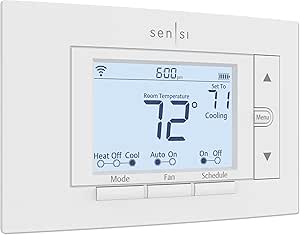
Sensi Smart Thermostat, 100 Years Of Expertise, Wi-Fi, Data Privacy, Programmable, Easy DIY Install, Works With Alexa, Energy Star Certified, Mobile App, ST55
The Sensi ST55 offers a straightforward, reliable Wi-Fi thermostat with strong privacy protections and a simple DIY installation process. Unlike ecobee, which emphasizes sensors and air quality, Sensi focuses on core thermostat functions, making it ideal for users who value privacy and ease of setup. Its compatibility with most systems and absence of required C-wire in many cases make it accessible for standard homes. Its user-friendly app provides detailed usage reports and alerts, helping users optimize energy consumption without complex features like advanced sensors or integrations. While lacking the multi-zone or air quality monitoring found in ecobee, its proven performance and data privacy stance make it appealing for those who prioritize straightforward operation and privacy. However, it doesn’t include advanced occupancy sensing or air quality insights, limiting its energy optimization scope compared to premium models. This model suits budget-conscious, privacy-aware homeowners wanting dependable energy savings.
Pros:- Strong data privacy protections; does not sell personal info
- Easy DIY installation with step-by-step app guidance
- Compatible with most HVAC systems, no C-wire needed in many cases
Cons:- Limited advanced features like air quality monitoring
- No multi-zone or occupancy sensors
- Basic scheduling may not suit complex home setups
Best for: DIY homeowners prioritizing privacy and straightforward energy savings without extensive smart home integrations.
Not ideal for: Homeowners seeking advanced air quality, occupancy sensing, or multi-zone control, which ecobee or ecobee Premium provide.
- Controller Type:Wi-Fi, App & Voice Control
- Temperature Control Type:Programmable
- Energy Star Certified:Yes
- Connectivity Protocol:Wi-Fi
- Power Source:Most systems, no C-wire needed
- Display Type:Built-in Button
Bottom line: A dependable, privacy-focused thermostat ideal for users wanting simple energy savings and easy installation.
Amazon Smart Thermostat – Save money and energy – Works with Alexa and Ring – C-wire required
The Amazon Smart Thermostat offers a cost-effective upgrade for Alexa users, providing reliable scheduling and voice control. Compared to ecobee or ecobee Premium, its simpler interface and fewer sensors make it less feature-rich but more accessible—ideal for budget-conscious homeowners who primarily use Alexa. Its guided setup via the Alexa app streamlines installation, though it requires a C-wire, which might involve additional wiring or adapters. The device supports routines, voice commands, and energy savings estimates, but lacks advanced features like air quality sensors or occupancy detection. Its compatibility with Ring and Alexa ecosystems makes it an excellent choice for those already invested in Amazon’s smart home, but it’s less suited for users wanting detailed energy analytics or multi-room control. This pick is for budget-minded Alexa fans who want straightforward energy savings.
Pros:- Cost-effective, easy guided setup with Alexa app
- Supports routines and voice control
- Energy-saving features with scheduling and Alexa integration
Cons:- Requires C-wire, which may need additional wiring
- Limited to Alexa and Ring ecosystems
- No advanced sensors or air quality monitoring
Best for: Amazon Alexa users seeking an affordable, easy-to-install thermostat with basic energy-saving features.
Not ideal for: Homes without a C-wire or users looking for advanced sensors, multi-zone control, or compatibility beyond Alexa.
- Controller Type:Wi-Fi, Voice & App Control
- Temperature Control Type:Heating & Cooling
- Display Size:3.56 x 3.56 x 0.84 in
- Connectivity Protocol:Wi-Fi, Alexa
- Power Source:C-wire required
- Energy Star Certified:Yes
Bottom line: Best for Alexa-centric homes wanting an affordable, reliable way to reduce energy costs with voice control.
ecobee Smart Thermostat Premium with Smart Sensor and Air Quality Monitor – Programmable Wifi Thermostat – Works with Siri, Alexa, Google Assistant, Black
The ecobee Premium stands out with its comprehensive suite of features, including advanced sensors, air quality monitoring, and occupancy sensing. Compared to the Nest or simpler models like Sensi, ecobee’s inclusion of SmartSensors ensures more precise temperature control across multiple zones, supporting significant energy savings. Its built-in air quality monitor and radar occupancy sensing enable proactive adjustments, making it ideal for larger or multi-zone homes. The device’s compatibility with Siri, Alexa, and Google expands its smart home integration, but this comes with a higher price point and slightly more complex setup. The Premium’s sleek design and rich interface justify its premium status, though the need for additional sensors might increase installation complexity and costs. This pick makes sense for homeowners wanting advanced control, multi-room comfort, and air quality insights in one package.
Pros:- Includes SmartSensors for multi-zone control
- Built-in air quality and occupancy monitoring
- Works with Siri, Alexa, and Google Assistant
Cons:- Higher cost compared to basic thermostats
- Requires SmartSensor addition for full multi-zone benefits
- Installation can be more complex due to extra sensors
Best for: Large or multi-zone homes seeking advanced energy savings, air quality, and occupancy sensing with cross-platform voice control.
Not ideal for: Budget-conscious users or those with simple HVAC systems, since the ecobee Premium’s features and cost may be excessive for basic needs.
- Controller Type:Wi-Fi, Voice & App Control
- Temperature Control Type:Programmable
- Display Size:Large, Vibrant
- Air Quality Monitor:Built-in
- Occupancy Sensing:Radar Technology
- Compatibility:Most 24VAC HVAC systems
Bottom line: Best suited for homeowners with larger or multi-zone systems who want detailed control, air quality, and energy savings in a premium package.
meross Smart Thermostat for Home, WiFi Thermostat Works with Matter, Alexa, Apple Home, Google Assistant, App & Voice Control, 7x24h Scheduling, Energy Saving, C-Wire Required
This meross thermostat stands out for its broad HVAC system compatibility—covering 95% of systems including heat pumps, furnaces, and air conditioners—making it a flexible choice compared to more limited options like the Emerson Sensi Touch. Its seamless Matter integration simplifies setup with Apple Home, Google Home, Alexa, and more, reducing app clutter and making control effortless. The 7-day, 24/7 scheduling feature allows detailed programming, helping you save energy without sacrificing comfort. Compared to the ecobee Smart Thermostat Essential, meross offers a straightforward installation process and a sleek modern design that appeals to tech-savvy homeowners. However, it requires a C-wire, which could be a barrier for some, and its app, while intuitive, may lack some advanced energy analytics found in premium models. For those seeking a versatile, easy-to-install thermostat with robust smart home compatibility, this pick makes the most sense.
Pros:- Works with Matter, Alexa, Apple HomeKit, Google Assistant, and Samsung SmartThings, offering versatile smart home integration
- Compatible with 95% of HVAC systems, including heat pumps and furnaces
- 24/7 scheduling with energy-saving modes for customized comfort and efficiency
- Sleek modern design that fits well with various home decors
Cons:- Requires a C-wire, which may necessitate additional wiring or adapters
- Limited advanced energy analytics compared to higher-end thermostats
Best for: Homeowners with varied HVAC systems who want reliable compatibility and a straightforward setup.
Not ideal for: Users with electric baseboard heaters or systems without a C-wire, as it’s incompatible with those wiring configurations.
- Controller Type:Wi-Fi
- Additional Features:Matter, Alexa, Apple Home, Google Assistant, 24/7 Scheduling
- Specific Uses For Product:Air Conditioner, Furnace, Heat Pump
- Power Source:24 Volts
- Display Type:LED
- Control Type:App & Voice Control
Bottom line: Ideal for tech-savvy homeowners seeking a highly compatible, easy-to-install thermostat that maximizes energy savings.
vine Smart Thermostat for House, WiFi Thermostats for Home Compatible with Alexa and Google Assistant, 7day x 8period Programmable, Energy Star Certified, C-Wire Required
This vine thermostat offers exceptional value, delivering 7-day, 8-period programming that helps reduce energy costs—comparable in energy savings potential to the ecobee Smart Thermostat Essential, but at a significantly lower price point. Its simple setup and compatibility with Alexa and Google Assistant make it accessible for users who want basic smart control without complexity. The design is sleek and modern, seamlessly fitting into various home decors, and the app interface is intuitive for all users, including those less tech-savvy. It also displays inside and outside temperatures, providing useful real-time data. However, its reliance on a C-wire means it’s not suitable for older systems without wiring upgrades, and it lacks some advanced features like indoor humidity sensors or smart sensors for individual rooms. For budget-conscious consumers seeking reliable energy savings and straightforward control, this thermostat strikes a solid balance.
Pros:- Energy Star certified, helping save up to 23% on heating and cooling costs
- Simple installation with online guides, suitable for most 24V systems
- Compatible with Alexa and Google Assistant for voice control
- Displays both inside and outside temperatures for better climate awareness
Cons:- Requires a C-wire, which may not be available in all homes
- Lacks advanced room sensors, limiting multi-room control
Best for: Budget-conscious homeowners who want reliable energy savings without premium features.
Not ideal for: Homeowners with older wiring systems or electric baseboard heaters, as it needs a C-wire and isn’t compatible with all setups.
- Controller Type:Wi-Fi
- Additional Features:7-day programming, Energy Star Certified
- Specific Uses For Product:Air Conditioner, Boiler, Furnace
- Control Type:App & Voice Control
- Display Type:LCD
- Power Source:24 Volts
Bottom line: Best for homeowners seeking an affordable, energy-efficient thermostat with reliable smart home compatibility and simple setup.
Emerson Sensi Touch Wi-Fi Smart Thermostat with Touchscreen Color Display, Works with Alexa, Energy Star Certified, C-wire Required, ST75 Black
The Sensi Touch thermostat is distinguished by its sleek touchscreen display and intuitive interface, making it highly appealing for users who value modern aesthetics. Its compatibility with Alexa and Energy Star certification offers solid energy-saving features comparable to the meross and ecobee options. Installation is straightforward with the included level and step-by-step app instructions, suitable for most homes with a C-wire. Its large color display provides easy-to-read temperatures and status updates, which can be a significant advantage for households wanting clear visibility. Conversely, it doesn’t support Matter or other advanced smart home protocols, and its design is more traditional, lacking some of the more futuristic features of higher-end models. For individuals who prioritize a stylish, reliable, and easy-to-use thermostat, this model fits well.
Pros:- Sleek touchscreen color display for easy navigation
- Works with Alexa and is Energy Star certified for energy savings
- Simple DIY installation with clear instructions
- Reliable performance from a trusted brand with HVAC expertise
Cons:- Limited smart home protocol support (no Matter integration)
- Design is more traditional, lacking futuristic features
Best for: Homeowners who want a stylish, easy-to-install thermostat with proven performance and straightforward control.
Not ideal for: Smart home enthusiasts seeking integration with the latest protocols like Matter or advanced multi-room sensors.
- Controller Type:Wi-Fi
- Additional Features:Color touchscreen, Energy Star
- Specific Uses For Product:Air Conditioner, Boiler, Furnace
- Control Type:Touchscreen & App
- Display Size:4.3 Inches
- Power Source:AC
Bottom line: Ideal for style-conscious homeowners who want dependable, easy-to-use energy savings with a modern touchscreen interface.

How We Picked
I evaluated these thermostats based on several criteria critical to energy savings, including smart features like learning algorithms, sensor integration, and manual scheduling. Ease of installation, especially for DIY users, was also a priority, along with compatibility across popular smart home platforms. Build quality and user interface usability influenced the ranking, as these factors impact daily operation and long-term reliability. Price-to-value ratio was considered, ensuring that the top picks offer meaningful energy-saving features without unnecessary extras. Overall, the goal was to identify models that maximize savings while remaining accessible and easy to use for a broad range of homeowners.Factors to Consider When Choosing Best Smart Thermostat For Energy Savings
Choosing the best smart thermostat for energy savings involves balancing features, compatibility, and budget. Beyond looks and basic functions, understanding key factors can help ensure you select a device that truly reduces your energy bills and fits your home’s setup. Here are the main considerations to keep in mind:Compatibility and Connectivity
Verify that the thermostat works with your existing heating and cooling system, especially if you have specialized setups like electric baseboards or heat pumps. Compatibility with your preferred smart home ecosystem—whether Alexa, Google Assistant, Apple HomeKit, or others—ensures smooth integration and voice control. Avoid models that require proprietary hubs unless you’re willing to pay extra for added convenience. Remember, a compatible device saves you the hassle of replacing or upgrading other components later.
Sensor and Learning Capabilities
Advanced sensors that detect occupancy, temperature, and humidity can significantly enhance energy savings by optimizing heating and cooling only when needed. Learning algorithms that adapt to your routines can reduce manual adjustments over time, further cutting costs. Beware of budget models lacking these features, as they often rely solely on basic scheduling, which might not be enough for substantial savings. Investing in sensors or models with learning features can pay off through more precise temperature control.
Ease of Installation
Consider whether the thermostat is DIY-friendly or requires professional installation. Models that use a C-wire tend to be more reliable, especially for complex systems, but some newer options work without it. Think about your comfort with wiring and setup; a complicated installation might lead to frustration or suboptimal performance. Sometimes, spending extra on professional setup ensures the device works correctly and maximizes energy savings from the start.
Pricing and Value
While premium models come with extra features like air quality monitoring and voice assistant integration, they don’t always translate into better energy savings. Balance your budget with the features you truly need. Cheaper models may lack advanced sensors but still offer decent savings if they include programmable schedules and smart features. Focus on value: a device that provides meaningful savings with a reasonable price point will deliver the best long-term return.
User Interface and App Control
An intuitive app and display make daily adjustments and monitoring easier, ensuring you stay engaged with your energy-saving goals. Touchscreens and clear menus reduce setup errors and improve usability. Some models also offer remote sensors or geofencing, which can adapt heating and cooling based on your location, further enhancing savings. A user-friendly interface encourages consistent use, maximizing the device’s potential to cut energy costs.
Frequently Asked Questions
Can a smart thermostat really lower my energy bills?
Yes, a well-chosen smart thermostat can significantly reduce your energy bills by optimizing heating and cooling schedules, adjusting based on occupancy, and learning your routines. These devices automatically fine-tune temperature settings, avoiding unnecessary heating or cooling when you’re away or asleep. Over time, the savings can offset the initial investment, especially if you select a model with advanced sensors and automation features designed for energy efficiency.
Is a C-wire necessary for a smart thermostat to work properly?
Many smart thermostats require a C-wire for consistent power, especially those with advanced features like sensors and displays. However, some models are designed to work without a C-wire using power-stealing technology or adapter kits. If your system lacks a C-wire, double-check the thermostat’s compatibility and consider professional installation if needed. Ensuring proper wiring helps prevent connectivity issues and maximizes energy-saving capabilities.
How much should I expect to spend on a smart thermostat for energy savings?
Prices vary widely, from budget-friendly options around $50 to premium models exceeding $250. Cheaper models often provide basic scheduling and Wi-Fi control, which can still yield savings if used effectively. Mid-range options typically include learning features and better integration, offering more consistent savings. Premium models add sensors, air quality monitoring, and voice control, which can enhance comfort and efficiency but may not always boost savings proportionally. Balance your budget with the features that matter most for your home.
Will a smart thermostat work with my existing heating system?
Most smart thermostats are compatible with common systems like central air, heat pumps, and electric heating, but some specialized setups may require additional wiring or adapters. Check your current system’s specifications and confirm the thermostat’s compatibility before purchasing. If unsure, consulting a professional can help prevent installation issues and ensure your device operates at peak efficiency, maximizing energy savings.
Are smart thermostats worth the extra cost over traditional models?
For many homeowners, smart thermostats offer better control, automation, and potential savings, making them a worthwhile investment. The ability to remotely adjust settings, use learning algorithms, and integrate with other smart devices often results in lower energy bills over time. While the upfront cost is higher, the long-term savings and convenience tend to justify the expense, especially if your energy bills are high or your routines vary frequently.