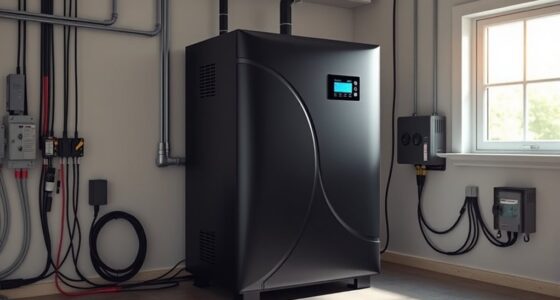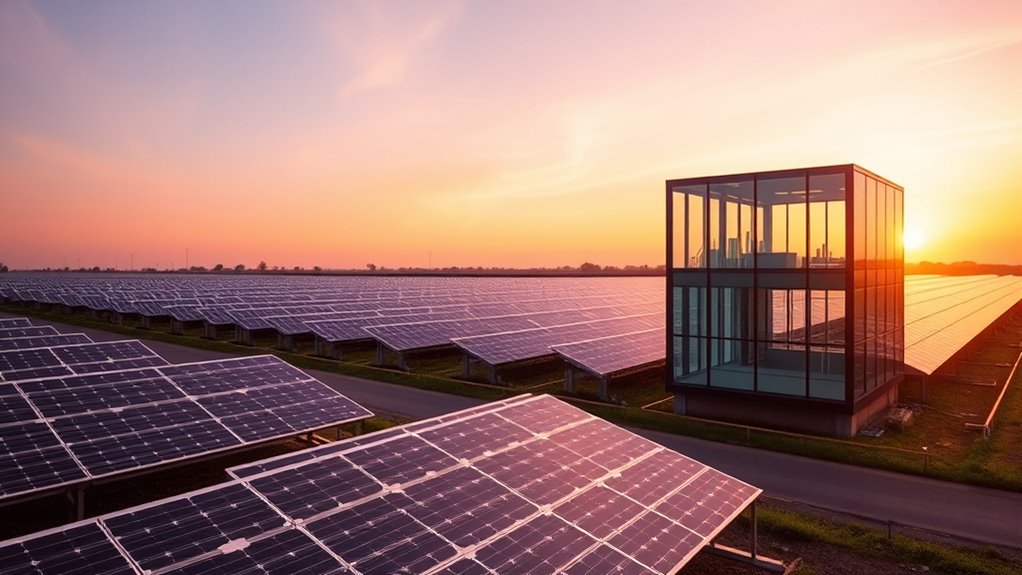

A Power Purchase Agreement (PPA) is a contract between you and an energy provider that guarantees the purchase of renewable energy over a set period, usually 10 to 25 years. It helps secure funding for projects, guarantees stable energy prices, and provides predictable revenue streams for developers and investors. If you continue exploring, you’ll discover how these agreements balance interests and support the growth of renewable energy.
Prime for Young Adults — start your free trial
Fast free delivery, streaming and member deals for eligible 18–24 year olds.
As an affiliate, we earn on qualifying purchases.
Key Takeaways
- PPAs are contracts that secure steady revenue and funding for renewable energy projects by committing buyers to purchase power at agreed terms.
- They specify project output, duration (typically 10-25 years), and pricing structures like fixed rates or escalation clauses.
- PPAs help project developers and investors predict income, making projects more attractive for financing and reducing market risk.
- Contract terms include responsibilities, conditions for termination, and flexibility provisions for changes or unforeseen events.
- They serve as essential tools for ensuring project financial stability, attracting investment, and supporting long-term renewable energy deployment.

Have you ever wondered how energy projects secure funding and guarantee steady revenue? The answer often lies in Power Purchase Agreements, or PPAs. These contracts are essential tools that help renewable energy developers and investors ensure a predictable income stream by committing to sell power to buyers, usually utilities or large corporations. When it comes to renewable energy, PPAs offer a way to lock in prices and provide financial stability, making projects more attractive to lenders and investors. The contract terms are central to this arrangement, defining the length of the agreement, pricing structures, and other key conditions that influence the project’s success.
In a typical renewable energy PPA, you’ll find that the contract specifies the amount of power to be delivered, the duration of the agreement—often ranging from 10 to 25 years—and the pricing mechanisms. These contract terms are carefully negotiated to balance the interests of both parties. For instance, fixed-price arrangements give buyers certainty about their energy costs, while the project developer benefits from a guaranteed revenue stream that helps secure financing. Some PPAs feature escalation clauses, which adjust prices over time to account for inflation or changes in market conditions, adding flexibility to the deal.
Renewable energy PPAs specify delivery amounts, durations (10–25 years), and pricing, balancing buyer certainty and developer revenue.
The contract terms also outline the responsibilities of each party. The developer commits to delivering a certain amount of renewable energy, often from sources like solar, wind, or hydro projects. Meanwhile, the buyer agrees to purchase that energy at predetermined rates, shielding both sides from volatile market fluctuations. This predictability is essential for project financing, as lenders want assurance that the project will generate enough revenue to repay loans and deliver a return on investment. Additionally, incorporating sustainable practices into project planning can enhance the project’s appeal to environmentally conscious buyers and investors.
Another important aspect of contract terms involves the conditions under which the agreement can be terminated or renegotiated. These provisions protect both parties if circumstances change, such as regulatory shifts or technical issues. Additionally, PPAs may include provisions for handling excess energy, curtailments, or force majeure events that could impact the project’s output or revenue.
As an affiliate, we earn on qualifying purchases.
Frequently Asked Questions
How Do PPA Rates Compare to Traditional Energy Costs?
You’ll find that PPA rates often offer more rate stability compared to traditional energy costs, which can fluctuate with the energy market. While conventional energy prices vary based on market conditions, PPA rates are typically locked in for the contract duration, providing predictable expenses. This stability helps you budget better and reduces exposure to energy market volatility, making PPAs an attractive option for long-term cost management.
Can PPAS Be Customized for Different Energy Types?
Yes, you can customize PPAs for different energy types to match your renewable flexibility and support energy diversification. This means you can tailor agreements to include solar, wind, or other renewable sources, ensuring the energy supply aligns with your specific needs and sustainability goals. By customizing PPAs, you gain more control over your energy mix, promoting a diverse, reliable, and environmentally friendly energy portfolio.
What Are the Common Pitfalls in Signing a PPA?
Imagine sailing a ship without checking the map first. You might face contractual pitfalls or negotiation challenges that threaten your journey. When signing a PPA, you risk unclear terms, hidden costs, or inflexible clauses. To avoid this, read every detail carefully, negotiate terms upfront, and seek expert advice. These steps help prevent surprises and make sure your energy voyage stays smooth and secure.
How Do PPAS Impact a Company’s Sustainability Goals?
Power purchase agreements boost your company’s sustainability goals by supporting renewable integration, allowing you to source clean energy directly. This exemplifies your corporate responsibility and commitment to reducing carbon footprints. By investing in renewable energy through PPAs, you not only meet environmental targets but also enhance your brand’s reputation. Embracing PPAs helps you align business practices with sustainability initiatives, showing stakeholders your dedication to a greener future.
Are There Tax Incentives Associated With PPAS?
Yes, there are tax incentives associated with PPAs. You can benefit from tax credits and other financial incentives that make renewable energy projects more affordable. These incentives often include federal tax credits like the Investment Tax Credit (ITC) and state-specific benefits. By entering into a PPA, you can leverage these tax credits, reducing your overall costs and making your sustainability investments more financially attractive.
Conclusion
Think of a Power Purchase Agreement as your trusty vessel charting the vast ocean of renewable energy. With it, you steer confidently toward a cleaner future, ensuring steady energy supply and financial stability. Just like a skilled captain, you harness the winds of opportunity, avoiding storms of uncertainty. Embrace this agreement, and you’ll sail smoothly into a sustainable horizon, turning your energy journey into a voyage of growth and responsibility. Your adventure begins now.
Fall yard work Picks
leaf blowers
As an affiliate, we earn on qualifying purchases.