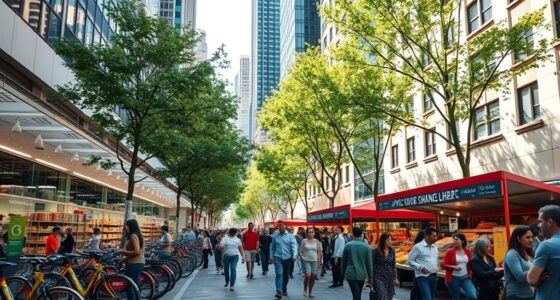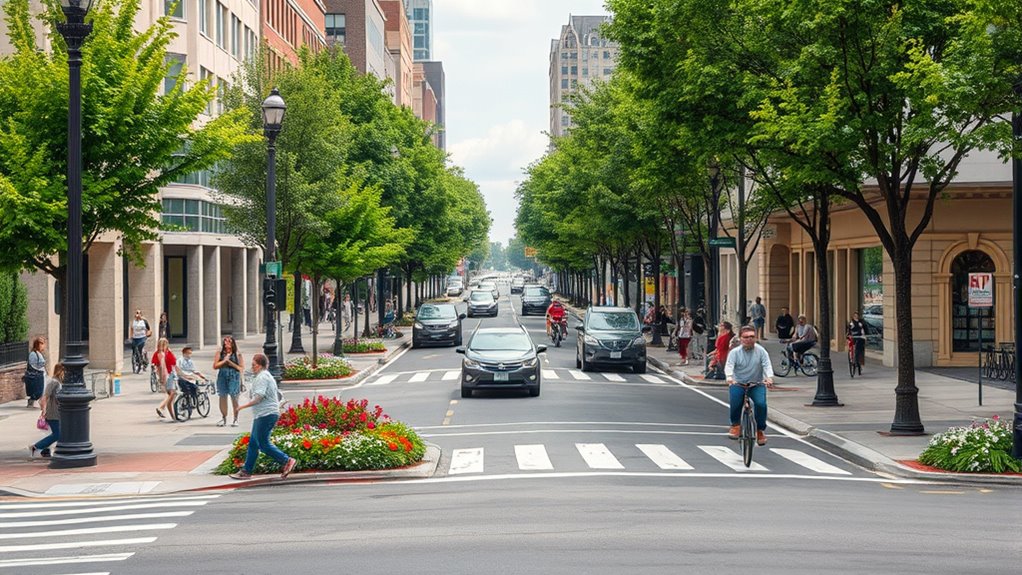

Complete Streets are designed to make roads safer and more accessible for everyone, including pedestrians, cyclists, transit riders, and drivers. By focusing on inclusive planning, these streets reduce accidents, promote active transportation, and support local communities. They help address disparities in underserved neighborhoods, giving all residents better access to jobs, schools, and services. If you’d like to understand how these thoughtful designs create safer, more equitable environments, there’s more to explore ahead.
Key Takeaways
- Complete Streets are designed to prioritize safety and accessibility for pedestrians, cyclists, transit users, and drivers.
- They promote transportation equity by improving infrastructure in underserved communities.
- Implementing Complete Streets reduces traffic injuries and encourages safer, more inviting environments for all users.
- Collaboration among planners, residents, and advocacy groups ensures streets meet diverse community needs.
- These strategies support sustainable urban development, enhancing safety, economic vitality, and quality of life for everyone.
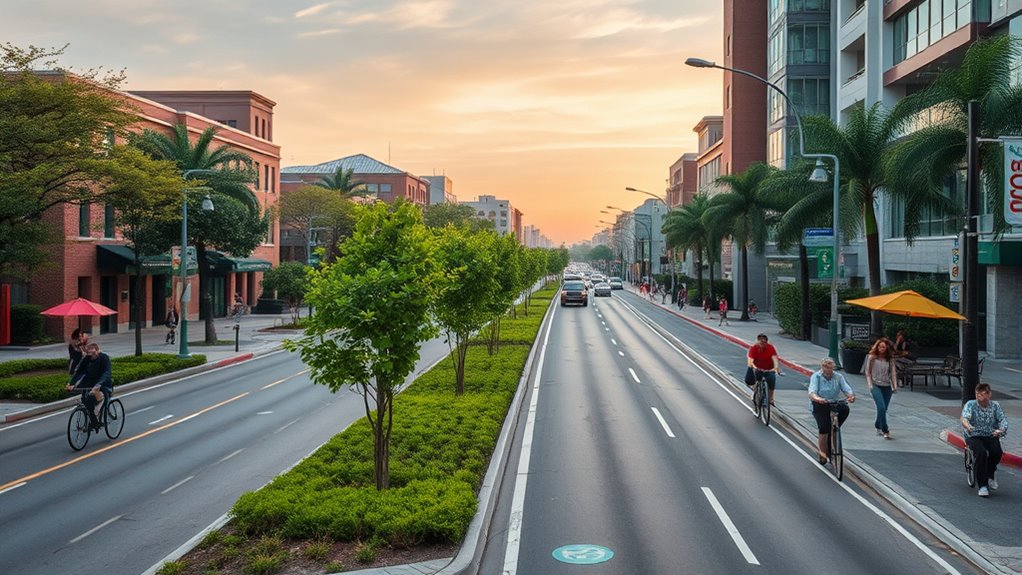
Have you ever wondered how our streets can better serve everyone? The answer lies in rethinking urban planning and prioritizing transportation equity. When cities design streets that accommodate all users—pedestrians, cyclists, transit riders, and drivers—they create safer, more inclusive environments. This approach, known as Complete Streets, aims to guarantee that roads are not just for cars but for everyone who shares them. By integrating thoughtful planning into urban development, municipalities can address diverse mobility needs, reduce accidents, and promote healthier communities.
Incorporating transportation equity into urban planning means paying attention to those who have historically been underserved by traditional road designs. For example, low-income neighborhoods and communities of color often face limited access to reliable transit options or safe pedestrian pathways. When planners focus on equitable design, they ensure that these communities gain improved access to essential services, jobs, and educational opportunities. It’s about creating a balanced transportation network that recognizes and rectifies existing disparities. This effort involves installing crosswalks, bike lanes, and transit stops that are accessible and safe for all users, regardless of age, ability, or income level.
Complete Streets also foster a sense of community and support local economies. When streets are safe and inviting for walking and biking, people are more likely to shop locally, attend community events, or simply enjoy outdoor activity. This, in turn, promotes social interactions and enhances overall quality of life. Furthermore, well-designed streets can reduce vehicle speeds, decrease traffic-related injuries, and lower emissions, contributing to healthier environments. The integration of transportation equity into urban planning doesn’t just make roads safer; it makes cities more livable and sustainable for everyone.
Implementing Complete Streets involves collaboration across multiple sectors—city planners, transportation officials, residents, and advocacy groups. It requires a shift from focusing solely on vehicle throughput to considering how streets function as public spaces. By engaging communities in the planning process, cities can better understand local needs and priorities, leading to more effective, equitable solutions. This approach also emphasizes flexible designs that adapt to changing demographics and technological advancements, such as the rise of electric scooters or autonomous vehicles.
Ultimately, transforming streets into Complete Streets is about recognizing that mobility is a fundamental right and designing infrastructure that reflects that principle. When you prioritize urban planning with a focus on transportation equity, you’re helping build safer, more inclusive cities where everyone can move freely, confidently, and comfortably. Recognizing the importance of community resilience can significantly enhance the effectiveness of these initiatives. It’s a crucial step toward creating urban environments that truly serve the diverse needs of all their residents.

24"/30" Solar Powered Flashing Led Pedestrian Crossing Sign, Aluminum
- High-brightness LED Beads: 8 LED lights with 100,000-hour lifespan
- Long Working Time: Operates up to 5 days on full charge
- Weatherproof Design: IP65 waterproof and rust-proof construction
As an affiliate, we earn on qualifying purchases.
As an affiliate, we earn on qualifying purchases.
Frequently Asked Questions
How Are Complete Streets Funded and Maintained?
You fund and maintain Complete Streets through a mix of local, state, and federal government budgets. Urban planning plays a key role, making certain projects align with community needs. Community engagement helps prioritize features like bike lanes or crosswalks, securing public support. Regular maintenance is funded through ongoing budgets, with improvements guided by feedback from residents. This collaborative approach ensures streets stay safe and accessible for everyone.
What Communities Benefit Most From Complete Streets?
Communities craving safer streets benefit most from complete streets. You’ll find pedestrian safety and bicycle infrastructure improving walkability and encouraging cycling, especially in densely populated or underserved neighborhoods. These streets help vulnerable users feel secure and foster friendly, functional environments. By prioritizing pedestrian pathways and bike lanes, you support healthier, happier communities, making streets safer for everyone, regardless of age or ability.
How Do Complete Streets Impact Local Business Traffic?
You’ll see increased local business traffic as complete streets improve pedestrian safety and seamlessly integrate bike lanes, encouraging more visitors. When streets are safer for pedestrians and cyclists, people feel more comfortable stopping, shopping, or dining nearby. Bike lane integration helps attract active commuters and reduce congestion. Overall, these improvements make your community more accessible and inviting, boosting local economy and fostering a vibrant, healthy neighborhood.
Are There Specific Design Standards for Complete Streets?
You might be surprised to learn there are indeed specific design standards for complete streets. These standards prioritize pedestrian safety and include features like well-marked crosswalks, curb ramps, and dedicated bike infrastructure. Designers carefully plan these elements to create safer, more accessible environments for everyone. By following these standards, streets not only become safer but also more inviting, encouraging community interaction and active transportation.
How Do Complete Streets Accommodate Emergency Vehicle Access?
You can see that complete streets accommodate emergency vehicle access through well-planned emergency vehicle routes integrated into street design considerations. These routes ensure that fire trucks, ambulances, and police vehicles can navigate quickly and safely. Street design considerations include wider lanes, clear signage, and unobstructed pathways to support emergency response times. By prioritizing these elements, complete streets help emergency services perform efficiently while maintaining safe, accessible roads for everyone.
Conclusion
So, you see, by simply embracing Complete Streets, you’re ensuring everyone’s safety—except perhaps the cars, which might be feeling a bit left out. It’s ironic how a little thought for pedestrians, cyclists, and public transit can make your roads safer for all, yet some still cling to old habits. Perhaps the real hazard isn’t the new design, but resisting change. In the end, safer roads benefit everyone—except those unwilling to share them.