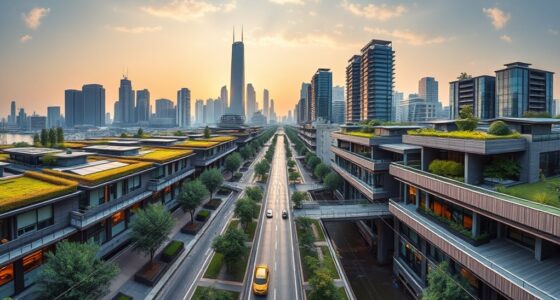
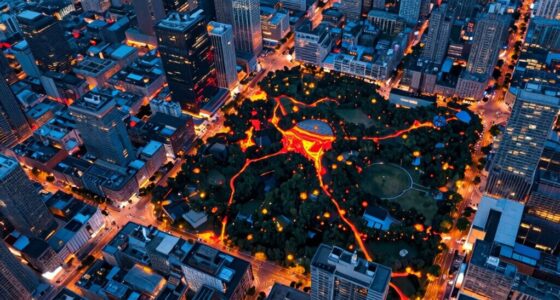
To build cities that survive storms, you should prioritize climate-resilient urban planning by integrating green infrastructure like parks, green roofs, permeable pavements, and urban forests. These natural systems absorb rainwater, reduce runoff, and slow flooding, making neighborhoods more resilient. Combining these with smart policies and design strategies strengthens urban defenses against extreme weather. Keep exploring to discover how effective planning can turn your city into a more sustainable, flood-resistant place.

Get garden gear delivered free with Prime
- Fast, free delivery on millions of items
- Prime Video, Amazon Music and more included
- Member-only deals all year
Key Takeaways
- Integrate green infrastructure like parks, green roofs, and permeable pavements to absorb rainwater and reduce flood risk.
- Develop stormwater management plans that prioritize natural solutions and enhance urban resilience against heavy storms.
- Implement zoning policies encouraging green space development and nature-based flood mitigation strategies.
- Design urban landscapes with interconnected green corridors to facilitate water absorption and flood control.
- Promote adaptive planning that combines engineering and ecological methods to ensure city resilience during extreme weather events.
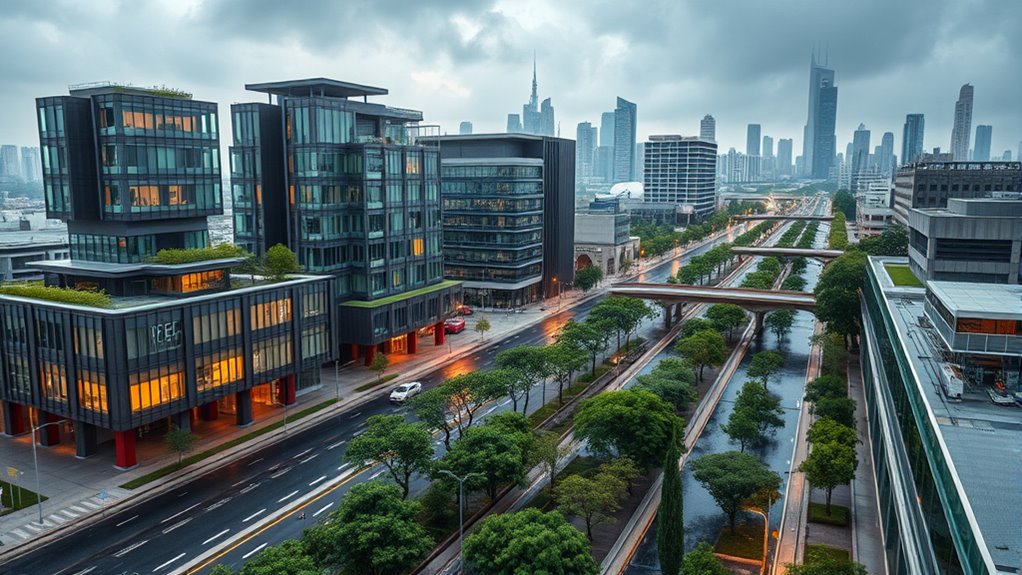
As cities face increasing threats from climate change, urban planning plays a crucial role in building resilience. One of the most effective strategies involves integrating green infrastructure into city designs. Green infrastructure includes parks, green roofs, permeable pavements, and urban forests—all of which work together to absorb rainwater, reduce runoff, and improve overall urban health. By embedding these natural systems into the urban fabric, you can markedly enhance flood mitigation efforts. When heavy storms hit, concrete and asphalt alone can’t handle the deluge, leading to dangerous urban flooding. Green infrastructure helps absorb excess water, preventing it from overwhelming drainage systems and flooding streets and homes.
You should prioritize creating a network of green spaces that not only beautifies the city but also functions as a natural sponge during storms. For example, planting trees along streets and in parks can slow down runoff, giving water more time to seep into the ground. Green roofs on buildings can also retain rainwater, reducing the volume that reaches storm drains during heavy rains. Permeable pavements allow water to pass through instead of pooling on the surface, further reducing flood risks. These measures work together to create a resilient urban environment that minimizes flood damage and keeps the city functional during extreme weather events.
Incorporating green infrastructure isn’t just about flood mitigation; it also improves air quality, lowers urban temperatures, and boosts biodiversity. As climate change causes more intense storms and rising sea levels, the need for adaptable, resilient urban planning becomes urgent. You should consider zoning policies that encourage green infrastructure investments and develop stormwater management plans that leverage natural solutions. These actions make your city more adaptable to climate impacts and help protect vulnerable communities from disaster.
Ultimately, adopting green infrastructure as a core element of urban planning transforms the way cities handle stormwater challenges. It shifts the focus from purely engineered solutions to nature-based approaches that are sustainable and cost-effective. When you prioritize flood mitigation through green infrastructure, you’re not just preventing floods—you’re creating a healthier, more resilient city that can withstand the increasing pressures of climate change. This approach ensures that your city remains habitable, safe, and vibrant in the face of future storms, giving residents peace of mind that their environment is prepared for whatever climate challenges lie ahead.
green roof systems for buildings
As an affiliate, we earn on qualifying purchases.
As an affiliate, we earn on qualifying purchases.
Frequently Asked Questions
How Can Community Involvement Enhance Climate-Resilient Urban Planning?
Community involvement plays a vital role in enhancing urban planning. You can foster community engagement and participatory planning to guarantee local needs and knowledge shape resilient strategies. When residents participate actively, planners gain valuable insights, leading to more effective solutions that reflect real concerns. This collaboration builds trust, encourages shared responsibility, and creates stronger, more adaptive cities, better prepared to withstand storms and climate impacts.
What Funding Sources Support Climate-Resilient Infrastructure Projects?
You can tap into diverse funding sources to support climate-resilient infrastructure projects. Green bonds are a popular option, allowing you to raise capital specifically for sustainable initiatives. Tax credits also provide financial incentives, reducing your overall costs. By leveraging these resources, you can effectively finance resilient urban projects, ensuring your city can better withstand storms and climate impacts while promoting long-term sustainability.
How Do Urban Planners Measure the Effectiveness of Resilience Strategies?
Imagine a city as a sturdy tree; its resilience depends on how well you measure its strength. You assess resilience strategies by analyzing resilience metrics and conducting infrastructure audits. These tools help you visualize progress, identify vulnerabilities, and determine if adaptations are effective. By regularly monitoring these indicators, you guarantee your urban environment can withstand storms, just like a resilient tree standing tall against fierce winds.
What Role Do Technology and Data Play in Designing Resilient Cities?
You leverage technology and data to design resilient cities by using smart sensors to monitor environmental conditions in real-time. These sensors provide critical data that predictive modeling analyzes to forecast storm impacts and identify vulnerabilities. This proactive approach helps you make informed decisions, optimize infrastructure, and improve emergency responses. Ultimately, integrating these tools allows you to build urban environments better prepared to withstand and recover from storms.
How Can Policies Balance Development Needs With Climate Adaptation?
To balance development needs with climate adaptation, you should implement zoning regulations that restrict high-risk developments in vulnerable areas. Conduct thorough environmental assessments to understand potential impacts and guarantee infrastructure resilience. By integrating these policies, you can promote sustainable growth while protecting communities from climate-related hazards. This approach helps you meet development goals without compromising long-term climate resilience, creating safer, more adaptable urban environments.
Conclusion
So, next time you marvel at a city’s skyline, remember it’s not just about aesthetics but about how well it’s prepared to laugh off storms. Urban planners might claim they’ve built resilience, but when the rain floods your favorite café, it’s clear some designs are more “climate-proof” than a paper umbrella in a hurricane. Ultimately, surviving storms isn’t just about sturdy buildings; it’s about a city’s wit—and maybe a dash of luck.
Halloween Picks
halloween
As an affiliate, we earn on qualifying purchases.