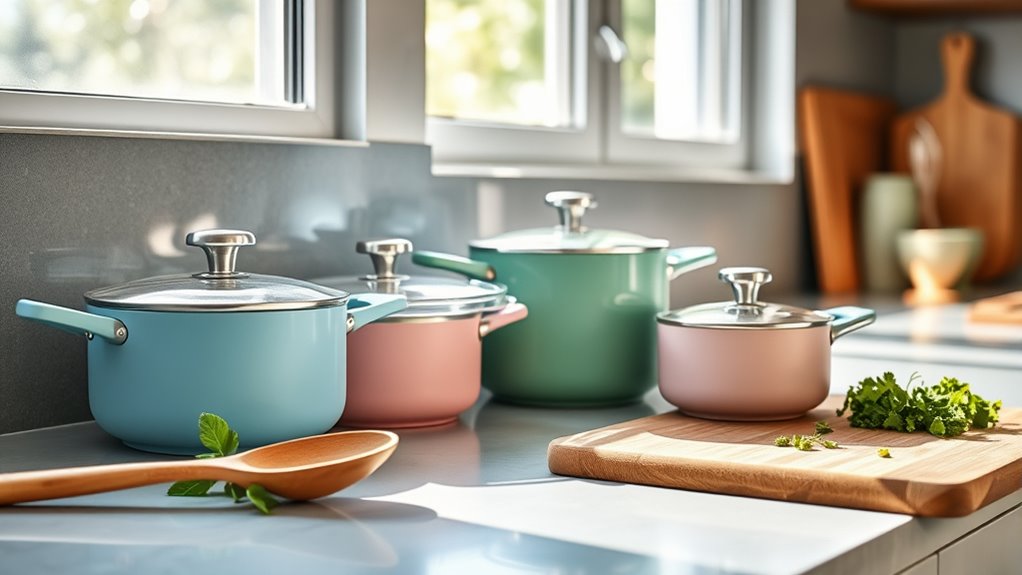

Choosing safer, non-toxic cookware means prioritizing materials like high-quality ceramic, stainless steel, cast iron, or glass, which don’t release harmful chemicals into your food. Avoid cookware with synthetic coatings or damaged surfaces that can leach metals or toxins, especially when cooking acidic foods. Proper use and regular inspections help extend the lifespan and safety of your pots and pans. Keep exploring to discover more tips on maintaining a healthy cooking environment and making smarter choices.

Get garden gear delivered free — and shop member deals
- Fast, free delivery on millions of items
- Access to Prime Big Deal Days deals on October 6–7
- Prime Video, Amazon Music and more included
Key Takeaways
- Choose cookware made from safe materials like cast iron, stainless steel, or glass for minimal chemical risks.
- Opt for high-quality ceramic-coated cookware from reputable brands that adhere to safety standards.
- Regularly inspect cookware for chips or damage to prevent metal leaching into food.
- Avoid overheating cookware and use appropriate utensils to maintain coating integrity and safety.
- Follow manufacturer care instructions to prolong lifespan and reduce exposure to harmful substances.
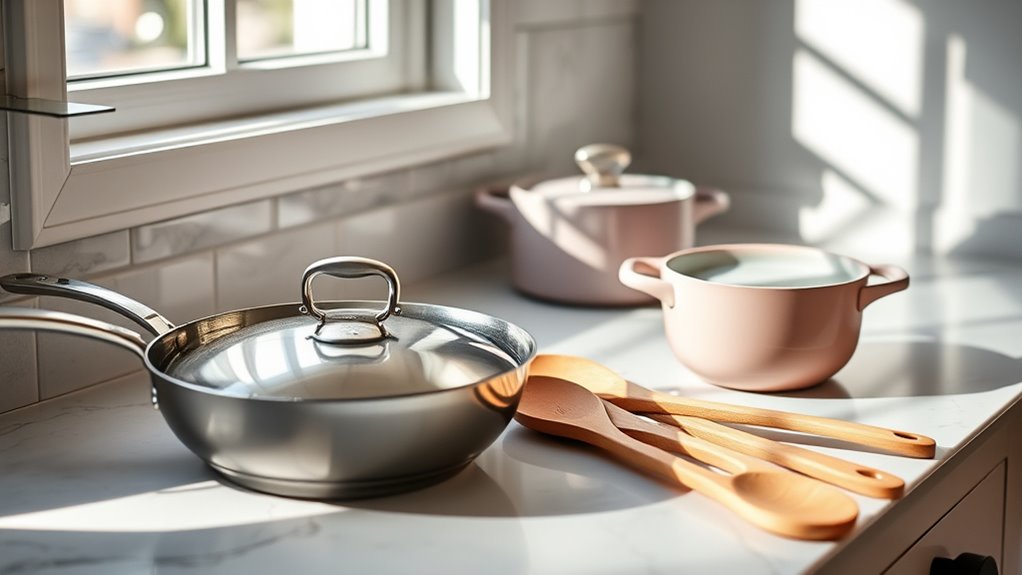
When choosing cookware, it is essential to prioritize safety and health. The materials and coatings used in your pots and pans can considerably impact your well-being. One popular option gaining attention is cookware with ceramic coatings. These coatings are often marketed as non-toxic and eco-friendly, but it’s vital to understand how they work. Ceramic coatings are typically made from inorganic materials, providing a smooth, non-stick surface that doesn’t require synthetic chemicals like PTFE or PFOA. This makes them a safer choice for everyday cooking, especially if you’re concerned about chemical exposure. However, not all ceramic coatings are created equal. Some may contain additives or fillers that can degrade over time, potentially exposing you to particles or chemicals. It’s wise to choose high-quality ceramic-coated cookware from reputable brands that adhere to safety standards.
Prioritize high-quality ceramic cookware to ensure safety and reduce chemical exposure.
A key factor to think about with ceramic coatings is the issue of metal leaching. During high-heat cooking or if the coating becomes scratched or damaged, there’s a possibility that metals used in the cookware’s base—such as aluminum or other alloys—could leach into your food. While ceramic coatings are often promoted as inert and safe, the underlying metals can sometimes migrate into your meals, especially if the coating wears out. This is particularly important if you cook acidic foods like tomatoes or citrus, which can accelerate metal leaching. To minimize this risk, look for ceramic cookware that has a durable, intact coating and avoid using metal utensils that can scratch the surface. Regularly inspecting your cookware for chips or wear and replacing it when necessary can also help prevent unwanted metal exposure.
Additionally, AI-powered safety monitoring in the manufacturing process can help ensure that ceramic coatings meet strict safety standards and reduce the risk of harmful substances being present. In addition to ceramic coatings, think about the overall composition of your cookware. Materials like cast iron, stainless steel, and glass tend to be safer options that don’t involve concerns about metal leaching or chemical coatings. If you opt for ceramic-coated cookware, follow the manufacturer’s instructions for proper use and care. Avoid overheating the pans, as excessive heat can damage the coating and increase the likelihood of leaching. By doing so, you reduce potential health risks and prolong the lifespan of your cookware.
Ultimately, being informed about ceramic coatings and the potential for metal leaching empowers you to make safer choices in your kitchen. Prioritize high-quality, well-maintained cookware and stay attentive to signs of wear. This way, you can enjoy the benefits of non-toxic, safe cookware without compromising your health.
As an affiliate, we earn on qualifying purchases.
Frequently Asked Questions
How Long Do Non-Toxic Cookware Products Typically Last?
Non-toxic cookware typically lasts about 5 to 10 years, depending on its durability lifespan and how well you preserve it. With proper care, like gentle cleaning and avoiding metal utensils, you can extend its life. Cast iron and stainless steel tend to be more durable, while ceramic or non-stick coatings may need replacement sooner. Regular maintenance ensures your cookware stays safe and functional for years to come.
Are Non-Toxic Cookware Options Suitable for Induction Stoves?
Think of your induction stove as a dance floor, demanding the right partner. Non-toxic cookware options are often suitable if made from compatible materials like cast iron, stainless steel, or certain enameled options. Always check for induction compatibility labels, as not all non-toxic cookware works seamlessly. When you choose the right materials, your cooking becomes a smooth, toxin-free performance, perfectly suited for your stovetop.
Can Non-Toxic Cookware Be Used in the Oven at High Temperatures?
Yes, non-toxic cookware can often be used in the oven at high temperatures if it has good high temperature durability. Always check the manufacturer’s oven safety instructions before use, as some non-toxic materials may not withstand very high heat. Cast iron, certain ceramics, and stainless steel are usually safe for oven use at high temperatures, ensuring your cookware remains durable and safe during oven cooking.
What Cleaning Methods Are Recommended for Non-Toxic Cookware?
You should clean your non-toxic cookware regularly to prevent buildup and maintain safety. Use gentle, non-abrasive cleaners to avoid damaging the surface and causing chemical reactions. Hand wash with warm water and mild soap, avoiding harsh chemicals. Clean after each use or at least once a week, depending on how often you cook. Proper cleaning frequency helps keep your cookware safe and in good condition, preventing potential chemical reactions.
Is Non-Toxic Cookware Safe for Use With Acidic Foods?
Think of non-toxic cookware as a loyal partner in your kitchen dance. It’s generally safe for acidic foods if made from materials like cast iron, ceramic, or stainless steel, which handle acidity well. However, avoid using reactive metals like aluminum or uncoated copper, as they might leach into your food. Always check your cookware’s material compatibility to guarantee acidic food safety and enjoy worry-free cooking.
Conclusion
Choosing the right non-toxic cookware is like finding a trusted friend in your kitchen—reliable, safe, and always there for you. By opting for materials free from harmful chemicals, you protect your health and enjoy cooking with peace of mind. Remember, your cookware should be as dependable as a lighthouse guiding ships safely home. Make informed choices today, and turn your cooking space into a haven of safety and joy.
Fall yard work Picks
leaf blowers
As an affiliate, we earn on qualifying purchases.