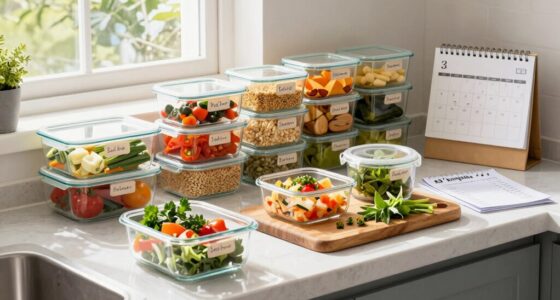
By developing good composting habits, you make the process faster, easier, and more effective, even in small urban spaces. Regularly adding kitchen scraps, turning the compost, and monitoring moisture help keep it active and odor-free. Proper placement and avoiding pests guarantee a clean, manageable experience. Consistent routine boosts compost quality and accelerates decomposition, providing healthier soil. Keep practicing these habits, and you’ll discover simple ways to optimize your composting success.

Get garden gear delivered free with Prime
- Fast, free delivery on millions of items
- Prime Video, Amazon Music and more included
- Member-only deals all year
Key Takeaways
- Consistent addition of kitchen scraps and maintenance accelerates compost maturity and improves soil benefits.
- Proper habits prevent odors and pests, making composting cleaner and more sustainable.
- Regular turning and monitoring optimize conditions for faster decomposition.
- Strategic bin placement and moisture control ensure an efficient composting environment.
- Educating and applying best practices reinforce motivation and ensure ongoing success.
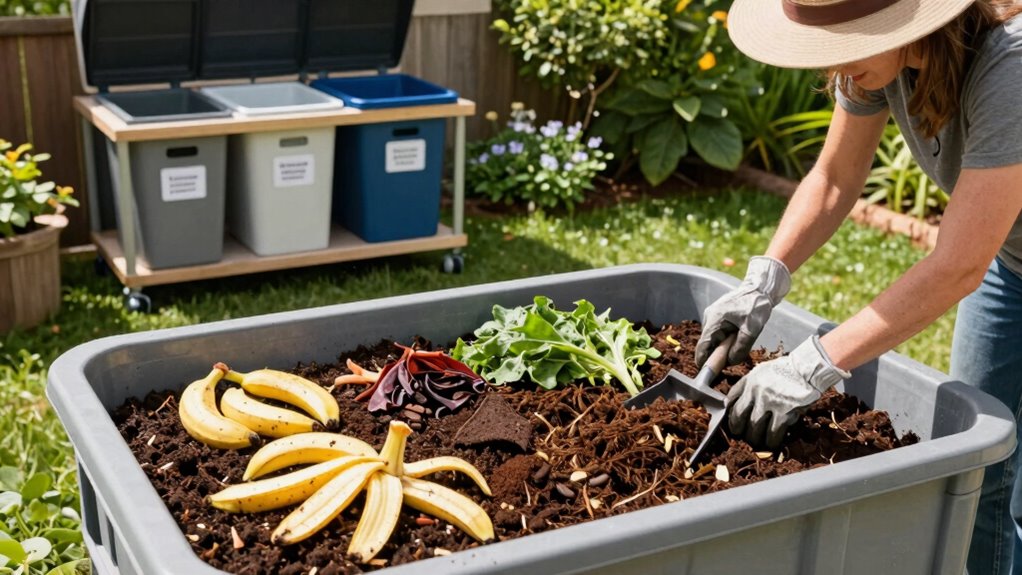
Starting a home composting routine can considerably reduce your waste and enrich your garden soil, but it requires consistent habits. One of the biggest advantages of developing good composting habits is that it makes urban composting much easier and more effective. In cities, space is limited, and many people believe that composting isn’t feasible or that it draws pests and smells. These are common composting myths that discourage many from starting, but with the right habits, you can overcome these misconceptions. Urban composting is entirely possible with strategic bin placement, proper maintenance, and understanding what materials to include. When you develop a routine—adding scraps regularly, turning the compost, and monitoring moisture—you’ll find composting becomes second nature, even in tight spaces.
Building better habits means understanding what works and what doesn’t, which helps dispel composting myths. For example, some think you need a large backyard to compost effectively, but that’s not true. You can compost in small apartments using indoor bins or balcony containers. Consistent addition of kitchen scraps like vegetable peels and coffee grounds, combined with occasional turning, keeps the compost active and prevents odors. Over time, your routine becomes more efficient, and you’ll see the benefits sooner. The key is to be mindful of what you’re adding—avoiding meat, dairy, and oily foods—since these can attract pests and cause unpleasant smells, especially in urban settings. Additionally, understanding the benefits of composting can motivate you to stick to your habits and maintain a clean, odor-free process.
Establishing clear composting routines can significantly improve your results and make the process more manageable. Furthermore, establishing a regular schedule helps you stay committed. If you only add scraps sporadically, the compost can stagnate or develop foul odors. Instead, set a routine—perhaps a daily or every-other-day habit—to add waste and turn the pile. This consistency ensures faster decomposition and healthier compost. To optimize your efforts, learning about composting methods can help you choose the best approach for your space and lifestyle. It’s also important to learn the truth behind composting myths. For instance, some believe composting is complicated or smelly, but when you follow proper practices—balancing greens and browns, maintaining moisture, and aerating—the process remains odorless and straightforward. Developing good composting habits also involves understanding the importance of monitoring temperature and moisture levels to keep the compost active and efficient. Regularly educating yourself on composting best practices can further enhance your success and keep the process enjoyable.
indoor compost bin for small spaces
As an affiliate, we earn on qualifying purchases.
As an affiliate, we earn on qualifying purchases.
Frequently Asked Questions
How Long Does It Take for Compost to Be Ready?
You’ll see compost maturity typically in 3 to 6 months, depending on your habits. When you maintain good microbial activity by turning the pile regularly and balancing greens and browns, compost develops faster. Keep an eye on the smell and texture—when it’s dark, crumbly, and earthy, it’s ready. Consistent habits accelerate microbial activity, ensuring quicker compost maturity and enriching your garden soil effectively.
Can I Compost All Food Scraps?
You can’t compost all food scraps, especially fruit peels and dairy waste. These items can attract pests and create unpleasant odors, disrupting your composting process. Instead, focus on composting vegetable scraps, coffee grounds, and eggshells. By being selective and sticking to suitable scraps, you promote proper decomposition. This careful curation keeps your compost healthy, helping your garden grow and ensuring your composting efforts stay efficient and odor-free.
What Are Common Composting Mistakes to Avoid?
Avoid common composting mistakes like overloading your bin, which hampers aerobic processes and slows decomposition. Don’t forget to balance greens and browns, as imbalances can lead to foul odors and attract pests. Always cover food scraps to improve pest management and prevent odors. Also, turn your compost regularly to maintain oxygen flow, supporting aerobic processes and preventing anaerobic conditions that cause smell and slow down composting.
How Often Should I Turn My Compost?
You should turn your compost every few days to keep it lively—about 2-3 times a week. Ironically, neglecting this can slow down composting, but good moisture management and proper compost bin placement make turning easier. Keep the bin in a shaded spot to prevent drying out, and regularly aerate to balance moisture. This routine helps break down materials faster and keeps odors at bay.
Is Composting Suitable for Small Apartments?
Yes, composting is suitable for small apartments. Indoor composting options like compost bins or worm farms fit well in limited spaces. You can easily maintain apartment sustainability by regularly adding kitchen scraps and turning the compost. Keep it in a well-ventilated area, and you’ll reduce waste and create nutrient-rich soil. With good habits, your small apartment can contribute to eco-friendly living without sacrificing space or convenience.
Conclusion
By adopting better composting habits, you open the full potential of your waste. Every mindful decision, from what you toss in to how you maintain your pile, brings you closer to richer soil and a healthier planet. But the real magic begins when you realize that your simple actions can spark unexpected results—fertile ground for growth and change. Ready to see what surprises await? Your composting journey is just beginning—are you prepared for what’s next?
Columbus Day / Indigenous Peoples' Day Picks
long weekend sales
As an affiliate, we earn on qualifying purchases.