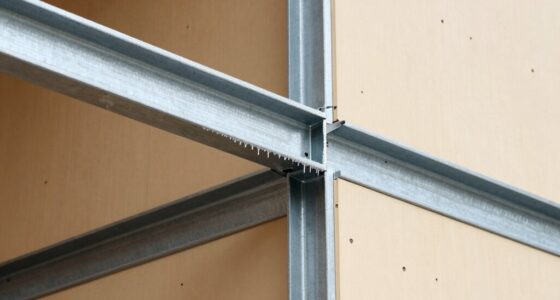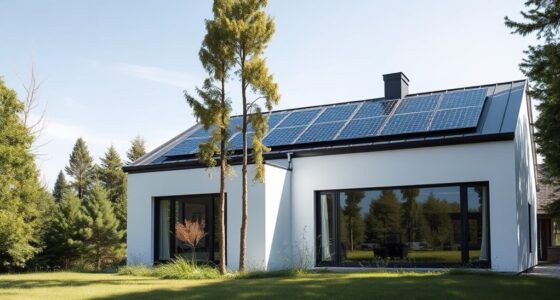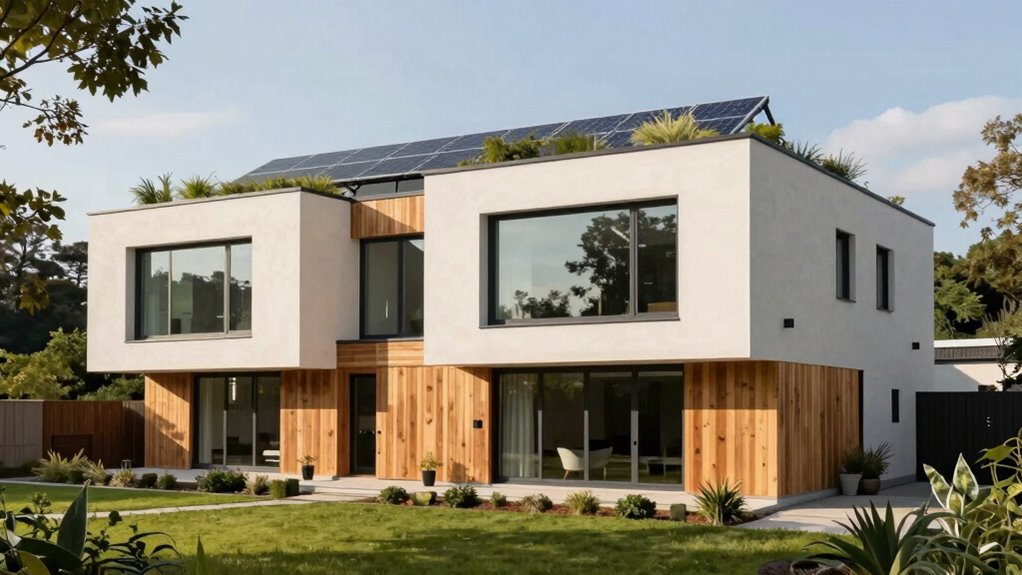

Passive house principles are shaping mainstream homes by making them more energy-efficient, comfortable, and sustainable. You’ll notice homes are better insulated, airtight, and equipped with controlled ventilation using heat recovery. This design reduces your energy bills and keeps indoor temperatures stable year-round. As these strategies become more common, your home can seamlessly integrate renewable energy sources and better environmental practices. Curious how these features can fit into your space? Keep exploring to discover more.
Listen free for 30 days with Audible
Thousands of audiobooks and originals — cancel anytime.
As an affiliate, we earn on qualifying purchases.
Key Takeaways
- Passive house principles improve energy efficiency, reducing utility costs in mainstream homes.
- They enhance indoor comfort and air quality through airtightness and controlled ventilation systems.
- Incorporating passive strategies makes sustainable, low-energy homes more accessible and affordable.
- Mainstream adoption promotes a holistic approach to building design focused on insulation and airtightness.
- Passive house techniques support the integration of renewable energy and future-proof sustainable living.
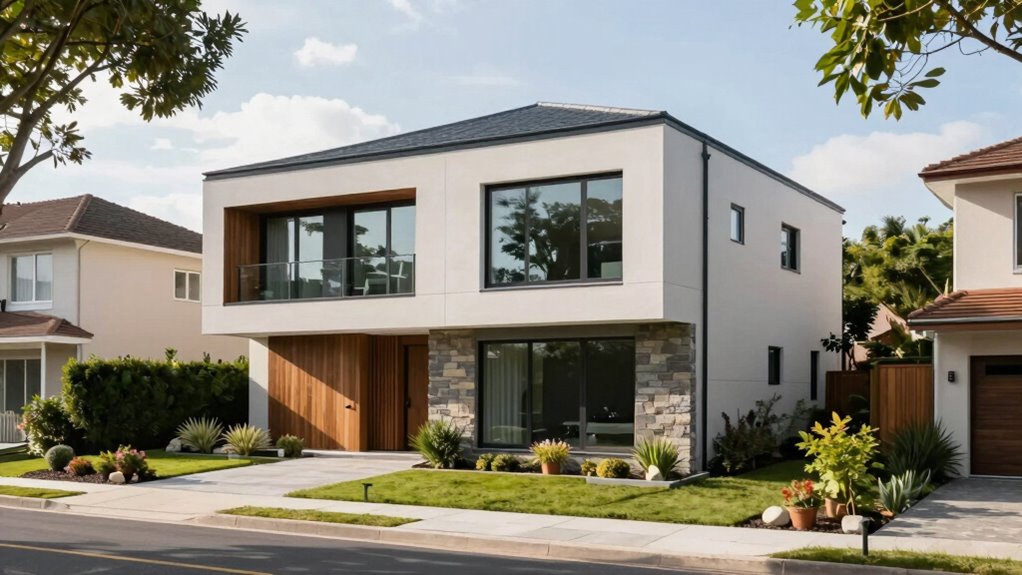
Have you ever wondered how homes can be more energy-efficient without sacrificing comfort? The answer lies in the principles of Passive House design, which are increasingly influencing mainstream homes. These principles focus on creating buildings that use minimal energy for heating and cooling while maintaining a high level of indoor comfort. When you adopt passive house strategies, you basically redesign your home to optimize insulation, airtightness, and ventilation, making it a more sustainable and comfortable space to live in.
At the core of Passive House principles is maximizing energy efficiency. By prioritizing high-performance insulation and airtight construction, your home prevents heat loss during winter and keeps out unwanted heat in summer. This means your heating and cooling systems don’t have to work as hard, reducing energy consumption and lowering utility bills. Instead of relying heavily on traditional HVAC systems, passive houses harness natural energy flows. This shift results in a more efficient home that’s easier to heat and cool naturally, ultimately saving you money and reducing your environmental impact.
Maximize energy efficiency with insulation and airtight design for a more sustainable, cost-effective home.
Indoor comfort is another critical aspect that passive house principles enhance. When your home is built to be airtight, drafts and cold spots become a thing of the past. You’ll experience a consistent indoor temperature throughout the year, regardless of outside weather conditions. This stability creates a cozy environment where you don’t have to constantly adjust the thermostat or worry about uneven heating. Additionally, controlled ventilation systems with heat recovery ensure fresh, clean air circulates continuously, improving indoor air quality without sacrificing energy efficiency. This results in a healthier living space where you feel comfortable and relaxed no matter the season. Incorporating airtightness and high-quality insulation are essential components that contribute to these benefits. Emphasizing the importance of building envelope improvements can further enhance overall energy performance. Understanding the significance of energy-efficient design can help homeowners make informed choices that align with passive house standards. Furthermore, integrating renewable energy sources into passive house designs can significantly reduce reliance on non-renewable energy, making the home even more sustainable. Additionally, these principles promote a holistic approach to sustainable home design, ensuring that all aspects work together for maximum efficiency.
The beauty of integrating passive house principles into mainstream homes is that you don’t have to overhaul your entire property to benefit from them. Builders and homeowners are increasingly incorporating these strategies into new constructions and renovations alike. You can choose high-quality insulation, airtight windows, and energy recovery ventilation systems that meet passive house standards. These modifications are becoming more accessible and affordable, making it easier for you to enjoy the advantages of a more sustainable, comfortable home.
In essence, passive house principles are transforming how you think about home design. They demonstrate that energy efficiency and indoor comfort are not mutually exclusive but can go hand in hand. As more mainstream homes adopt these strategies, you’ll find yourself living in a space that’s kinder to the environment, more economical to operate, and ultimately more comfortable to live in every day.
As an affiliate, we earn on qualifying purchases.
Frequently Asked Questions
What Are the Initial Costs of Implementing Passive House Standards?
The initial costs of implementing Passive House standards are higher than traditional designs, mainly due to specialized materials and construction techniques. You’ll see a cost comparison showing increased expenses upfront, but these are offset by lower energy bills over time. Material selection is essential—opt for high-performance insulation, windows, and airtightness. While the investment is significant initially, it pays off through energy savings and increased comfort in your home.
How Long Does It Take to Retrofit Existing Homes to Passive House Standards?
Retrofitting your home to passive house standards typically takes several months, depending on the home’s size and complexity. The retrofit timeline varies with factors like insulation upgrades, window replacements, and ventilation system installations. Cost factors include labor, materials, and any structural changes needed. You should plan for a thorough assessment upfront to understand the scope, and work closely with professionals to guarantee the retrofit is efficient and meets passive house criteria.
Are There Regional Challenges to Adopting Passive House Principles?
Regional climate and building regulations can pose some hurdles, though they’re often more like gentle nudges than insurmountable barriers. In colder or more humid areas, adapting Passive House standards requires careful planning and sometimes creative solutions. Local building codes may also need updates to support these practices. But with determination and collaboration, you can navigate these regional challenges and make your home more energy-efficient and comfortable.
How Do Passive House Principles Affect Indoor Air Quality?
Passive house principles substantially improve your indoor air quality by emphasizing proper indoor ventilation and air filtration. You benefit from continuous, controlled airflow that removes indoor pollutants and moisture, reducing mold risk. High-quality air filtration systems trap dust, allergens, and airborne contaminants, making your home healthier. This focus on ventilation and filtration ensures fresh air circulates efficiently, creating a comfortable, safe environment while reducing energy waste.
Can Passive House Techniques Be Integrated With Smart Home Technology?
Yes, you can integrate passive house techniques with smart home technology. By using energy-efficient windows and advanced thermal insulation, you enhance your home’s efficiency. Smart systems can monitor and optimize insulation performance, control ventilation, and manage temperature seamlessly. This integration guarantees your home remains comfortable, reduces energy use, and aligns with passive house standards, making your living space both eco-friendly and smart.
Conclusion
Just as the great architects of the past sought harmony with nature, embracing Passive House principles lets you create homes that breathe, conserve, and endure. By adopting these ideas, you become part of a movement that echoes the wisdom of those who built to last—resilient, efficient, and sustainable. In making your home smarter and greener, you’re not just living better; you’re shaping a future where comfort and responsibility walk hand in hand.
NFL season / tailgating Picks
team gear
As an affiliate, we earn on qualifying purchases.