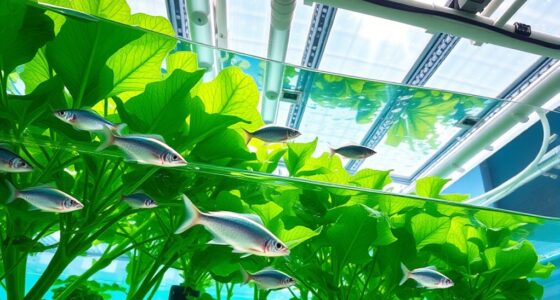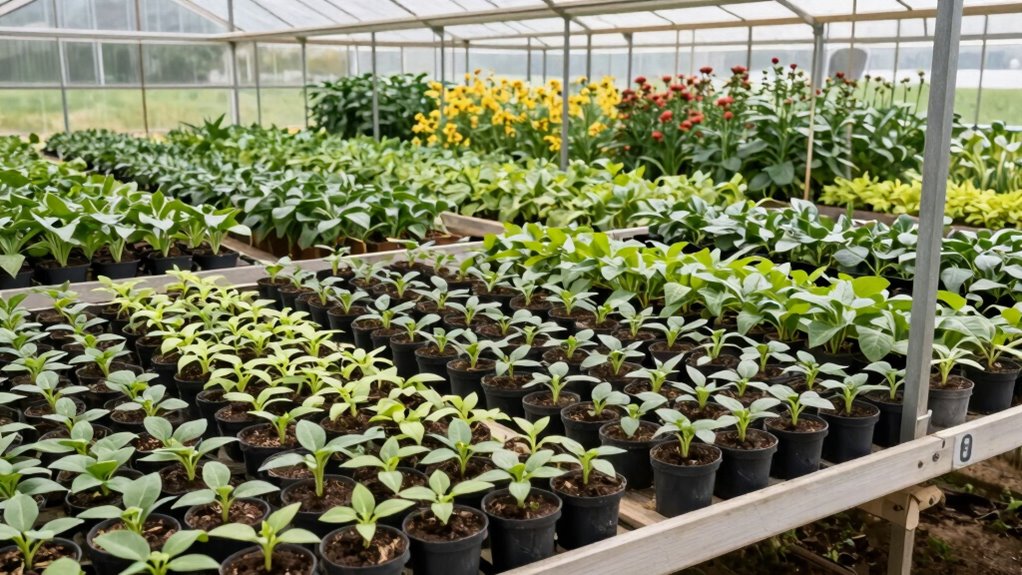

Propagation areas focus on creating new plants using methods like cuttings, grafting, or tissue culture, with an emphasis on maintaining genetic diversity and selecting the right rootstocks. Production areas, on the other hand, are designed for large-scale growth of mature plants aimed at maximizing yield, fruit quality, and uniformity. Management practices differ as well—propagation needs sterile conditions and careful handling, while production prioritizes efficiency and crop management. Continue to explore to discover how these differences impact plant success.
Prime for Young Adults — start your free trial
Fast free delivery, streaming and member deals for eligible 18–24 year olds.
As an affiliate, we earn on qualifying purchases.
Key Takeaways
- Propagation areas focus on creating new plants using sterile techniques, while production areas emphasize harvesting mature, fruit-bearing plants.
- Propagation maintains clonal diversity and selects rootstocks, whereas production favors genetic uniformity for consistent yields.
- Propagation requires controlled, sterile environments, while production zones are designed for large-scale efficiency and harvesting.
- Resource allocation in propagation prioritizes delicate handling and healthy rooting, whereas production invests in infrastructure like irrigation and pest control.
- Rootstock selection in propagation influences genetic diversity and vigor, while in production, it ensures uniform performance and environmental adaptation.
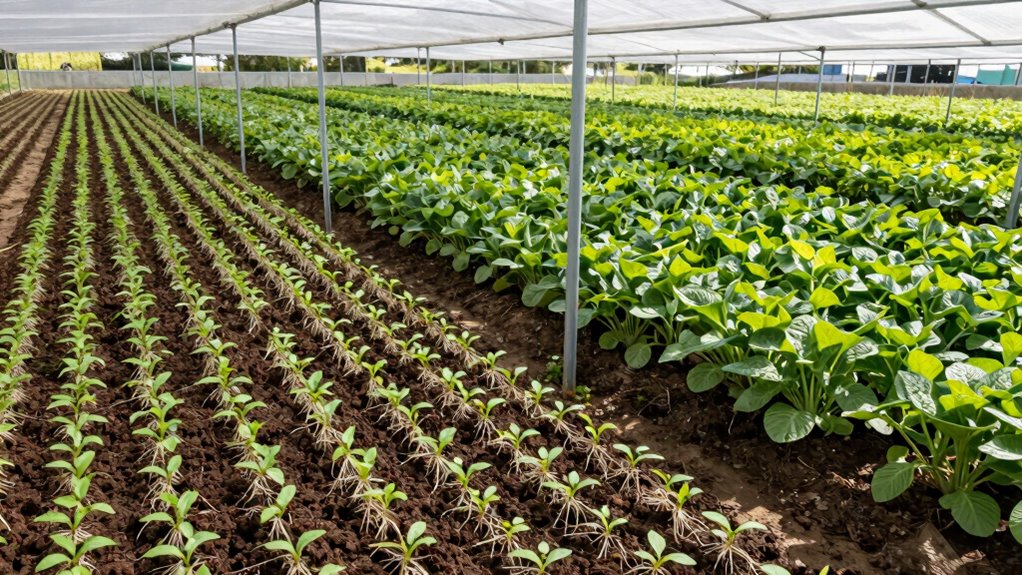
Understanding the difference between propagation and production areas is essential for efficient horticultural practices. These two zones serve distinct purposes in the lifecycle of plants, especially in fruit and ornamental crop cultivation. Propagation areas are primarily dedicated to creating new plants, often through methods like cuttings, grafting, or tissue culture. Here, the focus is on maintaining clonal diversity and selecting the right rootstock to guarantee healthy, vigorous plants. Clonal diversity is vital in propagation because it allows you to preserve genetic variation, which can be critical for disease resistance and adaptability. When selecting rootstocks, you aim to match them to your specific environmental conditions and desired plant characteristics. This selection process influences the future performance of your crop, as the rootstock determines not only growth vigor but also resistance to pests and soil-borne diseases.
Propagation areas focus on creating diverse, vigorous plants through grafting and tissue culture for healthy crop development.
In contrast, production areas are where the plants mature and produce harvestable yields. These zones prioritize maximizing yield, fruit quality, and uniformity. The plants here are typically propagated once and then maintained through pruning, fertilization, and pest management strategies to enhance production. Unlike propagation areas, where clonal diversity might be intentionally preserved or manipulated, production sites often focus on genetic uniformity. This guarantees that all plants respond similarly to cultural practices and environmental conditions, simplifying management and harvesting processes. Rootstock selection in production areas still matters but is more about ensuring consistent performance and adaptability to local soil and climate conditions rather than introducing genetic variation.
Furthermore, the layout and management practices differ markedly between the two areas. Propagation areas require sterile conditions, careful handling, and precise techniques to prevent contamination and guarantee successful rooting or grafting. You might use specialized tools and environments to promote healthy clonal development. Conversely, production areas are designed for high efficiency and large-scale management, often involving trellising, irrigation systems, and integrated pest management strategies to support the growing plants. The focus shifts from seedling or clone production to maintaining ideal growing conditions for fruit or flower development.
Additionally, understanding the importance of rootstock selection in both areas helps optimize plant performance and resilience, ultimately influencing the success of your horticultural operation. Ultimately, understanding these key differences helps you allocate resources and expertise appropriately. By recognizing the importance of clonal diversity and rootstock selection in propagation, you can produce resilient, high-quality planting materials. Meanwhile, optimizing production practices ensures that these plants reach their full potential in yield and quality. Both areas are interconnected but serve distinct roles in the lifecycle of cultivated plants, and managing them effectively is crucial for a successful horticultural operation.
As an affiliate, we earn on qualifying purchases.
Frequently Asked Questions
What Are Common Tools Used in Propagation Areas?
In propagation areas, you typically use tools like pruning shears and rooting hormone to support nursery techniques. You’ll also rely on specific propagation media, such as perlite, peat moss, or coconut coir, to create ideal conditions for root development. These tools and media help you manage cuttings or seeds efficiently, ensuring healthy growth. Properly selecting and using them allows you to maximize success in your propagation efforts.
How Do Climate Conditions Affect Propagation Versus Production Areas?
Imagine a nursery adjusting to a drought; climate conditions considerably influence propagation and production areas. Climate adaptation is vital, as propagation areas often need controlled environments to meet specific soil requirements and protect delicate young plants. In contrast, production areas require resilient conditions for mature plants. For example, in arid regions, propagation might involve irrigation and soil amendments, whereas production focuses on maintaining ideal growth conditions for harvest.
Are There Specific Safety Protocols Unique to Each Area?
Yes, safety protocols differ between propagation and production areas. You should undergo specific safety training tailored to each area’s risks. In propagation zones, focus on equipment protocols for handling delicate plants and tools, ensuring minimal damage and safety. In production areas, prioritize safety training related to machinery operation and chemical handling. Always follow equipment protocols diligently to prevent accidents, and stay alert to the unique hazards in each zone for your safety.
How Is Pest Management Different Between the Two Areas?
Think of pest management like tending two different gardens. In propagation areas, you focus on integrated pest control with biological treatments to nurture young plants gently. In production areas, you’re more vigilant, using targeted methods to protect mature crops. You adapt your strategies, combining biological treatments with other methods to keep pests in check, ensuring healthy growth at each stage. Your approach evolves with the garden’s needs, balancing care and control.
What Are the Cost Differences in Maintaining Each Area?
You’ll find that maintaining propagation areas typically costs less due to their smaller size and focus on early-stage plant growth, which requires less intensive resources. In contrast, production areas demand higher investment for larger spaces, advanced equipment, and more labor. To optimize cost efficiency, you should allocate your budget carefully, prioritizing essential treatments and infrastructure in each area, ensuring maximum productivity without overspending.
Conclusion
Understanding the differences between propagation and production areas is essential—you’re not just managing plants, you’re shaping entire ecosystems! Propagation areas focus on starting new life, while production zones turn those tiny sprouts into thriving crops. Mistakes here can lead to chaos, like a domino effect of failure. By mastering these distinctions, you’ll be unstoppable in cultivating success—your green thumb could easily be mistaken for a magic wand, transforming landscapes with a flick!
Flea & tick season Picks
flea and tick prevention
As an affiliate, we earn on qualifying purchases.