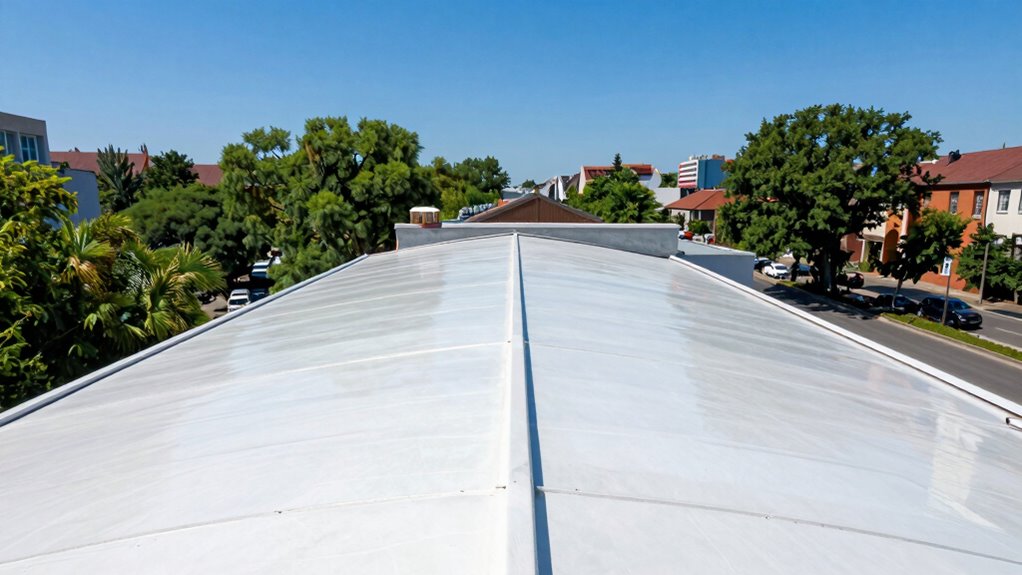

Cool roofs reduce summer heat gain by reflecting much of the sunlight that hits them, which helps keep surfaces cooler. This means less heat is transferred into your building, leading to lower indoor temperatures. As a result, your space stays more comfortable, especially during hot days. By choosing reflective materials like acrylics, elastomers, or silicone, you can cut down on cooling costs and help fight urban heat islands. If you’d like to discover more about how this works, keep going.

Get garden gear delivered free with Prime
- Fast, free delivery on millions of items
- Prime Video, Amazon Music and more included
- Member-only deals all year
Key Takeaways
- Cool roofs reflect more sunlight and absorb less heat, reducing the amount of heat transferred into buildings.
- They bounce back solar radiation, preventing it from penetrating indoor spaces and increasing indoor temperatures.
- By decreasing heat absorption, cool roofs help lower indoor temperatures during hot summer days.
- Reduced heat gain diminishes the need for air conditioning, cutting energy consumption and associated heat release.
- Cooler roof surfaces lessen the urban heat island effect, contributing to a cooler overall environment.
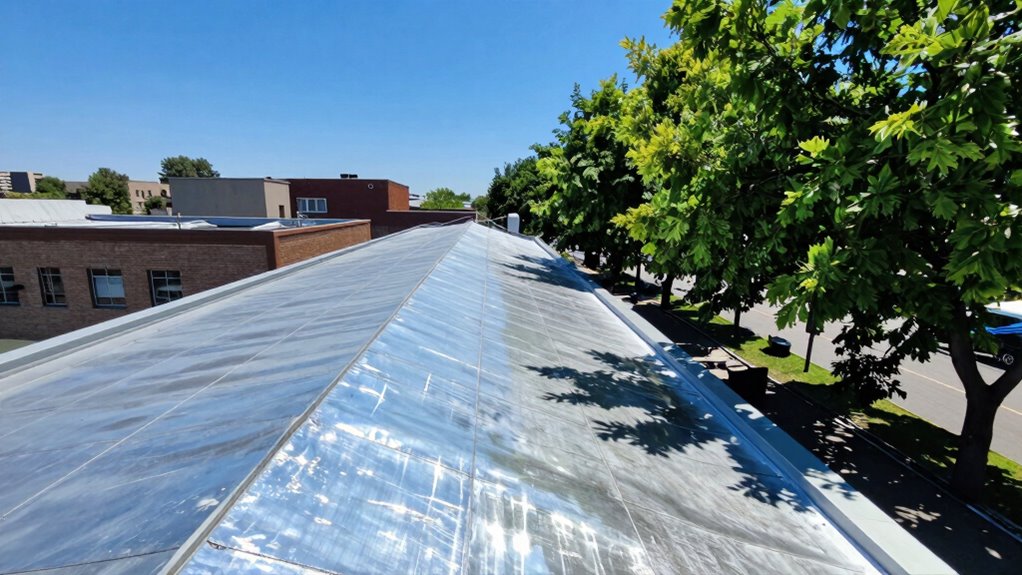
During hot summer days, cool roofs can make a noticeable difference in reducing indoor temperatures and lowering energy costs. One of the main ways they achieve this is through the use of reflective coatings. These coatings are specially designed to reflect more sunlight and absorb less heat compared compared to traditional roofing materials. When applied to your roof, reflective coatings bounce back a significant portion of solar radiation, preventing it from penetrating into your building. As a result, your indoor spaces stay cooler naturally, reducing the need for air conditioning and saving you money on energy bills. Reflective coatings are a key component of cool roof technology because they enhance the roof’s ability to reflect sunlight. They come in various formulations, including acrylics, elastomers, and silicone, all of which are highly effective at increasing solar reflectance. By choosing a reflective coating, you fundamentally turn your roof into a heat barrier, which is especially beneficial during peak summer months. This simple upgrade not only improves comfort inside your home or office but also contributes to the broader effort of mitigating the urban heat island effect, which is driven by extensive use of heat-absorbing materials. Additionally, reflective coatings can improve the longevity of roofing materials by protecting them from UV damage and weathering. Using reflective coatings can also help reduce the overall energy consumption of a building by decreasing the reliance on air conditioning. Implementing cool roof strategies is also an effective way to contribute to the sustainability goals of reducing energy consumption and lowering greenhouse gas emissions.
Popular right now

De'Longhi Dinamica Plus Fully Automatic Espresso Machine

Bose QuietComfort Headphones (2nd Gen), Wireless Noise-Cancelling Over-Ear Headphones, Eucalyptus Green

TCL 85-Inch QM6K Series QLED Mini LED 4K HDR Smart Google TV
As an affiliate, we earn on qualifying purchases.
Frequently Asked Questions
How Long Do Cool Roof Coatings Typically Last?
Cool roof coatings typically last between 10 to 15 years, depending on factors like climate, maintenance, and quality. You can enhance coating longevity by regular cleaning and inspections, ensuring it remains effective. Durability lifespan varies, but choosing high-quality materials and proper application can extend coating longevity. Keep an eye on wear and tear, and reapply when necessary to maintain peak heat-reflective benefits and maximize your roof’s lifespan.
Are Cool Roofs More Expensive Than Traditional Roofs?
Cool roofs are generally more expensive upfront than traditional roofs due to specialized coatings and materials. However, the cost comparison often favors cool roofs over time because they save energy and reduce cooling costs. You might face installation challenges, especially on existing roofs, but these can be managed with professional help. Overall, while initial costs are higher, the long-term benefits and energy savings make cool roofs a smart investment.
Can Cool Roofs Be Installed on Any Type of Building?
You can install cool roofs on most building types, regardless of their roof design or material. Imagine a reflective, shimmering surface atop your structure, designed to bounce back heat. Whether your building has flat or sloped roofs, many building materials—like metal, asphalt, or tiles—can be adapted for cool roof technology. This versatility helps lower indoor temperatures and boosts energy efficiency across diverse architectural styles.
Do Cool Roofs Require Special Maintenance?
Cool roofs don’t require much special maintenance. You should check the coating’s durability periodically, especially after severe weather, to guarantee it remains effective. Maintenance frequency is generally low, involving simple inspections and cleaning to remove debris or dirt that can reduce reflectivity. If the coating shows signs of wear or damage, a touch-up or reapplication might be necessary to keep the roof’s reflective properties ideal and extend its lifespan.
How Do Cool Roofs Impact Indoor Temperature Comfort?
Think of a cool roof as a gentle breeze on a hot day—bringing relief and balance. It boosts solar reflectance, bouncing sunlight away, which lowers indoor temperatures and enhances thermal comfort. By reducing heat transfer through the roof, you feel cooler inside, even during summer’s peak. This not only improves your indoor comfort but also lessens the strain on air conditioning, making your space more energy-efficient and comfortable year-round.
Conclusion
By choosing a cool roof, you can markedly cut down indoor temperatures and lower your energy bills. Did you know that cool roofs can reflect up to 85% of sunlight, reducing heat absorption? This means less work for your air conditioner and a smaller carbon footprint. So, when summer hits, remember that a simple upgrade like a cool roof not only keeps you comfortable but also helps protect the environment. Stay cool and make smart choices!