When choosing backup power for your well pump, focus on its starting watts, especially for larger models, which often require a surge of power. If your pump runs on 240V, make certain your generator or system can handle the higher startup demand, not just the running wattage. Many underestimate this surge, risking overloads or failure. To keep your water flowing during outages, understanding these power needs and how they vary is vital—there’s more to take into account if you want reliable, continuous supply.

Get garden gear delivered free — and shop member deals
- Fast, free delivery on millions of items
- Access to Prime Big Deal Days deals on October 6–7
- Prime Video, Amazon Music and more included
Key Takeaways
- Starting watts are critical for backup power sizing, especially for larger or 240V well pumps.
- 240V pumps often require higher surge wattage, influencing generator or solar system capacity.
- Accurate assessment of startup wattage prevents overloads and ensures reliable backup operation.
- Proper pump sizing and backup system matching optimize efficiency and avoid power insufficiencies.
- Solar backup solutions must be designed to handle the initial surge wattage for continuous well pump operation.
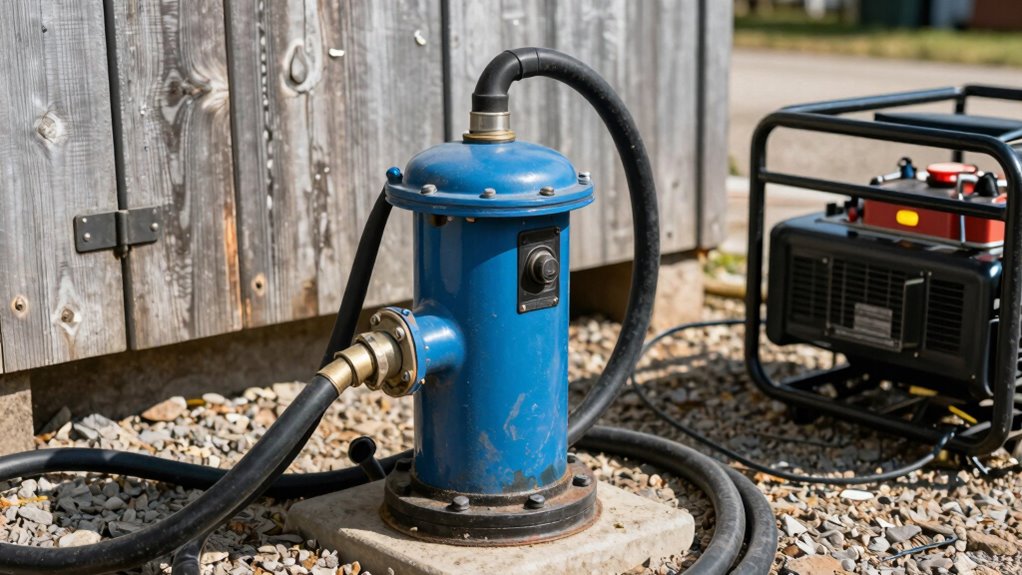
Having a reliable well pump is vital for your home’s water supply, but even the best equipment can fail during power outages. To guarantee continuous water access, understanding how backup power options work is essential. One key factor is your pump’s starting watts—the initial power needed to get it running. Many well pumps require a significant surge of power at startup, especially larger models, which can impact your choice of backup systems. When considering backup solutions, you need to account for the starting watts to prevent overloads or insufficient power supply. This is particularly important if you’re exploring solar compatibility, as solar systems must be designed to handle these surges. Proper pump sizing becomes a critical step here, as selecting a pump too large or too small can cause inefficiencies or insufficient water flow. Smaller pumps might not meet your household needs, while oversized pumps could draw more power than your backup system can support.
In terms of backup power options, a generator often provides a straightforward solution, but you should guarantee it supplies enough wattage for your pump’s starting requirements. For instance, a 240V pump may have different startup demands than a 120V model, and your backup system must be capable of handling this. When considering solar compatibility, you might think about integrating a solar power system with battery storage. This setup can be an excellent eco-friendly backup, but it requires careful planning around pump sizing and startup wattage. A properly sized solar array paired with an inverter capable of handling starting surges can keep your well functioning during outages.
As an affiliate, we earn on qualifying purchases.
Frequently Asked Questions
How Do I Determine the Right Backup Power Size for My Well Pump?
To determine the right backup power size for your well pump, start with pump sizing by noting its starting watts and voltage. Then, perform a power calculation to find the total wattage needed. Add a safety margin for startup surges. Choose a generator or inverter that can handle this calculated wattage comfortably, ensuring reliable operation during power outages. Always double-check specifications to match your pump’s requirements.
Can a Generator Handle Multiple Well Pumps Simultaneously?
A generator can handle multiple well pumps simultaneously if it has enough capacity and proper power distribution. You need to check the total running and starting watts of all pumps and compare them to your generator’s capacity. Confirm your generator can supply the peak starting watts, especially for pumps with high starting loads. Proper power distribution prevents overloads, so consider using a transfer switch or load management system for safe operation.
What Maintenance Is Required for Backup Power Systems?
You need to regularly check your backup power system by inspecting the battery for corrosion and ensuring connections are tight. Also, schedule periodic generator servicing to keep it in top condition, including oil changes, filter replacements, and testing run cycles. Proper maintenance prevents unexpected failures, ensuring your system will work reliably during power outages. Stay proactive with these tasks, and you’ll keep your backup power ready when you need it most.
Are There Eco-Friendly Backup Power Options for Well Pumps?
Think of your backup power like a garden needing eco-friendly care. Solar power and wind turbines act as gentle rain and breeze, providing clean energy for your well pump. These options reduce your carbon footprint, are sustainable, and often cost-effective long-term. By choosing solar or wind, you guarantee your water supply stays steady without harming the environment, turning your backup system into a green oasis.
How Long Can a Backup Power Source Run My Well Pump During an Outage?
During an outage, your backup power source can run your well pump for several hours, depending on its battery lifespan and power consumption. If your system uses a high-capacity battery, you might get up to 8-12 hours of operation. However, smaller batteries will last less time. To maximize runtime, reduce power consumption by limiting pump use, and consider upgrading your battery or adding a secondary power source for longer outages.
Conclusion
When planning your backup power for well pumps, don’t underestimate how much starting wattage they demand—it’s like trying to lift a mountain! Always check the pump’s starting watts and confirm your generator can handle that surge. Remember, a little prep now prevents a massive headache later. With the right backup, you’ll have water flowing like a mighty river even during a blackout—because nothing beats the power of being prepared!
Fall yard work Picks
leaf blowers
As an affiliate, we earn on qualifying purchases.