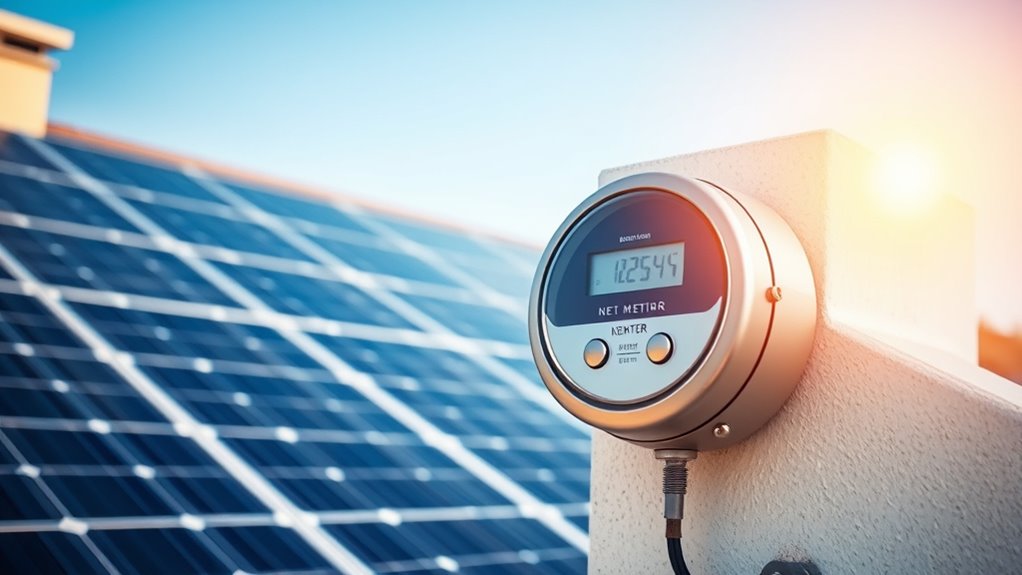

Net metering lets you earn credits for excess solar energy your system feeds back into the grid, which reduces your overall electricity bills. When your solar panels generate more power than you use, those extra kilowatt-hours are sent to the grid, and you get credits that offset future energy consumption. This process boosts your solar investment and increases your energy independence. If you’re interested in maximizing these benefits, there’s more to discover about how it works.
Key Takeaways
- Net metering allows solar system owners to earn credits for excess electricity sent to the grid.
- It helps balance energy production and consumption, especially during low solar output periods.
- Credits earned can be used to offset electricity costs when solar generation is insufficient.
- Proper grid integration and infrastructure upgrades are essential for maximizing net metering benefits.
- It encourages renewable energy adoption by reducing overall electricity bills and supporting a cleaner grid.
Have you ever wondered how solar energy systems can save you money on your electricity bill? One key way is through net metering, a system that allows you to earn credits for the excess solar power you generate and send back to the grid. When you install solar panels, you’re not just reducing your reliance on traditional energy sources; you’re also becoming part of a broader energy network. Many states and utility companies offer solar incentives that encourage you to adopt renewable energy, making the switch more affordable and attractive. These incentives can include rebates, tax credits, or other financial benefits that lower your initial investment. They work hand-in-hand with grid integration, enabling your solar system to work seamlessly with the existing electrical infrastructure.
With net metering, your solar panels produce electricity during the day when the sun is shining brightest. If you generate more power than you need at that moment, the excess gets fed into the grid. Instead of wasting that energy, your utility company gives you credits, which you can use later when your system isn’t producing enough, like during the night or on cloudy days. This creates a balance, helping you maximize your solar investment and reduce your overall electricity costs. It’s a win-win situation: you cut your bills while supporting a cleaner energy grid.
Grid integration plays a crucial role here because it ensures your solar system and the utility grid work together smoothly. Modern grids are designed to handle two-way flows of electricity, allowing you to send surplus power back to the grid and draw from it when needed. This integration requires smart meters and advanced infrastructure, which many utilities are now installing as part of their modernization efforts. These upgrades not only facilitate net metering but also improve grid stability and efficiency. As a homeowner, you benefit because your solar system becomes more flexible and reliable, giving you greater control over your energy costs.
Additionally, the availability of solar incentives often depends on how well your system can integrate with the grid. Utilities and governments want to ensure that distributed energy resources like solar panels don’t cause issues such as voltage fluctuations or power quality problems. Proper grid integration helps prevent these issues, making it easier for you to take advantage of net metering programs and maximize your savings. By understanding how solar incentives and grid integration work together, you can make informed decisions about installing a solar energy system that not only saves you money but also contributes to a more sustainable energy future. Proper grid integration ensures your system operates efficiently and safely alongside the existing infrastructure.
smart electricity meter for home
As an affiliate, we earn on qualifying purchases.
As an affiliate, we earn on qualifying purchases.
Frequently Asked Questions
How Do Net Metering Policies Vary by State or Country?
You should know that net metering policies vary by state or country due to regulatory differences. Some places offer generous policies, allowing you to earn credits for excess energy, while others have stricter limits or lower compensation rates. These policy variations impact how much you save or profit from solar power. It is crucial to review your local regulations to understand how these regulatory differences might influence your investment and potential benefits.
What Are the Long-Term Financial Benefits of Net Metering?
They say “a penny saved is a penny earned,” and with net metering, you can enjoy long-term solar savings that boost your investment returns. Over time, you’ll benefit from reduced electricity bills and potential incentives, making your solar system more cost-effective. This financial advantage grows as energy prices rise, turning your initial investment into steady savings and a smart, eco-friendly choice for the future.
How Does Net Metering Impact Utility Grid Stability?
Net metering positively impacts grid stability by balancing power supply and demand, which reduces power fluctuations. When you generate excess solar energy, it feeds back into the utility grid, helping to stabilize voltage levels and prevent overloads. This distributed generation decreases strain on traditional power plants and transmission lines. As a result, the grid becomes more resilient, ensuring reliable electricity for everyone, even during peak usage or outages.
Are There Any Disadvantages or Risks Associated With Net Metering?
Yes, there are disadvantages and risks with net metering. You might face policy complexity as regulations vary widely and can change, making planning difficult. Additionally, relying solely on net metering could lead to issues if your system’s battery storage isn’t sufficient during low-generation periods. This can cause financial strain or system inefficiencies, especially if policies don’t adequately support or incentivize battery use alongside net metering.
How Can Consumers Determine if Net Metering Is Right for Them?
You probably think net metering’s a no-brainer, but first, check your rooftop’s suitability—shade, size, and angle matter. Then, explore solar incentives to see if they tip the scales. If your energy bills are sky-high and your roof gets plenty of sun, net metering could save you money and the planet. Do the math, weigh the benefits, and decide if your home’s a solar superstar waiting to shine.
Conclusion
Now that you know how net metering works, you’re better equipped to make eco-friendly energy choices. Did you know that over 40 states in the U.S. have adopted net metering policies? That’s a confirmation to how popular and beneficial it’s become. By understanding this system, you can save money on your energy bills and help reduce carbon emissions. So, consider exploring solar options — it’s a smart move for your wallet and the planet.