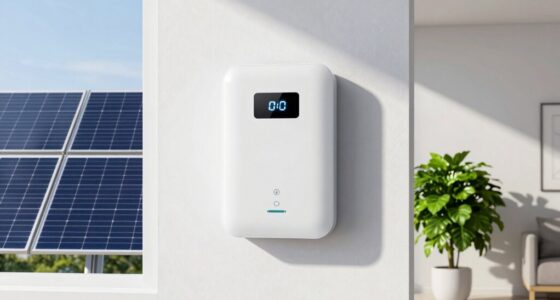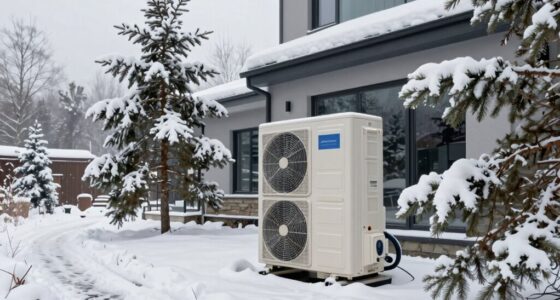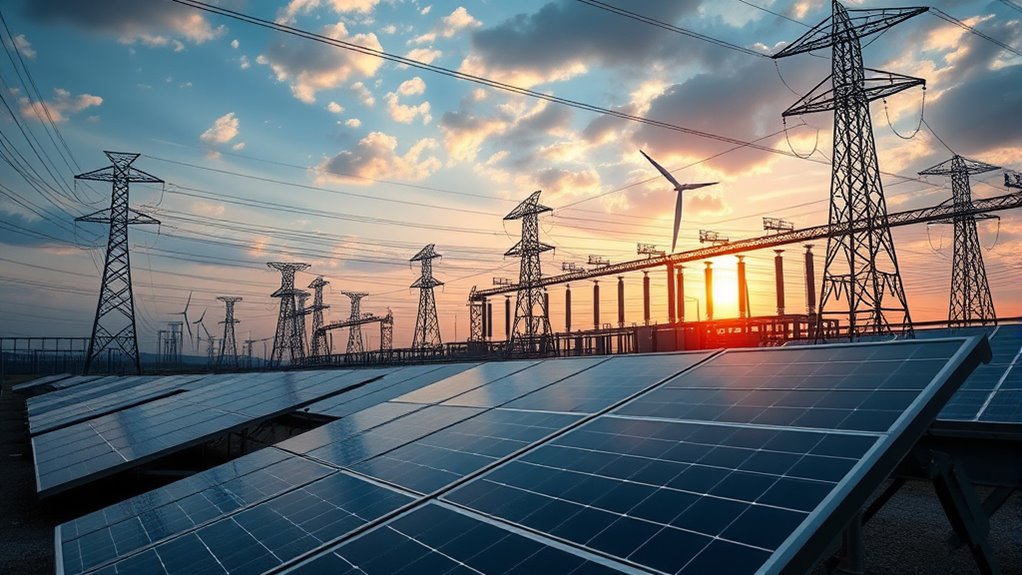

Integrating renewables into the grid can be tricky because sources like wind and solar are intermittent, causing variability and potential stability issues. To tackle this, you need advanced infrastructure like smart grids, energy storage, and flexible transmission lines that adapt quickly to changing conditions. Modern technologies, smart management, and supportive policies are essential for a smooth *shift*. If you want to understand how these solutions work together, there’s more to explore below.
Get ready for Prime Big Deal Days — try Prime free
Exclusive member deals on October 6–7, plus fast free delivery. Cancel anytime.
As an affiliate, we earn on qualifying purchases.
Key Takeaways
- Intermittency of renewable sources causes grid variability, requiring advanced management and storage solutions.
- Energy storage systems like batteries buffer fluctuations, ensuring reliable power supply.
- Modern smart grid technologies enable real-time monitoring and quick adaptation to changing conditions.
- Infrastructure upgrades, including flexible transmission and market incentives, support renewable integration.
- Combining technological advances with policy measures enhances grid resilience and promotes a sustainable energy future.
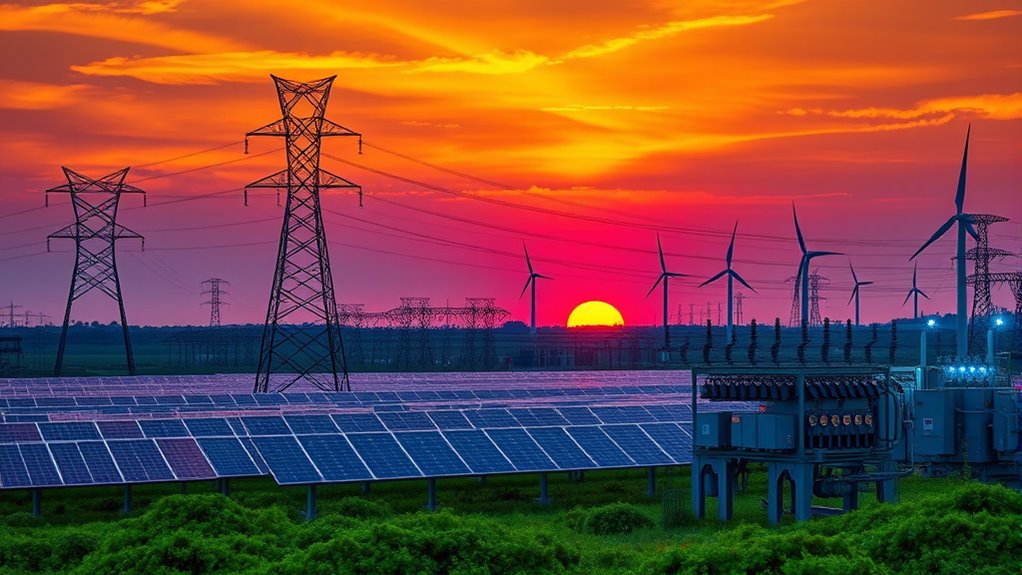
Have you ever wondered how renewable energy sources like wind and solar are being seamlessly integrated into existing power grids? The answer lies in innovative storage solutions and grid modernization efforts that enable these intermittent sources to supply reliable power. As renewable generation increases, the challenge is not just capturing clean energy but also managing its variability. Storage solutions, such as batteries and pumped hydro, store excess power generated during peak times and release it when demand is high or when the sun isn’t shining, ensuring a steady supply. These technologies act as buffers, smoothing out fluctuations and making renewables more dependable. Without effective storage, integrating large amounts of renewable energy could lead to grid instability, voltage fluctuations, and power outages. That’s why grid modernization plays a essential role, involving the upgrade of infrastructure, smart grid technologies, and advanced control systems that optimize the flow of electricity. Modern grids leverage digital communication, real-time data, and automation to respond quickly to changing generation and consumption patterns, reducing congestion and enhancing reliability. Additionally, implementing advanced sensors and automation enhances the ability of operators to monitor conditions continuously, making real-time adjustments to maintain grid stability. You’re likely aware that traditional grids were designed for predictable, centralized power plants, but renewable energy sources are decentralized and variable. Transitioning requires not only new hardware but also smarter management systems that can adapt instantly. Implementing advanced sensors and automation allows operators to monitor conditions continuously, making real-time adjustments to maintain grid stability. These systems can automatically reroute power, balance loads, and coordinate storage dispatch, minimizing disruptions. Additionally, grid modernization incorporates flexible transmission lines and interconnections to handle increased renewable capacity across regions, reducing bottlenecks and expanding access to clean energy resources. An important aspect of this process involves the integration of storage solutions, which helps address the inherent intermittency of renewable sources and enhances grid resilience. Incorporating energy management systems further optimizes how stored energy is dispatched and used, improving overall efficiency. You should also recognize that integrating renewables isn’t solely about technology; policy and market mechanisms matter too. Incentives for deploying storage solutions and investments in grid infrastructure accelerate the shift. Regulatory frameworks that support dynamic pricing and demand response encourage consumers to shift usage during periods of high renewable generation, easing pressure on the grid. As a result, you benefit from more resilient, cleaner power that aligns with environmental goals. Overall, the successful integration of renewables hinges on combining effective storage solutions with extensive grid modernization, ensuring your energy supply remains stable, affordable, and sustainable as we shift toward a greener future.
As an affiliate, we earn on qualifying purchases.
Frequently Asked Questions
How Do Grid Operators Manage Variability in Renewable Energy Output?
You manage variability in renewable energy output by focusing on grid balancing and improving forecast accuracy. By constantly monitoring supply and demand, you adjust other power sources to fill gaps. You rely on advanced weather forecasting tools to predict renewable generation more accurately, enabling proactive management. This approach helps you maintain a stable, reliable grid while maximizing renewable use, despite the unpredictable nature of sources like wind and solar.
What Policies Incentivize Renewable Energy Adoption at the Community Level?
You can promote renewable energy adoption at the community level through strong policy frameworks that encourage community engagement. Policies like grants, tax incentives, and feed-in tariffs motivate residents to invest in solar panels or wind turbines. By involving communities in decision-making and offering financial incentives, you foster local support and accelerate renewable deployment. These strategies guarantee that communities actively participate in building a sustainable energy future.
How Does Energy Storage Impact Renewable Integration Costs?
You might think energy storage always raises costs, but battery storage actually helps reduce them. By storing excess renewable energy, you can smooth out supply and demand, avoiding costly grid upgrades. This cost reduction makes renewable projects more economically viable and easier to integrate. So, investing in battery storage isn’t just about backup; it’s a strategic move that lowers overall integration costs and boosts renewable adoption.
What Cybersecurity Risks Are Associated With Increased Renewable Grid Integration?
You should be aware that increased renewable grid integration brings cybersecurity threats like grid intrusion, which can disrupt energy flow and compromise system stability. These risks include hacking, malware, and unauthorized access to control systems. To protect the grid, you need to implement robust cybersecurity measures, regularly update security protocols, and monitor for suspicious activities, ensuring that renewable energy sources remain secure and resilient against evolving cyber threats.
How Can Developing Countries Improve Renewable Energy Grid Access?
Did you know that over 600 million people in developing countries lack reliable electricity access? To improve renewable energy grid access, you need to tackle financing barriers that limit investments and focus on infrastructure development. You can do this by seeking international funding, encouraging public-private partnerships, and building resilient, scalable systems. These steps help expand renewable energy, making electricity more affordable and accessible for communities that need it most.
Conclusion
Integrating renewables into the grid may seem intimidating, but with innovative solutions and careful planning, it’s entirely achievable. You can harness the power of technology and smarter grid management to overcome challenges like variability and storage. Isn’t it worth investing in a cleaner, more sustainable future? By embracing these solutions today, you help pave the way for a resilient, efficient energy system that benefits everyone tomorrow. The question is: are you ready to make that change?
NFL season / tailgating Picks
team gear
As an affiliate, we earn on qualifying purchases.