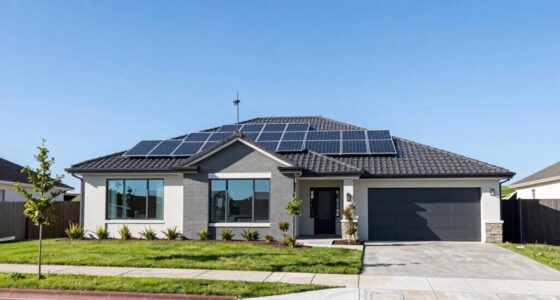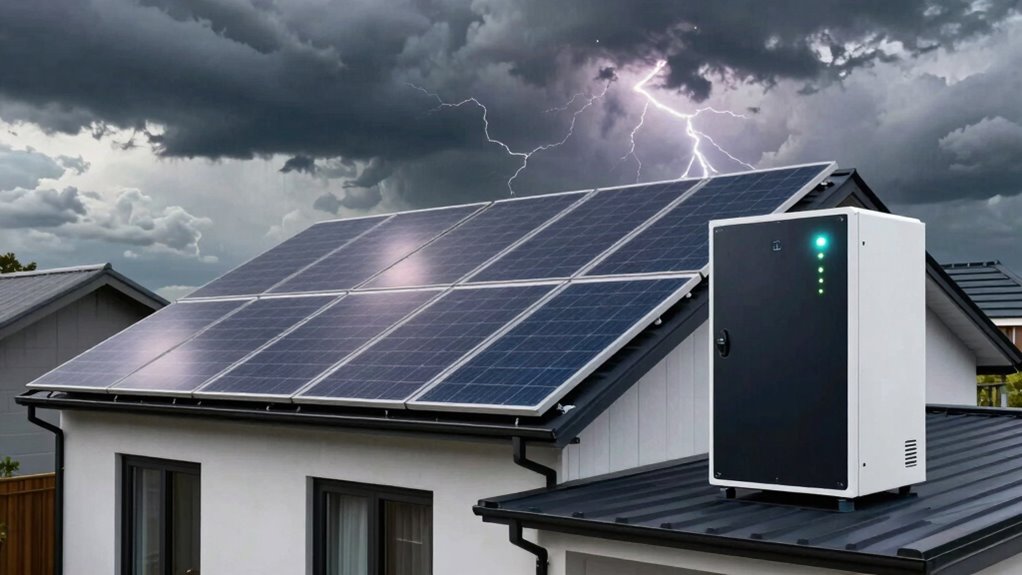

Solar plus storage helps you stay prepared during extreme weather by providing reliable, independent power when the grid goes down. It keeps your essential appliances running, like refrigeration, medical devices, and communication tools. With stored energy, you can maintain safety and stay connected even during storms, hurricanes, or heatwaves. This setup also reduces your reliance on external power sources, boosting your resilience. Keep exploring to discover more ways it can protect your home and peace of mind.

Get garden gear delivered free with Prime
- Fast, free delivery on millions of items
- Prime Video, Amazon Music and more included
- Member-only deals all year
Key Takeaways
- Solar plus storage provides independent power, reducing reliance on vulnerable utility grids during severe weather events.
- Stored energy ensures continuous operation of critical appliances and safety devices during outages.
- It enables homes to maintain essential functions like refrigeration and communication despite power disruptions.
- Renewable energy systems increase resilience by adapting to more frequent and intense weather conditions.
- Backup storage offers reliable energy reserves, supporting emergency preparedness and long-term disaster recovery.
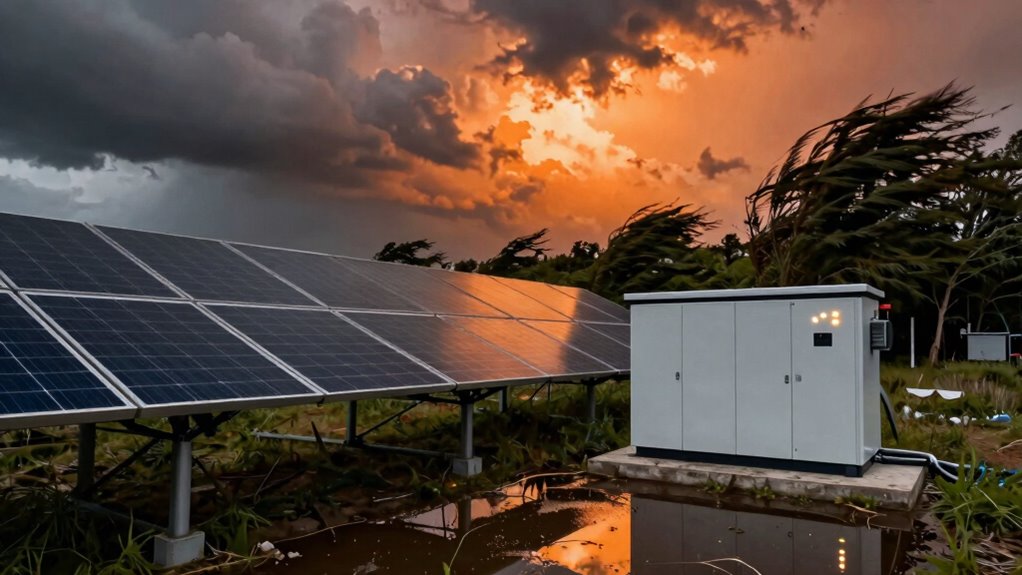
How can solar plus storage systems help you withstand extreme weather events? When storms, hurricanes, or heatwaves hit, traditional power sources often fail, leaving you without electricity when you need it most. Solar panels paired with energy storage give you a way to maintain power independently from the grid. This grid independence means you’re less vulnerable to widespread outages caused by severe weather conditions. Instead of relying solely on the utility, you can generate your own energy and store it for use during emergencies. This setup enhances your emergency resilience, guaranteeing your home remains functional even when the grid is down.
Solar plus storage boosts your emergency resilience by keeping your home powered during weather-related outages.
By installing solar plus storage, you’re actively preparing for unpredictable weather patterns. During a storm, your solar panels can continue to produce electricity as long as they’re not damaged, and your stored energy becomes a backup source. You won’t have to worry about losing power entirely, which is vital for maintaining safety, keeping food fresh, and powering essential devices like medical equipment or communication tools. This level of preparedness gives you peace of mind, knowing you’re not completely dependent on external power sources that can fail unexpectedly. Incorporating resilient energy systems can further enhance your preparedness and ensure continuous power supply during crises.
Emergency resilience is considerably strengthened with solar plus storage because it provides a reliable, self-sufficient energy supply. In extreme weather events, grid outages can last for days or even weeks, but with a well-designed system, you can keep critical appliances running throughout the crisis. The ability to store excess solar energy during normal conditions ensures that when the weather turns bad, you have a reserve of power ready to use. This reduces the stress and hardship caused by prolonged outages, allowing you to stay comfortable and connected to the outside world. Additionally, integrating renewable energy solutions like solar plus storage can help reduce your reliance on fossil fuels and minimize your carbon footprint, which is especially important in the face of climate change. Incorporating climate-resilient energy systems further enhances your home’s ability to withstand extreme weather. As weather becomes more unpredictable, investing in renewable energy solutions like these not only safeguards your home but also contributes to a more sustainable future. The integration of solar and storage technology empowers you to take control of your energy needs, making your home more resilient against the increasing frequency and severity of extreme weather events.
A reliable backup power source is increasingly important as extreme weather becomes more frequent and severe, making energy independence a key aspect of home resilience.
solar battery backup system for home
As an affiliate, we earn on qualifying purchases.
As an affiliate, we earn on qualifying purchases.
Frequently Asked Questions
How Long Can Solar Batteries Reliably Power a Home During Outages?
You can typically rely on solar batteries to power your home for several hours to days during outages, depending on their storage capacity and your energy needs. Most batteries have a lifespan of around 10-15 years, ensuring long-term reliability. To maximize backup power, choose a system with sufficient storage capacity that matches your consumption, and consider how much energy you need during outages to determine the right size for your home.
What Maintenance Is Required for Solar Storage Systems in Extreme Weather?
A stitch in time saves nine, and regular maintenance keeps your solar storage system resilient during extreme weather. You should routinely inspect batteries for corrosion, clean terminals, and guarantee proper ventilation to extend battery lifespan. Check for water ingress and secure enclosures to improve weather resilience. Staying proactive helps your system perform reliably, even in harsh conditions, ensuring your energy needs are met when you need it most.
Are Solar + Storage Systems Effective Against All Types of Natural Disasters?
Solar + storage systems aren’t effective against all natural disasters due to their limitations, like vulnerability to flooding or extreme winds. You need disaster-specific strategies, such as reinforced installations or backup power plans, to guarantee reliability. While they provide vital energy during outages, they might not withstand every disaster. Planning with these limitations in mind helps you maximize protection and maintain power during various extreme weather events.
How Quickly Can a Solar Storage System Be Installed After a Disaster?
While some may think installation delays are inevitable after a disaster, solar storage systems can often be deployed quickly with proper planning. The installation timeline depends on the system’s complexity and available infrastructure, but emergency response teams and solar providers work swiftly to get systems operational within days to weeks. Rapid deployment enhances disaster response efforts, ensuring reliable power during critical times when it’s needed most.
What Are the Costs and Incentives Associated With Solar + Storage for Emergency Preparedness?
You’ll find that the costs of solar plus storage vary based on system size and location, but a thorough cost analysis helps you understand the investment. Policy incentives, like tax credits and rebates, considerably reduce upfront expenses, making it more affordable. These incentives encourage emergency preparedness investments, ensuring you have reliable power during extreme weather. By leveraging available programs, you can better protect your home and family against unexpected disasters.
Conclusion
You’re like a sturdy lighthouse in a storm, guiding your home through the darkest nights and fiercest winds. Solar plus storage isn’t just a backup; it’s your beacon of resilience, illuminating a path to independence when the grid falters. Embrace this powerful duo, and you’ll weather extreme weather with confidence, knowing your energy source is as reliable as the steady lighthouse guiding ships safely ashore. Stay prepared, stay resilient—your future self will thank you.
Fall yard work Picks
leaf blowers
As an affiliate, we earn on qualifying purchases.