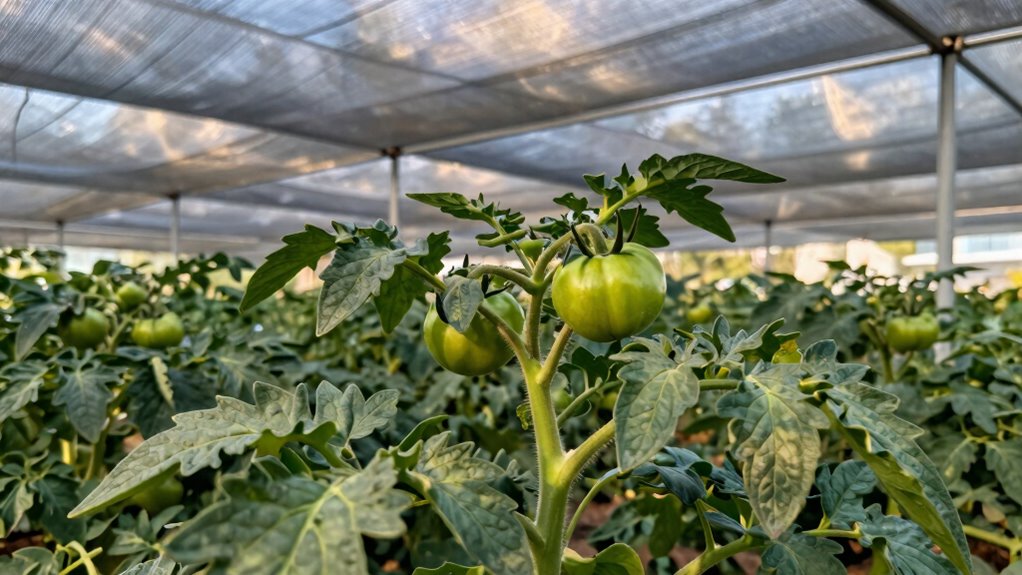

Shade systems protect your plants even when heat doesn’t feel extreme by controlling temperature fluctuations and reducing subtle stress. They safeguard delicate seedlings and young plants from dehydration and sunburn, promoting steady growth. By creating a stable environment, shade systems help prevent issues caused by inconsistent sunlight and moderate warmth. This guarantees your plants stay healthy and productive across different seasons. If you want to discover how these systems adapt to various conditions, keep exploring.

Get garden gear delivered free with Prime
- Fast, free delivery on millions of items
- Prime Video, Amazon Music and more included
- Member-only deals all year
Key Takeaways
- Shade systems moderate temperature fluctuations, preventing stress even when heat feels mild.
- They reduce UV radiation exposure, protecting plants from subtle yet damaging sunlight effects.
- Shade provides a consistent environment, supporting stable growth despite minor temperature variations.
- They help control moisture levels, preventing dehydration during warm but not intensely hot days.
- Shade systems optimize light conditions, ensuring plants receive appropriate sunlight without overexposure.
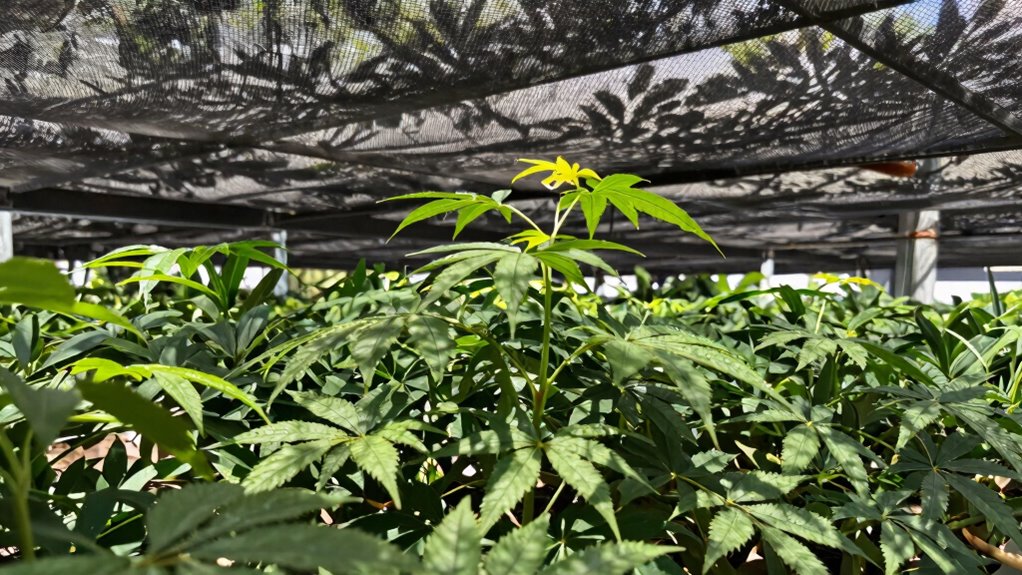
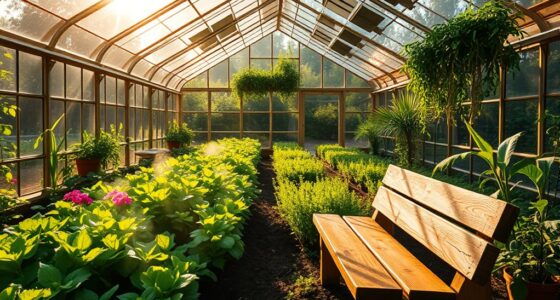
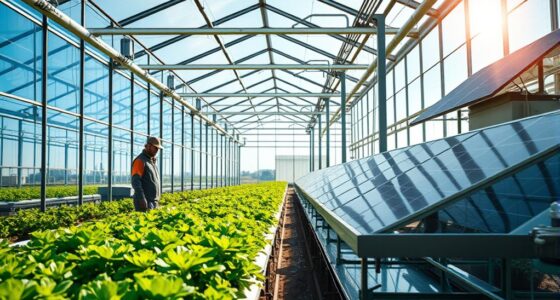
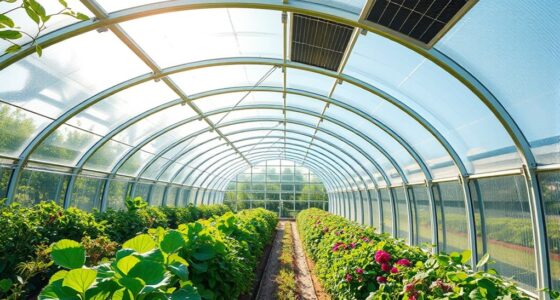
Shade systems play an essential role in safeguarding plants from excessive sunlight and heat, guaranteeing ideal growth conditions. Even when the weather doesn’t seem unbearably hot, these systems help maintain a stable environment that promotes healthy development. In urban agriculture, where space is limited and environmental control is critical, shade systems become an indispensable tool. They prevent plants from experiencing unnecessary stress caused by fluctuating temperatures and intense solar radiation, which can otherwise hinder growth and reduce yields. By providing consistent shading, you create a more predictable environment that encourages stronger, healthier plants, leading to more successful urban farming initiatives. Additionally, shade systems contribute to biodiversity preservation by creating microhabitats that support diverse plant and insect life. In greenhouses, shade systems greatly boost efficiency. While greenhouses are designed to trap heat and light to foster plant growth, they can sometimes overheat during sunny days, even if the outside temperature isn’t extreme. Excess heat can cause plants to wilt or develop stress symptoms, decreasing productivity. Shade systems help regulate the internal temperature, preventing overheating and allowing plants to thrive without the need for constant cooling or ventilation. This not only improves plant health but also reduces energy consumption, making greenhouse operations more sustainable and cost-effective. When you implement shade solutions, you maximize the environment for your crops, guaranteeing they receive the right amount of light without the negative effects of excessive heat. They also serve as a cost-effective method for controlling environmental conditions, which is especially important for small-scale or resource-limited growers. Moreover, shade systems contribute to the overall efficiency of urban agriculture projects. They protect delicate seedlings and young plants from sudden sun exposure, which can cause sunburn or dehydration. This protection helps stabilize growth rates, making your cultivation process more reliable. Shade fabrics or structures can be adjusted based on seasonal changes, providing flexibility to adapt to varying weather patterns. As a result, you can extend the growing season and increase productivity, even when outside conditions are less predictable. In densely populated areas, where direct sunlight may be intense and limited, shade systems help maximize the available light while mitigating its harmful effects. Proper environmental control is crucial for optimizing plant health and productivity in diverse settings. A well-designed shade system also considers seasonal adjustments, ensuring optimal protection year-round. Incorporating climate adaptability into your shade system design can further enhance its effectiveness across different weather conditions.
As an affiliate, we earn on qualifying purchases.
Frequently Asked Questions
Do Shade Systems Reduce Humidity Around Plants?
Yes, shade systems can help reduce humidity around your plants. They support humidity control and microclimate regulation by limiting direct sunlight and airflow, which prevents excessive moisture buildup. This creates a more balanced environment, reducing the risk of mold or fungal diseases. By controlling humidity levels, shade systems help your plants stay healthier and more resilient, even when the weather feels milder but humidity remains high.
Can Shade Systems Prevent Plant Diseases?
Absolutely, shade systems can help prevent plant diseases by reducing direct sunlight, which lowers leaf temperature and moisture buildup. This creates a cooler, drier environment that discourages disease development. Plus, shade covers can act as barriers, aiding in pest control by limiting pest access and activity. By providing protection, shade systems promote healthier plants, fostering robust growth and reducing the risk of pests and pathogens taking hold.
Are Shade Systems Effective in Winter?
Yes, shade systems are effective in winter for seasonal shading and winter protection. They shield plants from harsh winter winds, frost, and excessive snow, helping maintain a more stable temperature around your plants. By providing this protection, you reduce winter stress, prevent frost damage, and promote healthier growth come spring. Even in colder months, shade systems serve as valuable tools to safeguard your plants and guarantee their ongoing resilience.
How Long Do Shade Fabrics Typically Last?
Shade fabrics usually last between 5 to 15 years, depending on their durability and UV resistance. You’ll want to choose high-quality fabrics with strong UV resistance to guarantee longevity. Regular maintenance and proper installation also help extend their lifespan. Keep in mind that exposure to harsh weather can accelerate wear, so inspecting your shade fabric periodically makes sure it continues to protect your plants effectively over time.
Do Shade Systems Require Special Maintenance?
Surprisingly, shade systems don’t demand high maintenance, despite their durability. You just need to occasionally clean the fabric with mild soap and water to keep it in top shape. Inspect the structure for wear and tear, especially after storms. Following simple maintenance tips guarantees your shade system’s longevity, maintaining its durability while shielding your plants effectively. It’s easier than you’d think to keep your shade system in great condition!
Conclusion
So, next time you notice a cloudy day or a gentle breeze, remember that shade systems are quietly working behind the scenes, shielding your plants from subtle heat stresses. It’s funny how something so simple can make such a big difference, almost like a secret guardian for your garden. Whether it’s a surprise warm spell or just the usual sunshine, these systems help your plants thrive, proving that protection often comes in the most unexpected forms.
Halloween Picks
halloween
As an affiliate, we earn on qualifying purchases.