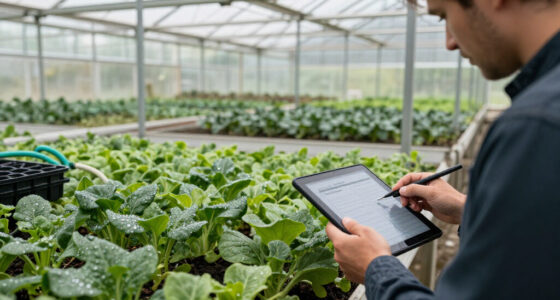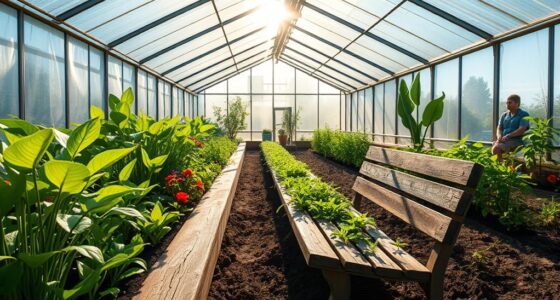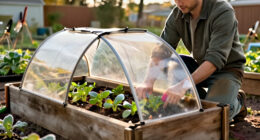
To design energy-efficient greenhouses that lower costs, incorporate solar panels to harness renewable energy and reduce electricity bills. Use automation systems to optimize climate control, lighting, and irrigation, cutting unnecessary energy use. Choose high-performance glazing and insulation to maintain temperature with less heating and cooling. Combining these methods creates a resilient, cost-saving environment. Keep exploring these strategies, and you’ll discover how to maximize both savings and crop productivity effectively.

Get garden gear delivered free with Prime
- Fast, free delivery on millions of items
- Prime Video, Amazon Music and more included
- Member-only deals all year
Key Takeaways
- Incorporate photovoltaic solar panels to generate renewable energy and reduce electricity expenses.
- Utilize automation systems for climate, lighting, and irrigation to optimize resource use and minimize manual labor.
- Implement high-performance glazing and insulation to maintain temperature and decrease heating/cooling needs.
- Automate shading and ventilation to regulate temperature efficiently and enhance energy conservation.
- Integrate energy management technologies to synchronize solar power with control systems, maximizing efficiency and lowering operational costs.
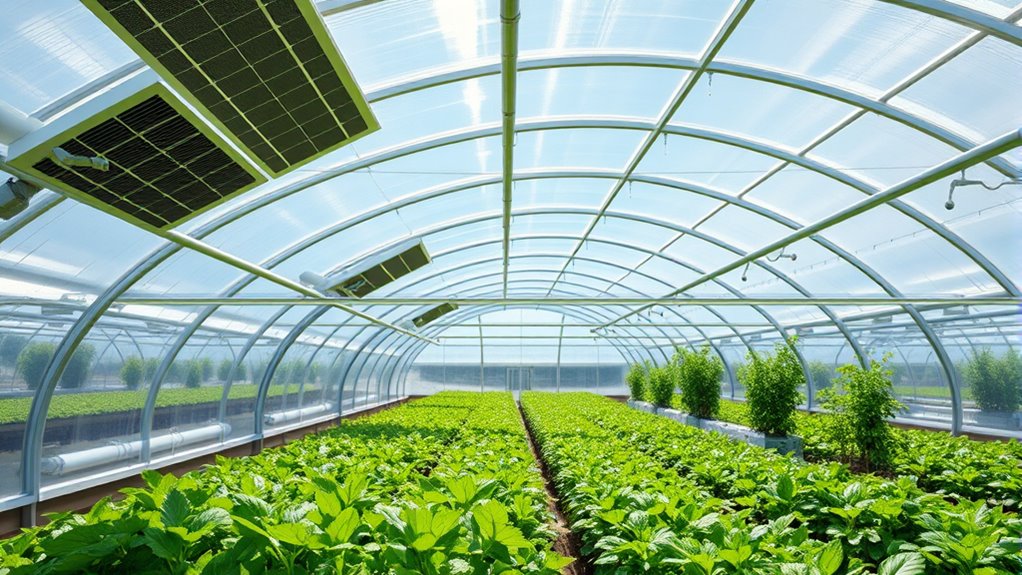
Greenhouses that lower costs are transforming the way growers produce crops by making year-round cultivation more affordable. When you design an energy-efficient greenhouse, you focus on reducing your operational expenses while maximizing productivity. One of the most impactful strategies is solar integration, which allows you to harness the sun’s abundant energy to power your greenhouse. Installing photovoltaic panels not only cuts your electricity costs but also reduces your carbon footprint, making your operation more sustainable. With solar integration, you can generate your own power, decreasing reliance on grid electricity and shielding yourself from fluctuating energy prices.
Solar integration reduces costs and boosts sustainability in energy-efficient greenhouses.
Alongside solar panels, automation systems play a crucial role in creating a cost-effective greenhouse. Automated climate control, lighting, and irrigation systems ensure ideal growing conditions with minimal manual intervention. For example, smart ventilation and heating systems can adjust airflow and temperature based on real-time data, conserving energy while maintaining ideal conditions for your crops. Automation reduces waste, prevents overuse of resources, and helps you fine-tune operations to improve yields and quality.
When designing your greenhouse, consider integrating these technologies seamlessly. An energy-efficient greenhouse isn’t just about adding solar panels or automation; it’s about creating a cohesive system where each component works together to minimize energy consumption and operational costs. For instance, automation systems can be programmed to optimize lighting schedules in sync with natural sunlight, decreasing the need for artificial lighting during the day. This synergy between solar integration and automation not only lowers costs but also enhances your crop’s growth environment.
Furthermore, insulation and glazing choices markedly impact your energy efficiency. High-performance glazing materials keep heat in during the winter and out during the summer, reducing the need for heating and cooling. Pairing insulation with automated shading systems allows you to regulate internal temperatures more precisely, saving energy and money. These design features, combined with renewable energy solutions and automation, create a resilient, cost-efficient greenhouse.
Adding to these strategies, understanding the benefits of eye patch benefits can improve your focus and comfort for workers who spend long hours in the greenhouse, indirectly supporting operational efficiency. Ultimately, designing an energy-efficient greenhouse means adopting a holistic approach. By integrating solar energy and automation systems, you can drastically cut energy costs, improve resource management, and extend your growing season. These investments pay off in the long run by reducing operational expenses, increasing crop yields, and promoting sustainability. When you focus on these advanced technologies, you’re not just lowering costs—you’re building a smarter, more resilient way to grow your crops year-round.
As an affiliate, we earn on qualifying purchases.
Frequently Asked Questions
What Are the Best Materials for Energy-Efficient Greenhouse Glazing?
For energy-efficient greenhouse glazing, you should consider options like polycarbonate and double-glazed glass, as they balance insulation and light transmission. These glazing options offer excellent material durability, resisting impacts and weather fluctuations. You’ll find that selecting the right material helps reduce heat loss and lowers energy costs. Opt for durable, high-quality glazing to ensure longevity and consistent performance, ultimately creating a more efficient and cost-effective greenhouse environment.
How Does Climate Impact Greenhouse Energy-Saving Strategies?
Oh, climate variability just loves to complicate things, doesn’t it? You’ll need to make seasonal adjustments to your greenhouse strategies, since unpredictable weather patterns impact energy use. Warmer winters may reduce heating needs, while colder spells demand more insulation. Understanding your local climate helps you tailor energy-saving measures effectively, ensuring your greenhouse stays efficient year-round despite the whims of weather. Adaptation is your best tool against climate’s ever-changing moods.
What Maintenance Is Required for Green Energy Systems?
You need to regularly maintain your green energy systems to guarantee peak performance. Start with solar panel maintenance by cleaning the panels and checking for dirt or damage. Also, perform battery health checks to prevent efficiency loss and extend lifespan. Monitoring these components helps catch issues early, saving you money and energy. Consistent maintenance keeps your system running smoothly, ensuring your greenhouse remains energy-efficient and cost-effective over time.
Can Existing Greenhouses Be Retrofitted for Better Efficiency?
Your greenhouse’s potential for efficiency is mind-blowing! Retrofitting options can substantially boost its performance, making it more sustainable and cost-effective. Start with an energy audit to identify key improvement areas. You can upgrade insulation, install energy-efficient glazing, or add heating systems. These changes are surprisingly simple and can turn your existing greenhouse into a green powerhouse, drastically reducing energy costs and environmental impact.
What Are the Initial Costs Versus Long-Term Savings?
You should perform a thorough cost analysis to compare initial costs with long-term savings. While retrofitting your greenhouse involves upfront investments, the investment benefits include reduced energy bills and maintenance costs over time. Although the initial costs can be significant, the savings you’ll gain through improved efficiency make it a smart choice. Ultimately, this approach helps you maximize your greenhouse’s profitability and sustainability in the long run.
Conclusion
By embracing energy-efficient greenhouse designs, you’re planting the seeds for a brighter, more sustainable future. These innovations act as a gentle breeze guiding your crops toward prosperity, while cutting costs keeps your dreams rooted firmly in reality. Together, you can cultivate a world where nature and ingenuity dance in harmony, blossoming into a lush garden of hope and resilience. Step into this greener tomorrow—your efforts will bloom into a legacy that nurtures both your spirit and the planet.
Fall Picks
fall essentials
As an affiliate, we earn on qualifying purchases.