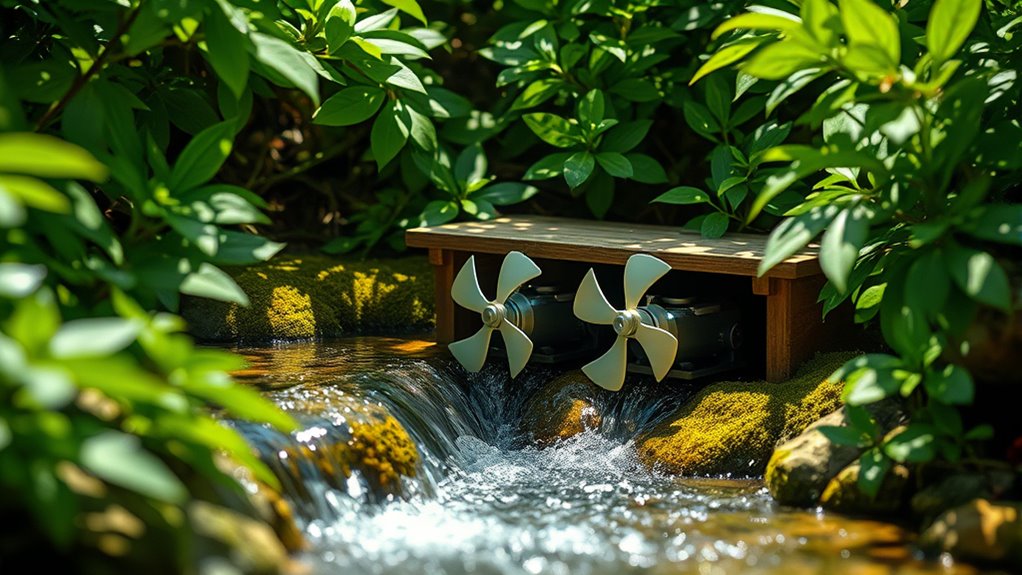

Small-scale hydropower lets you harness local rivers or streams to generate renewable electricity with minimal environmental impact. You can choose from options like micro-hydro turbines or run-of-river systems, which require less infrastructure and cause fewer ecological disruptions. Proper site assessment guarantees steady flow and minimal habitat disturbance. If you want to explore effective ways to implement small hydropower solutions, you’ll discover more details that could help bring your project to life.
Key Takeaways
- Small-scale hydropower involves installing turbines in rivers or streams to generate local, renewable electricity with minimal environmental impact.
- Site selection focuses on steady water flow, sufficient head, and minimal ecological sensitivity for optimal efficiency.
- Eco-friendly turbines and fish passage solutions help mitigate impacts on aquatic habitats and fish migration.
- Proper environmental assessments and regulatory compliance are essential to ensure sustainable and legal project development.
- Installation challenges include constructing access, foundations, and managing water flow variability for reliable power output.
Are small-scale hydropower options a viable solution for your energy needs? If you’re considering harnessing the power of local waterways, it’s imperative to understand how these systems can impact river ecology and what installation challenges you might face. Small hydropower projects typically involve installing turbines in rivers or streams to generate electricity with minimal environmental disruption. They can be an attractive option if you’re aiming for renewable energy that doesn’t require large-scale infrastructure. However, you need to evaluate whether your site supports a sustainable and efficient setup without harming the natural flow and health of the river.
River ecology plays a significant role in the success of small hydropower installations. Even minor modifications to a river’s flow can affect fish migration, sediment transport, and aquatic habitats. If not carefully planned, turbines can become barriers that prevent fish from reaching spawning grounds or disrupt the natural sediment cycle, leading to erosion or sediment buildup downstream. To mitigate these issues, you should consider environmentally friendly turbine designs and fish passage solutions. Proper environmental assessments are critical before installation so you can identify potential impacts and implement measures to preserve the river’s health. Additionally, understanding hydropower regulations can help ensure your project complies with legal requirements and environmental standards.
Installation challenges are another factor to weigh. Small hydropower systems often require placing turbines in flowing water, which can involve complex construction work. You might need to build access roads, dredge the riverbed, or install foundations that withstand water currents. These activities can be disruptive, especially in sensitive or remote areas. Additionally, securing permits and adhering to environmental regulations can add time and expense to your project. You’ll also need to evaluate the variability of water flow; during dry seasons, your system might produce less power, so understanding flow patterns is crucial for consistent energy output.
Choosing the right site is essential to overcoming installation challenges. A site with a steady flow, sufficient head (water height), and minimal ecological sensitivity will be easier and more cost-effective to develop. You may also need to evaluate the ease of access for construction and maintenance, ensuring that the system can be serviced regularly without significant disruption. While small-scale hydropower offers a renewable energy source with a relatively low footprint, it’s not without hurdles. Carefully planning, conducting environmental assessments, and selecting suitable sites will help you maximize benefits while minimizing ecological and logistical issues.
Frequently Asked Questions
What Permits Are Needed for Small-Scale Hydropower Projects?
You’ll need to secure water rights and obtain permits from local or state agencies to develop your small-scale hydropower project. Additionally, you’ll need approval for grid connection to guarantee your system integrates safely and legally with the existing power network. Make sure to check all regulations specific to your area, as these requirements vary. Planning ahead helps you avoid delays and ensures your project complies with all legal and environmental standards.
How Much Does Small-Scale Hydropower Installation Typically Cost?
Starting on small-scale hydropower comes with manageable cost considerations, typically ranging from $10,000 to $50,000 depending on your site and system size. You’ll find a variety of financing options to support your project, making it more accessible. Keep in mind that initial investment varies based on equipment, installation complexity, and permits, but the long-term energy savings often outweigh these upfront expenses, making it a worthwhile endeavor.
What Is the Average Lifespan of Small Hydropower Equipment?
You can expect small hydropower equipment to last around 30 to 50 years with proper maintenance. Regular equipment maintenance is essential to extend its lifespan. Advances in technology have improved durability and efficiency, helping equipment withstand environmental factors better. Staying updated on these technology advancements allows you to optimize performance and address potential issues early, ensuring your small hydropower system remains reliable and efficient over its long lifespan.
Can Small-Scale Hydropower Be Used in Remote Areas?
Yes, small-scale hydropower can definitely be used in remote areas. It provides off-grid solutions that are ideal for rural electrification, especially where extending the main power grid isn’t feasible. You can harness local water resources to generate reliable electricity, improving living standards and supporting local communities. Its sustainability and low operational costs make it a practical and eco-friendly option for powering remote locations efficiently.
What Are the Environmental Impacts of Small Hydropower Systems?
You’ll find that small hydropower systems can impact aquatic ecosystems by disrupting fish migration and altering water flow. These systems may create barriers for fish moving upstream and change sediment transport, which affects habitat quality. While they generally have fewer environmental effects than large-scale projects, it’s important to carefully design and operate them to minimize harm to local ecosystems and guarantee fish can migrate freely.
Conclusion
As you explore small-scale hydropower options, you realize how nature’s coincidence offers a hidden opportunity. By harnessing nearby streams and rivers, you can generate clean energy right where you are, turning everyday landscapes into power sources. It’s remarkable how a simple coincidence—like a flowing creek—can become your personal energy solution. Embracing these small-scale options isn’t just practical; it’s a chance to connect more deeply with the environment and create a sustainable future.