Choosing between microinverters and string inverters depends on your roof’s layout, shading, and energy goals. Microinverters work well if your roof faces shading issues, obstacles, or panels at different angles, offering better performance and easier maintenance. String inverters are more cost-effective and simpler to install if your roof is uniform and unobstructed. Understanding these differences helps you find the best fit, and exploring further will reveal which option maximizes your system’s efficiency.
Key Takeaways
- Choose microinverters for complex roofs with shading or panels at different angles for optimal energy output.
- Opt for string inverters if your roof is uniform, unobstructed, and cost-efficient installation is a priority.
- Consider microinverters for easier maintenance and system resilience in environments with shading or panel malfunctions.
- Use string inverters for simpler, faster installation on straightforward roof layouts with minimal shading.
- Balance upfront costs against long-term performance and system flexibility to select the inverter type that best aligns with your goals.
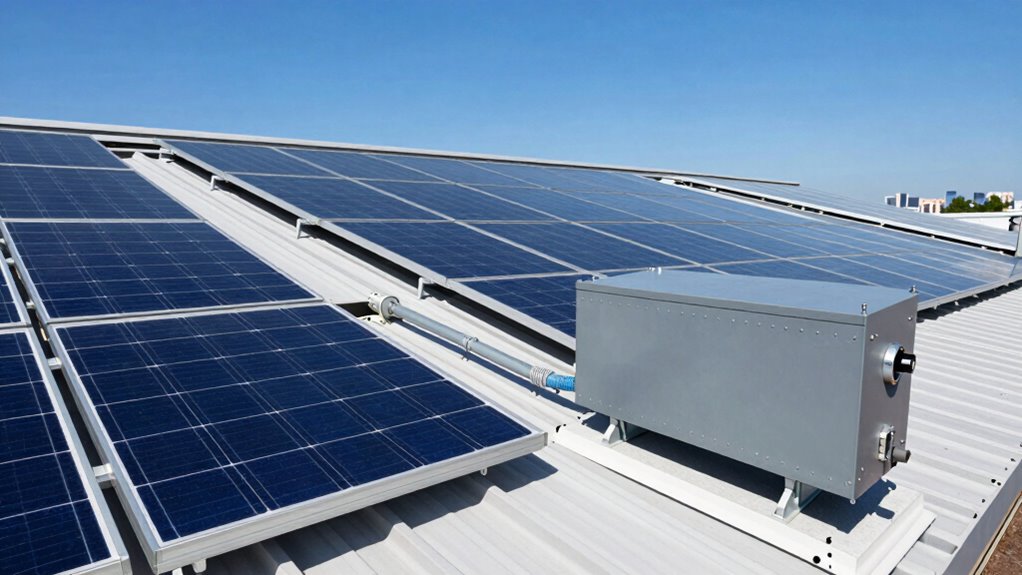
When choosing a solar inverter, understanding the differences between microinverters and string inverters is essential for optimizing your system’s performance. Your decision impacts not only how well your solar panels produce energy but also how much you’ll spend upfront and over time. Cost efficiency plays a key role here, as microinverters tend to have higher initial costs compared to string inverters. However, the overall savings can vary based on your specific setup and long-term goals. String inverters usually cost less per unit and are simpler to install, making them an attractive option if your roof is relatively uniform and unobstructed. They connect multiple panels in series, which means fewer components are involved, and the installation process is generally quicker and less complex. This simplicity often results in lower labor costs and fewer potential points of failure over the lifespan of your system.
On the other hand, microinverters are installed individually on each panel, which can increase your upfront investment. But this approach offers significant advantages in terms of system flexibility and performance, especially if your roof has shading issues or panels are positioned at different angles. Because each microinverter operates independently, shading on one panel doesn’t drag down the output of the entire system. This makes microinverters particularly advantageous if you have a complex roof layout or obstacles like chimneys and trees. While the initial cost is higher, microinverters can lead to better energy production in less-than-ideal conditions, potentially offsetting the higher investment over time.
Installation complexity is another important factor to think about. String inverters are easier to set up because they involve fewer components and connections. If you’re working with a straightforward, unobstructed roof and want a solution that’s quick to install, a string inverter might be your best choice. Conversely, microinverters require installing one unit per panel, which can be more time-consuming and may demand a bit more technical expertise. But this complexity pays off in enhanced system resilience and ease of maintenance later on, since individual panels can be isolated and serviced without affecting the whole system. Additionally, understanding the system’s safety considerations is crucial when installing any inverter type to ensure long-term reliability and protection.
Ultimately, your decision depends on your budget, roof configuration, and energy goals. If you’re seeking a cost-effective, simple solution for a uniform roof, a string inverter is probably your best bet. If maximizing energy output and flexibility is a priority, especially in shaded or irregular setups, microinverters could be worth the extra investment. Weighing these factors carefully ensures you choose the inverter type that aligns with your needs and helps you get the most from your solar investment.

Y&H 600W Solar Grid Tie Micro Inverter with AC Data Monitoring Display Screen Waterproof IP65 MPPT DC28-50V PV Input AC80-160V Output for 24V 36V Solar Panel
- Waterproof IP65 Design: Resists rainwater erosion
- Microinverter Conversion: Turns solar power into usable electricity
- Supports Single/Three-Phase: Flexible residential and small commercial use
As an affiliate, we earn on qualifying purchases.
As an affiliate, we earn on qualifying purchases.
Frequently Asked Questions
How Do Microinverters Impact Overall System Maintenance Costs?
Microinverters generally lower your overall system maintenance costs because they simplify troubleshooting. With a cost comparison, you’ll find that replacing or repairing a single microinverter is easier and cheaper than dealing with a string inverter affecting multiple panels. This ease of troubleshooting means less downtime and fewer costly technician visits, helping you save money over the system’s lifespan while keeping your solar setup running efficiently.
Are Microinverters Suitable for All Types of Roof Shading Conditions?
Microinverters are highly suitable for shading challenges because they optimize each panel separately, ensuring shaded sections don’t affect the entire system. They work well with various roof compatibility types, including complex or uneven surfaces. If your roof faces frequent shading or has irregular angles, microinverters provide a flexible and efficient solution, maximizing energy production without the need for extensive adjustments or compromises.
Can String Inverters Be Upgraded With Additional Panels Later?
Yes, you can upgrade your system with additional panels later, but it depends on your string inverter’s system compatibility. Some string inverters support future expansion, allowing you to add panels without replacing the inverter. However, not all models do, so it’s crucial to choose one that’s designed for future expansion. Planning ahead ensures your system can grow easily as your energy needs or roof space change.
What Is the Typical Lifespan Difference Between Microinverters and String Inverters?
Think of your inverters like sturdy shoes that keep you moving—microinverters generally last around 25 years, while string inverters might reach 15-20 years. Microinverters often have better inverter reliability and handle panel durability issues more effectively, extending their lifespan. This means you’ll likely enjoy longer performance and fewer replacements. Choosing microinverters can be a smart move if longevity and consistent output matter most to you.
How Do Inverter Warranties Vary Between Microinverters and String Inverters?
You’ll find that microinverters typically offer longer warranty durations, often up to 25 years, with all-encompassing coverage that includes parts and labor. String inverters usually come with warranties ranging from 10 to 12 years, sometimes extendable. The warranty coverage for microinverters tends to be more extensive, providing peace of mind for your investment, while string inverters may have more limited coverage but still protect you against manufacturing defects.
Conclusion
Choosing between microinverters and string inverters is like picking the right key for your home’s energy lock. If you want maximum flexibility and efficiency, microinverters might be your best friend. But if you prefer simplicity and lower upfront costs, string inverters could suit you better. Consider your roof’s layout and your goals—after all, the right inverter is the secret ingredient to releasing your solar potential and powering your future with confidence.