
Net zero homes are designed to produce as much energy on-site as they use, making you more energy independent and environmentally friendly. You can achieve this by installing renewable systems like solar panels or wind turbines, improving home energy efficiency, and adding energy storage solutions such as batteries. These strategies work together to create a balanced, self-sufficient energy system. If you’re curious about how to implement these features effectively, there’s more to discover.
Key Takeaways
- Net Zero Homes produce as much energy on-site as they consume, primarily through renewable technologies like solar panels.
- On-site generation reduces reliance on fossil fuels and supports sustainability goals.
- Enhancing energy efficiency minimizes overall energy demand, making renewable energy more effective.
- Energy storage systems, such as batteries, store excess energy for use during low renewable production periods.
- Integrating efficiency, renewable tech, and storage creates resilient, self-sufficient homes aligned with net-zero objectives.
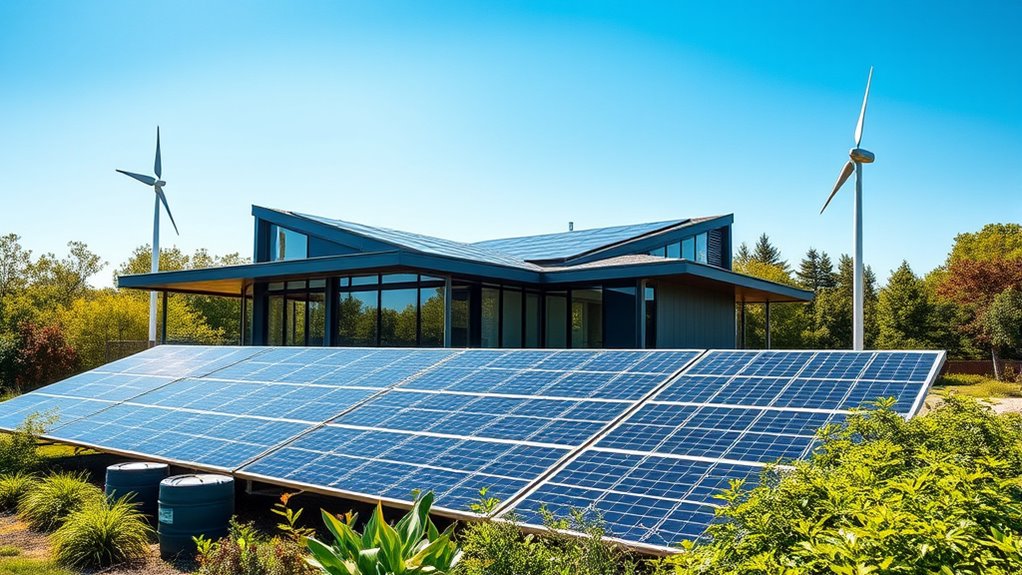
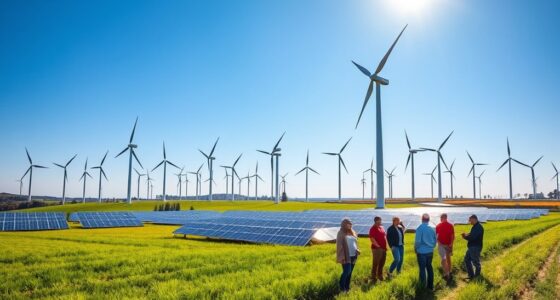
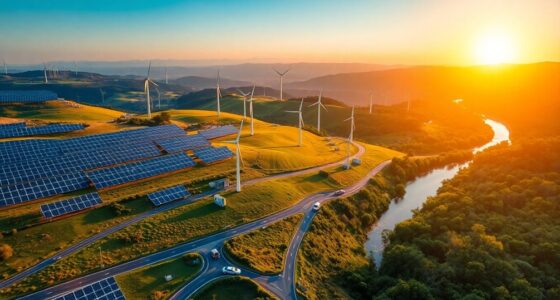
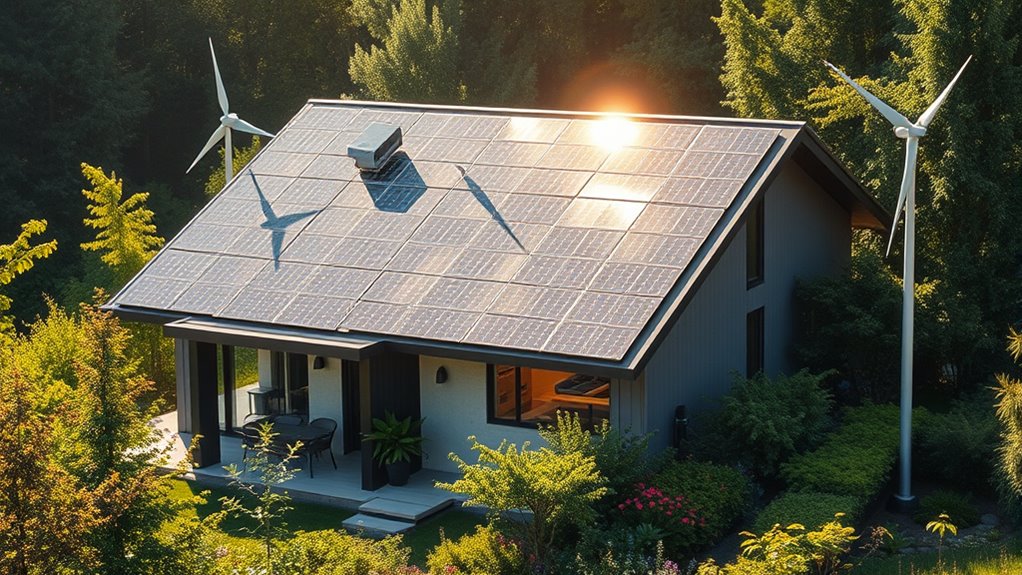
Net zero homes are changing the way we think about energy use by producing as much energy on-site as they consume. This shift isn’t just about reducing your carbon footprint; it’s about taking control of your energy future. By integrating renewable technologies, you can generate clean energy right where you live, cutting down reliance on fossil fuels and lowering your utility bills. Solar panels are the most common choice, harnessing sunlight to produce electricity. Wind turbines, though less common for residential use, can also contribute if your location is suitable. These renewable technologies allow your home to generate power sustainably, aligning with the goal of net zero energy consumption.
Achieving this balance hinges on maximizing energy efficiency within your home. Every appliance, light fixture, and heating system should be optimized to use as little energy as possible. High-efficiency HVAC systems, LED lighting, and smart thermostats help reduce overall energy demand. Insulation and window upgrades also play essential roles by minimizing heat loss during winter and keeping your home cool in summer. When your home is more energy-efficient, it requires less energy to maintain comfort, making on-site renewable generation more effective and manageable. It’s a cycle of mutual reinforcement: the more energy-efficient your home is, the less energy you need to produce, and the easier it becomes to meet your energy needs with renewable sources.
Furthermore, integrating energy storage systems like batteries helps you manage fluctuations in renewable energy production. During sunny or windy days, excess energy can be stored for later use, ensuring a steady supply even when the sun isn’t shining or the wind isn’t blowing. This capability enhances your home’s resilience and reduces dependence on the grid. Smart energy management systems can also optimize energy use throughout the day, shifting consumption to times when renewable generation peaks. This combination of renewable technologies, energy efficiency, and storage creates a self-sufficient energy ecosystem within your home. Additionally, understanding the importance of energy efficiency can help you make smarter decisions to reduce overall consumption and improve your home’s performance.
Frequently Asked Questions
What Are the Initial Costs of Building a Net Zero Home?
The initial costs of building a net zero home typically range from 10-20% above traditional homes, depending on your design and location. You should do a thorough cost analysis to understand these expenses and explore financing options that might be available. While the upfront investment is higher, energy savings over time can offset costs, making it a smart choice for long-term affordability and sustainability.
How Do Net Zero Homes Perform During Extreme Weather Events?
During extreme weather events, your net zero home performs well because it uses resilience strategies like reinforced insulation and durable roofing. Weatherproofing techniques, such as sealing gaps and installing storm-resistant windows, protect against water and wind damage. These measures help maintain comfort and safety, ensuring your home remains resilient and energy-efficient. By investing in these strategies, you can confidently face severe weather while minimizing damage and energy loss.
Are There Government Incentives for On-Site Renewable Energy Systems?
Think of government incentives as a key to open your renewable energy potential. You can benefit from government rebates and policy incentives that make installing on-site renewable energy systems more affordable. These programs aim to encourage sustainable choices, helping you reduce energy costs and carbon footprint. By taking advantage of these incentives, you transform your home into a symbol of eco-conscious living while saving money long-term.
What Maintenance Is Required for On-Site Energy Generation Equipment?
You need to regularly perform equipment upkeep and system inspections to keep your on-site energy generation equipment running smoothly. Clean solar panels, check for debris, and guarantee connections are secure. For other systems like wind turbines or generators, inspect moving parts and lubricate as needed. Scheduling annual professional assessments helps identify potential issues early, ensuring peak performance and extending your equipment’s lifespan. Consistent maintenance saves you money and keeps your energy system efficient.
How Quickly Can a Net Zero Home Achieve Energy Independence?
You can achieve energy independence in a net zero home within a few years, especially if you incorporate energy storage and optimize grid interaction. While some may think it’s a long process, strategic planning and consistent maintenance speed up the journey. By maximizing on-site generation, balancing energy use, and storing excess power, you’ll reduce reliance on external sources quickly, reaching true energy independence sooner than you might expect.
Conclusion
By choosing net zero homes with on-site generation, you take control of your energy future and reduce your environmental impact. With innovative technology making this easier than ever, why wouldn’t you? Imagine living comfortably while actively contributing to a sustainable world. Embracing these solutions isn’t just smart—it’s essential for a greener tomorrow. So, aren’t you ready to make your home part of the solution and generate your own clean energy today?