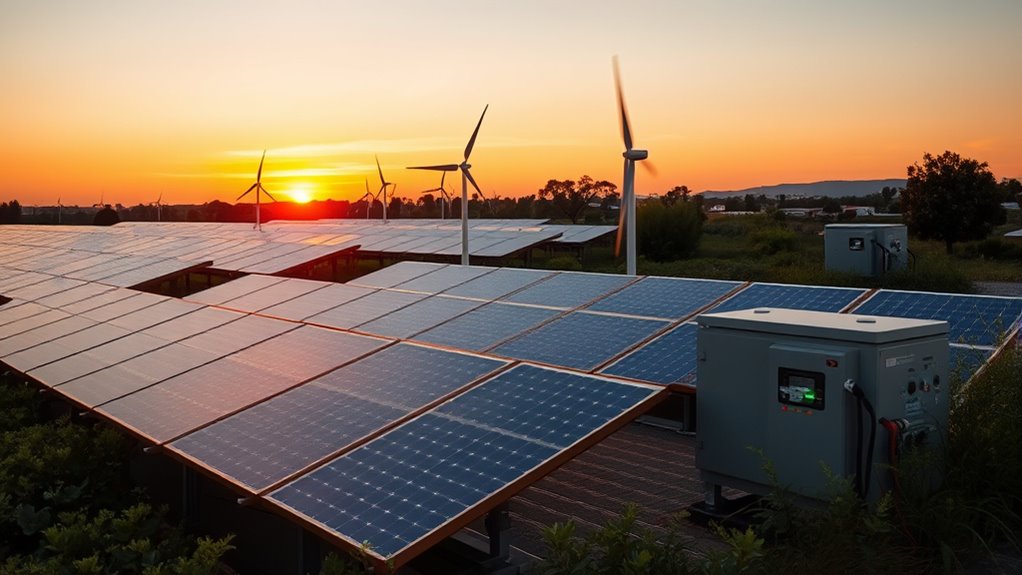

Microgrids work by producing, storing, and distributing power locally, often using renewable sources like solar and wind. They can operate connected to the main grid or independently during outages, relying on batteries and control systems to balance supply and demand. These systems boost resilience, cut costs, and promote sustainability by reducing reliance on fossil fuels. Want to discover how control systems and storage play a role in making microgrids efficient? Keep exploring.
Prime for Young Adults — start your free trial
Fast free delivery, streaming and member deals for eligible 18–24 year olds.
As an affiliate, we earn on qualifying purchases.
Key Takeaways
- Microgrids generate, store, and distribute electricity locally, often using renewable sources like solar and wind.
- They can operate connected to the main grid or independently during outages to ensure continuous power.
- Control systems monitor energy flow, adjusting generation and storage to optimize efficiency and stability.
- Batteries act as buffers, storing excess energy for use during low renewable output or blackouts.
- They improve energy independence, resilience, and sustainability by reducing reliance on fossil fuels and supporting clean energy.
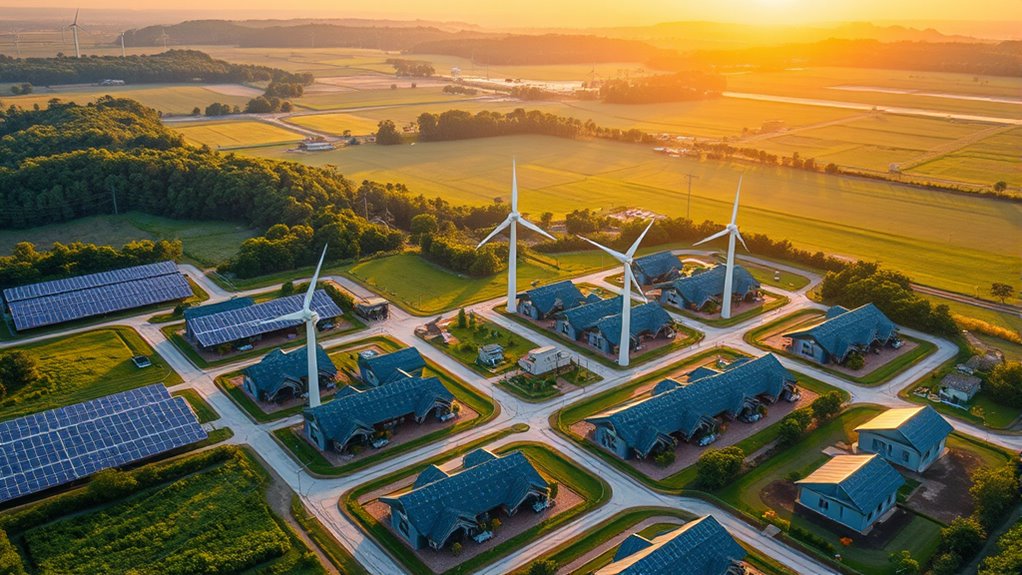
Have you ever wondered how communities can generate and manage their own electricity independently? Microgrids make this possible by allowing local areas to produce, store, and distribute power with greater control. At the core of a microgrid is its ability to seamlessly integrate renewable energy sources like solar panels and wind turbines. This renewable integration not only reduces reliance on fossil fuels but also promotes sustainability. When sunlight is abundant or wind speeds are high, the microgrid can capitalize on these resources to generate clean energy, reducing emissions and lowering costs over time. But integrating renewables isn’t without challenges; their intermittent nature can cause fluctuations in power supply, which makes maintaining grid stability crucial.
Microgrids harness renewable energy to promote sustainability and ensure reliable, independent power management.
Grid stability refers to the microgrid’s capability to keep the power supply consistent and reliable, even when renewable energy sources are variable. Unlike traditional grids, microgrids can operate in two modes: connected to the main grid or isolated. When connected, they can draw power from the larger grid to balance any shortfalls, ensuring a steady supply. When isolated—such as during a blackout—they rely on local generation and storage systems like batteries to keep the lights on. These batteries act as buffers, storing excess energy when production exceeds consumption and releasing it when demand rises or renewable output drops. This dynamic balancing act helps maintain grid stability, preventing blackouts and equipment damage.
The intelligent control systems within a microgrid play a vital role in managing renewable integration and grid stability. These systems constantly monitor energy production, consumption, and storage levels, automatically adjusting operations to optimize performance. For example, during peak sunlight, the system might prioritize solar energy, reducing reliance on stored batteries or backup generators. Conversely, at night or during low wind periods, the system draws from stored energy reserves to keep power flowing smoothly. By doing so, microgrids can maximize renewable use while safeguarding the overall stability of the local power network. Additionally, implementing advanced control systems can further enhance the efficiency and responsiveness of microgrids.
This combination of renewable integration and advanced control mechanisms makes microgrids highly adaptable and resilient. They foster energy independence, reduce environmental impact, and provide a reliable power source even amidst disruptions. Whether supporting a small community, a campus, or a critical infrastructure site, microgrids empower you to take control of your energy future. They demonstrate how local solutions can contribute to a cleaner, more stable, and more sustainable energy landscape, all while ensuring that your community’s power needs are met efficiently and reliably.
As an affiliate, we earn on qualifying purchases.
Frequently Asked Questions
How Do Microgrids Integrate With Existing Main Grids?
You connect a microgrid to the main grid through grid synchronization, ensuring voltage and frequency match seamlessly. This allows you to manage power flow effectively, switching between grid-connected and island modes as needed. By controlling power flow, you prevent disruptions, optimize energy use, and maintain stability. Proper integration enables your microgrid to support the main grid during high demand and operate independently when necessary, enhancing reliability and resilience.
What Are the Main Challenges in Microgrid Implementation?
Did you know that over 60% of microgrid projects face delays due to regulatory hurdles? You’ll find that implementing microgrids is challenging because of regulatory hurdles and technological complexity. Managing local policies, securing permits, and integrating advanced technology require careful planning. You need to stay informed about regulations and work closely with specialists to overcome these obstacles, ensuring your microgrid operates smoothly and efficiently in the long run.
How Cost-Effective Are Microgrids for Communities?
Microgrids can be quite cost-effective for communities, mainly through significant cost savings on energy bills and increased energy independence. While the initial investment costs can be high, the long-term benefits outweigh them, especially with lower operational costs and resilience against outages. Over time, communities often see a return on investment through reduced energy expenses and enhanced reliability, making microgrids a smart financial choice for local energy management.
What Types of Renewable Energy Sources Are Used in Microgrids?
You’ll find solar panels and wind turbines are the most common renewable energy sources in microgrids. Solar panels capture sunlight to generate electricity efficiently, while wind turbines harness wind power to produce energy. Both options allow your community to reduce reliance on fossil fuels, lower costs, and increase energy independence. By integrating these renewable sources, microgrids provide clean, sustainable power tailored to your local needs.
How Do Microgrids Improve Energy Resilience During Outages?
Imagine a community with a microgrid that keeps power running during a blackout. You gain energy independence because your microgrid isolates from the main grid, ensuring continuous supply. This boosts grid reliability, so outages don’t affect you. During disruptions, your microgrid seamlessly switches to local renewable sources and storage, maintaining essential services. This resilience helps protect your community’s safety and economy, making microgrids crucial for reliable energy during crises.
Conclusion
Imagine a microgrid as a neighborhood lantern that stays lit even when the power lines go dark. Just like that lantern keeps your street safe and warm, microgrids provide reliable energy during outages, ensuring your community stays powered. With over 2,000 microgrids already in operation worldwide, they’re shaping the future of resilient, sustainable energy. Embracing microgrids means you’re helping build a brighter, more dependable world—one neighborhood at a time.
NFL season / tailgating Picks
team gear
As an affiliate, we earn on qualifying purchases.