Your home battery’s true value isn’t just in its size, but in its ability to time energy use effectively. By strategically charging and discharging based on energy rates, solar generation, and grid signals, you can save money, support grid stability, and reduce your environmental impact. Smaller, responsive batteries often outperform larger ones when it comes to real-time control. Keep exploring how precise timing can maximize your energy system’s benefits and transform your energy management.
Key Takeaways
- Effective energy management relies on releasing stored power at optimal times for maximum savings and efficiency.
- Strategic timing supports grid stability, reducing reliance on fossil fuels during peak demand periods.
- Smaller, responsive batteries can outperform larger ones by quickly adapting to grid signals and energy needs.
- Proper timing of charging and discharging enhances environmental benefits and cost savings.
- The true value of home batteries lies in their orchestration and synchronization with energy flow, not just their capacity.
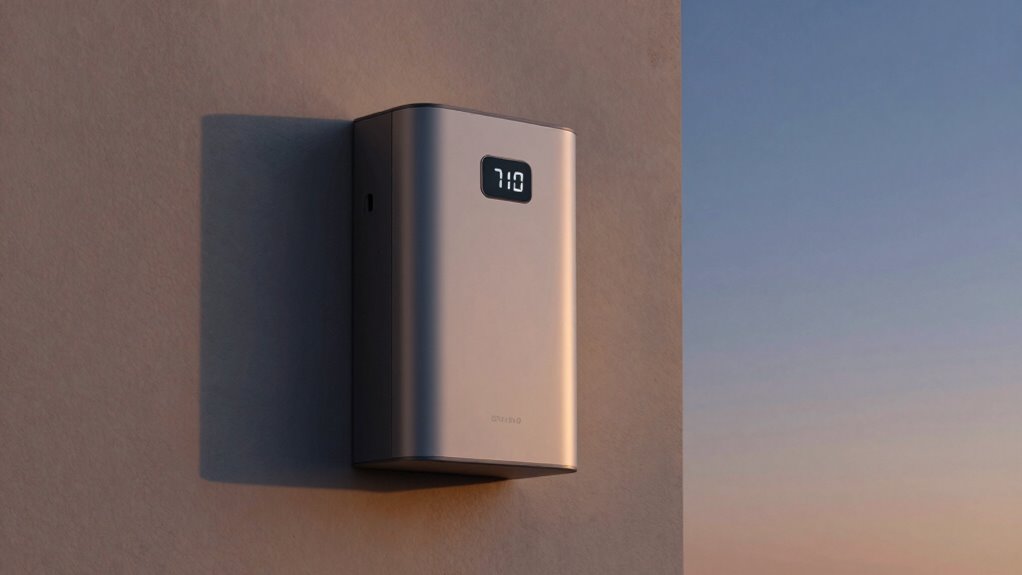
While many homeowners focus on choosing batteries with the largest capacity, timing often matters more. It’s tempting to think that a bigger battery means more stored energy and, consequently, better performance. But the real value lies in how well you can synchronize your battery’s use with your energy needs and the grid’s fluctuations. When you think about energy management, timing becomes vital. It’s not just about holding a lot of power; it’s about releasing it at the right moments to maximize efficiency and cost savings.
Timing your home battery use is more important than capacity for maximizing savings and efficiency.
Your home battery’s role in grid integration is about more than just storing excess solar power. It’s about smartly interacting with the grid to support stability and reduce reliance on fossil fuels. If you time your energy discharge correctly—say, during peak electricity rates or when solar generation drops—you can markedly cut costs. Conversely, charging your battery when electricity prices are low or when your solar panels are generating abundant power helps optimize usage and reduce grid strain. This strategic charging and discharging is at the core of effective energy management and can make a big difference in your overall energy bills.
Timing also influences how well your home battery can work alongside demand response programs. These programs often incentivize you to reduce consumption during high-demand periods, but only if your battery can respond promptly. A battery with a large capacity that doesn’t respond quickly might not deliver the same benefits as a smaller, more agile one. The ability to rapidly charge or discharge based on real-time grid signals ensures you’re making the most of your investment and contributing to grid stability. Additionally, the responsiveness of the battery is crucial for maximizing the benefits of smart grid technology. Smart grid integration enhances the efficiency of energy flow and enables more precise timing of storage and release.
Furthermore, the balance of energy flows depends on when you store and use power. If you wait too long to use stored energy, you might miss opportunities to save money or assist with grid balancing. Conversely, deploying stored energy at precisely the right moment enhances your energy management strategy, helping you avoid peak rates and reduce your carbon footprint. The key is timing—knowing when to draw from your battery and when to replenish it, aligned with both your household needs and grid demands. Properly managing these energy flows can significantly improve your energy savings and environmental impact. Integrating real-time data into your energy strategy allows for even more precise timing and optimization.
In essence, home batteries are less about how much they can hold and more about how effectively you can time their operation. Properly integrated into the grid and managed through smart timing, they become powerful tools for saving money, supporting renewable energy, and maintaining a stable energy system. It’s this precise orchestration that opens the true value of home energy storage.

GoveeLife H5901 Smart WiFi Sprinkler Timer with Gateway, 1 Water Outlet
- Long-Range Remote Control: Control irrigation up to 1640 ft away
- Connects Multiple Devices: Supports up to 64 devices via one gateway
- Weather-Adaptive Watering: Adjusts watering based on rain, light, temp, humidity
As an affiliate, we earn on qualifying purchases.
As an affiliate, we earn on qualifying purchases.
Frequently Asked Questions
How Does Battery Timing Impact Overall Energy Savings?
Battery timing directly impacts your energy savings by managing your energy demand during peak hours, reducing costs through peak shaving. When your home battery discharges at best times, it lowers the need to buy expensive grid power, especially during high-demand periods. This strategic timing not only cuts your energy bills but also helps balance grid load, making your energy use more efficient and cost-effective overall.
What Are the Key Factors Influencing Battery Timing Performance?
You’ll find that battery chemistry and charge cycles are key factors influencing battery timing performance. A stable chemistry guarantees smoother energy flow, while more charge cycles mean the battery can handle frequent use without losing efficiency. When these elements align well, your home battery can better sync with your energy needs, providing ideal timing. This harmony helps you maximize savings and rely confidently on your system when you need it most.
Can Timing Improve Battery Lifespan and Reliability?
Yes, timing can improve your battery’s lifespan and reliability. Proper battery calibration guarantees your system accurately tracks charge levels, preventing overuse. Regular power cycling helps recalibrate the battery and reduce capacity loss over time. By managing when you charge and discharge, you avoid stressing the battery, which extends its life. Consistent timing practices, including calibration and controlled power cycling, keep your home battery reliable and efficient for longer periods.
How Do Different Home Energy Usage Patterns Affect Battery Timing?
Your home’s energy habits can subtly influence battery timing, especially during peak usage times. When you experience frequent load surges, the battery needs to be ready for quick shifts, making load balancing essential. Consistent patterns help the system anticipate your needs, optimizing timing. By understanding your usage, you help your battery operate smoothly, ensuring it’s ready when you need it most, ultimately extending its lifespan and reliability.
Are There Specific Batteries Better Suited for Timing Over Capacity?
Yes, certain batteries are better suited for timing over capacity. Lithium-ion batteries, especially those with advanced battery chemistry, excel at rapid charge and discharge cycles, making them ideal for power management that relies on timing. Their quick response times help you optimize energy use during peak hours or outages. Choosing a battery with the right chemistry guarantees your home energy system operates efficiently, aligning with your usage patterns and maximizing timing advantages.
Conclusion
Remember, the real power of home batteries isn’t just about how much they can store but when they deliver that energy. Did you know that most homes only use about 30% of their battery capacity during peak times? So, focusing on timing means you’re optimizing energy use when it matters most. By prioritizing smart timing, you can save money, reduce reliance on the grid, and make your home more efficient. It’s all about playing the right energy moments.